
Blue wildflowers have a special way of catching your eye and calming your spirit. They’re not as common as reds or yellows, which makes them feel like a rare little treasure when you spot them blooming in a garden.
These beauties don’t just brighten your space; they also bring a sense of peace, serenity, and sky-like wonder.
Some might surprise you by being classified as weeds, yet when planted with intention, they can turn an ordinary patch of dirt into a dreamy, pollinator-friendly escape.
If you’ve ever wanted a garden that feels a little more magical, these 10 blue wildflowers could be exactly what you’re looking for. Take a scroll through and find the ones that speak to your heart and your growing conditions.
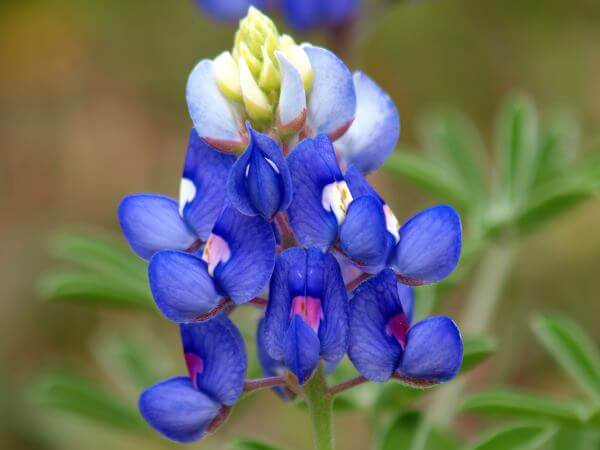
#1 Texas Bluebonnet (Lupinus Texensis)
 Source: Greennature
This iconic flower brings a bold burst of cobalt blue to open fields and sunny gardens. Its blooms look like velvet towers, rising above clusters of green foliage in early spring.
Texas Bluebonnets thrive in full sunlight and prefer well-draining soil with minimal watering once established. You can sow the seeds in the fall to let nature do the work over winter.
To help them thrive, gently scratch the seed coat or soak them overnight before planting. They’re beautiful in mass plantings or sprinkled across a border for that classic wildflower charm.
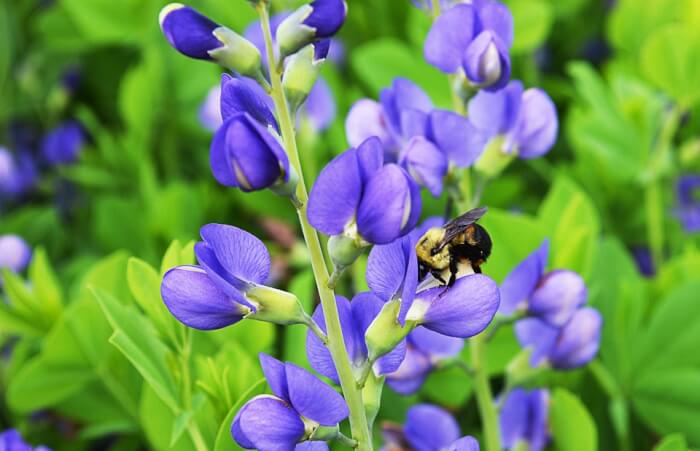
#2 Blue False Indigo (Baptisia Australis)
 Source: Ucanr
Blue False Indigo offers a tall, sculptural presence with spiky blue-purple flowers that bloom in late spring. It grows into a hardy, bush-like plant with soft foliage that turns silvery as it matures.
You’ll find it happiest in full sun, but it can handle light shade too. It doesn’t need rich soil, just decent drainage and a bit of patience as it slowly settles in.
Once established, it becomes drought-tolerant and almost care-free, making it a great choice for low-maintenance landscapes.
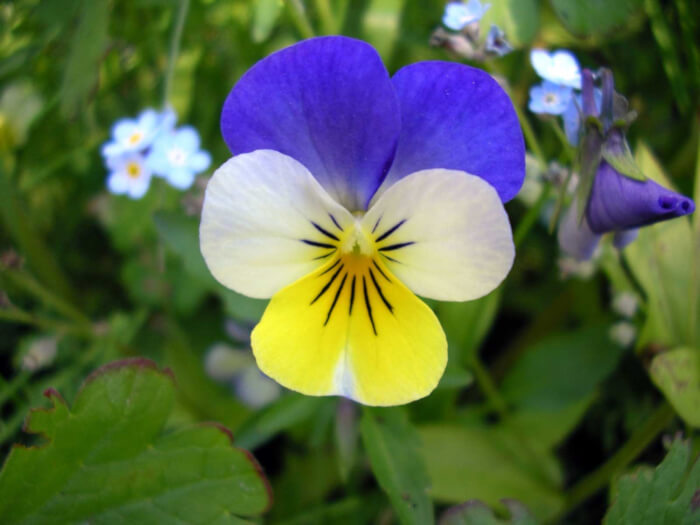
#3 Wild Violas, aka Johnny Jump-Ups, Heartsease (Viola Tricolor)
 Source: Buyrareseeds
These tiny charmers might be small, but they pack plenty of personality with their purple, blue, and yellow faces. Often called Johnny Jump-Ups or Heartsease, wild violas pop up quickly and love cool-season weather.
They’re known for reseeding easily, so you may want to grow them in containers if you’re short on space or prefer a more tidy look.
Their edible petals make them a sweet addition to salads or cakes. A spot with morning sun and moist soil will keep them blooming cheerfully.
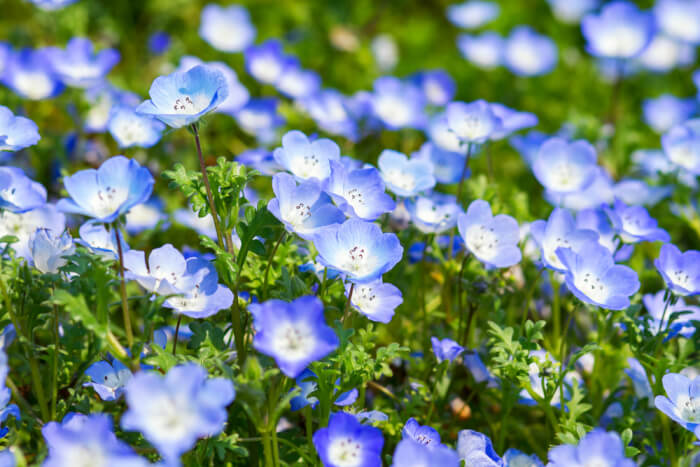
#4 Baby Blue Eyes (Nemophila)
 Source: Floraqueen
Baby Blue Eyes have soft, sky-colored petals that bring a gentle glow to the garden. These delicate annuals are native to California but can brighten up any space with well-drained soil and a little afternoon shade.
They’re especially good for filling in spaces beneath taller plants or along borders. You’ll see pollinators hovering around their pale blue blooms throughout spring.
Try scattering seeds directly into the garden after the last frost and keep the soil lightly moist until they sprout.
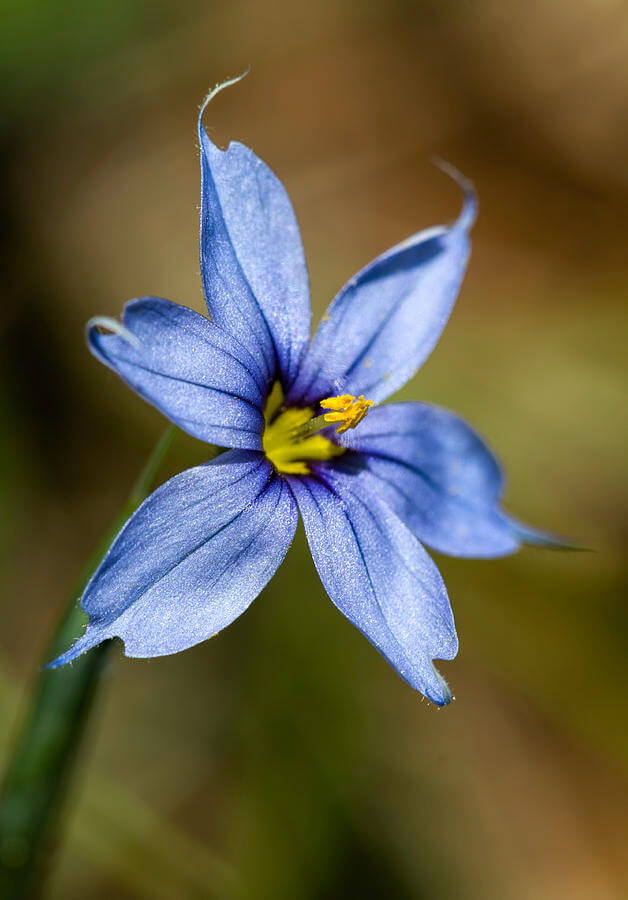
#5 Narrowleaf Blue-Eyed Grass (Sisyrinchium angustifolium)
 Source: Pixels
Despite its name, this wildflower isn’t a true grass; it’s a petite beauty with starry blue blooms on slender stalks. It does best in spots with damp soil and dappled light, though it can tolerate more sun if watered regularly.
Each bloom only lasts a day, but the plant sends up new ones over many weeks. It blends nicely into meadow-style plantings or near the edges of rain gardens.
Historically, some Native American groups used it for stomach troubles, adding a layer of traditional value to its charm.
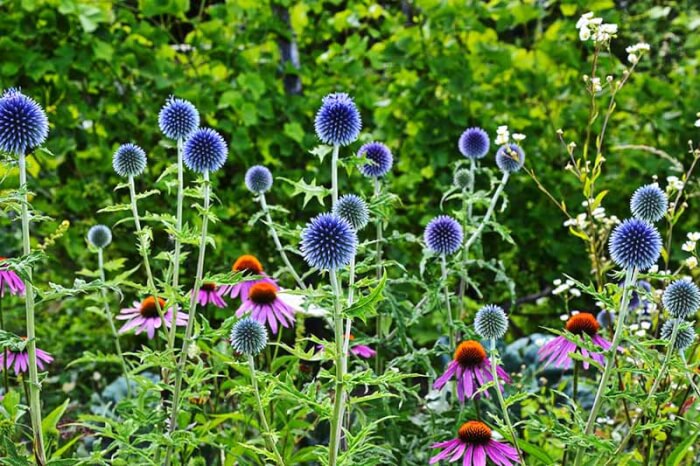
#6 Globe Thistles (Echinops)
 Source: Gardenerspath
Globe Thistles are spiky and bold, but don’t let that fool you; they’re beloved by bees and look incredible in late-summer gardens. Their globe-shaped blue blooms sit atop long stems, offering contrast against soft grasses and leafy perennials.
You can grow them in average soil as long as it drains well and gets full sunlight. Once they’re established, they’re drought-tolerant and need little attention. These thistles also dry beautifully, so consider snipping a few for indoor arrangements.
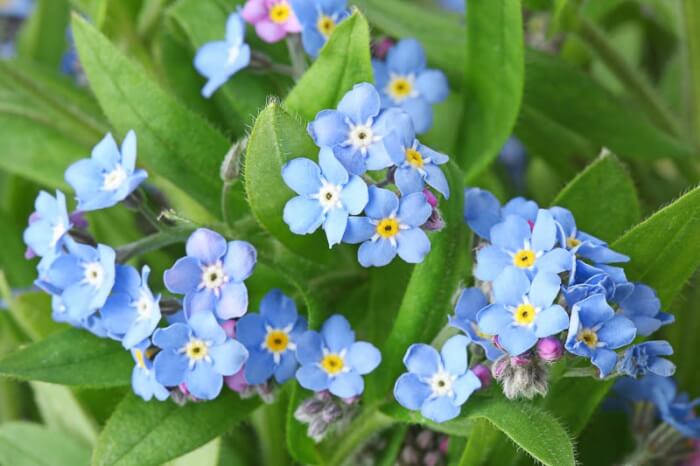
#7 Forget-Me-Nots (Myosotis)
 Source: Gardenia
Forget-Me-Nots add a dreamy, woodland feel with their clusters of tiny sky-blue flowers. They bloom generously from spring into early summer and can spread quickly in moist, shady spots.
Since they self-seed easily, you might find them popping up in new places next year. They’re perfect for borders, beneath trees, or near water features. Just give them soft, rich soil and they’ll reward you with a carpet of color.
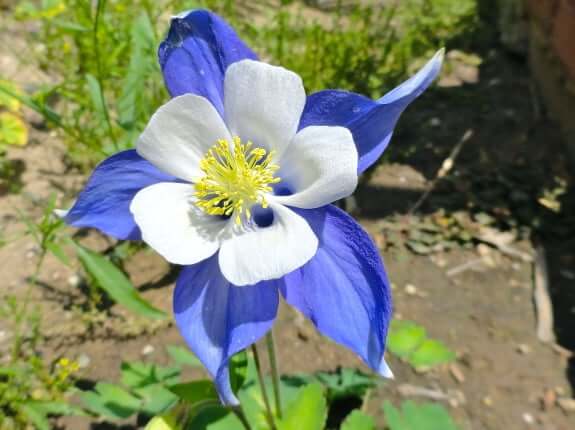
#8 Blue Columbine (Aquilegia caerulea)
 Source: Americanmeadows
Blue Columbines have delicate, layered petals in soft blue and white, like little woodland ballerinas. Their blooms sway on tall stems and bring a touch of wild elegance to cottage gardens or shaded beds.
They’re magnets for bees, butterflies, and hummingbirds who love their sweet nectar. You’ll find them thriving in part shade and slightly moist, well-drained soil. Let a few go to seed, and they’ll surprise you with new plants the following spring.
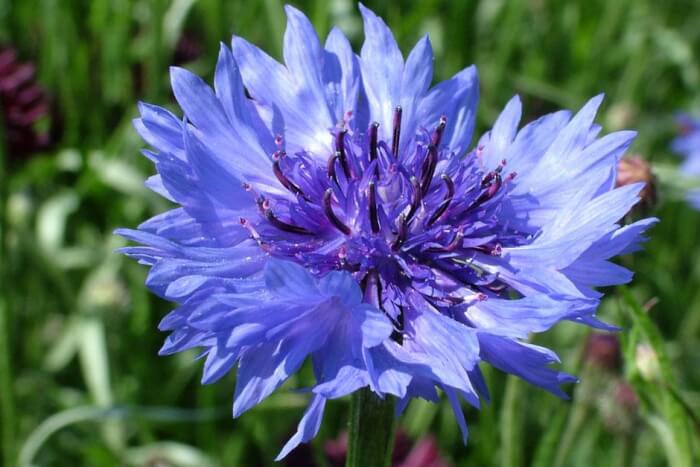
#9 Cornflower (Centaurea Cyanus)
 Source: Rhs
Cornflowers are classic cottage blooms that stand tall with brilliant blue petals and a cheerful spirit. They love full sun and tolerate poor soil, so they’re a smart choice for tough spots in the garden.
These annuals bloom fast and attract bees and butterflies in droves. Try mixing them into borders or wildflower meadows for a loose, natural feel. Deadheading regularly can extend their blooming season well into summer.
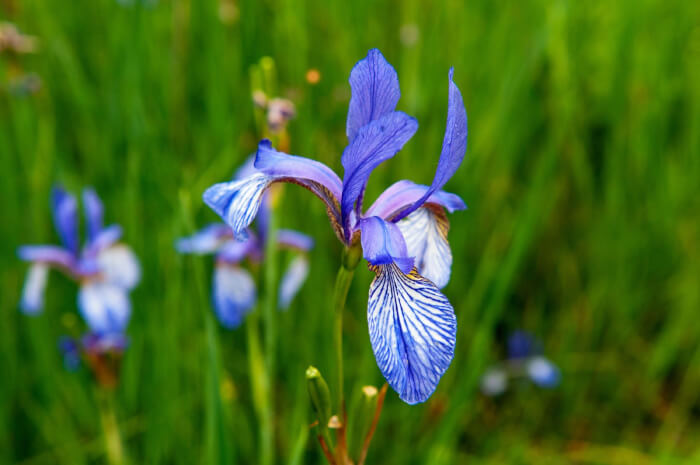
#10 Blue Flag Iris (Iris versicolor)
 Source: Gardeningknowhow