
Insulin is a hormone that controls how the body uses and stores glucose. When it is out of balance, the body struggles to regulate blood sugar. This condition is more common than many realize, but its early signs are often subtle.
Insulin imbalance can cause constant hunger, strong sugar cravings, weight gain, and fatigue. Many people dismiss these signals as normal. Over time, however, they may develop into more serious conditions such as type 2 diabetes, heart disease, or obesity.
The positive side is that insulin imbalance can be managed. Prevention plays a key role, and lifestyle changes can improve the way the body responds to insulin.
This article explains the common signs of insulin imbalance, the causes of high insulin, how to prevent problems, and practical solutions for those already facing high levels.
Signs of Insulin Imbalance
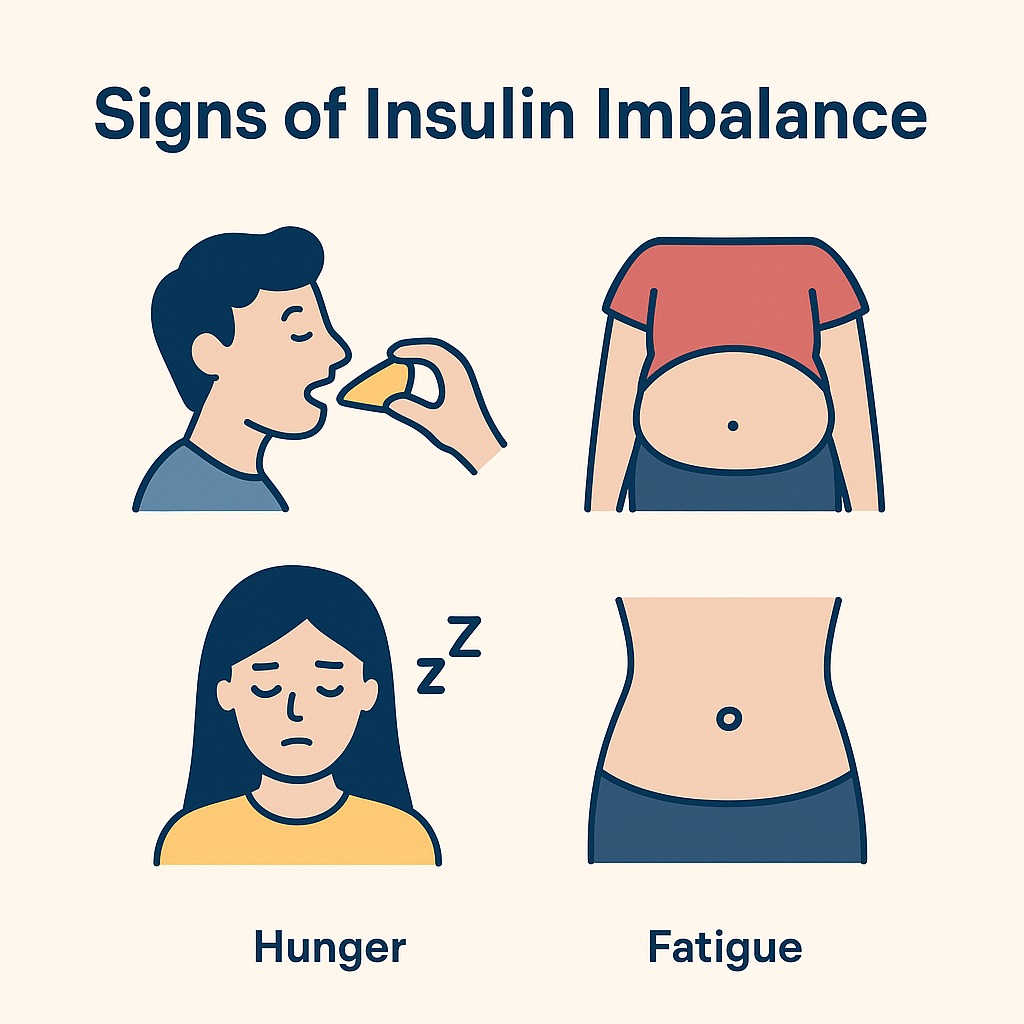
1. Constant hunger and cravings
When insulin levels are high, the brain does not receive the signal that the body is full. This often leads to hunger soon after eating and cravings for sweet or refined foods.
2. Weight gain and difficulty losing weight
Insulin encourages the body to store fat, especially around the waistline. Even with exercise and a careful diet, many people with insulin imbalance find it hard to lose weight.
3. Fatigue and energy crashes
Fluctuating blood sugar can cause energy highs followed by sudden lows. Feeling sleepy or drained an hour after eating is a common sign.
4. Skin and other changes
Some people develop darkened patches of skin, acne, or oily skin. Women may experience irregular periods, often linked to conditions like PCOS. High blood pressure can also appear as a result of insulin imbalance.
Causes of High Insulin Levels
One of the main drivers is diet. Eating large amounts of refined carbohydrates, sugary snacks, and sweetened drinks forces the body to release more insulin. A lack of exercise adds to the problem, as inactive muscles use less glucose.
Excess body fat, particularly around the abdomen, reduces the body’s ability to respond to insulin. Stress is another factor. When cortisol stays high, it interferes with blood sugar control. Genetics also play a role, as people with a family history of type 2 diabetes have a higher risk.
Prevention Strategies
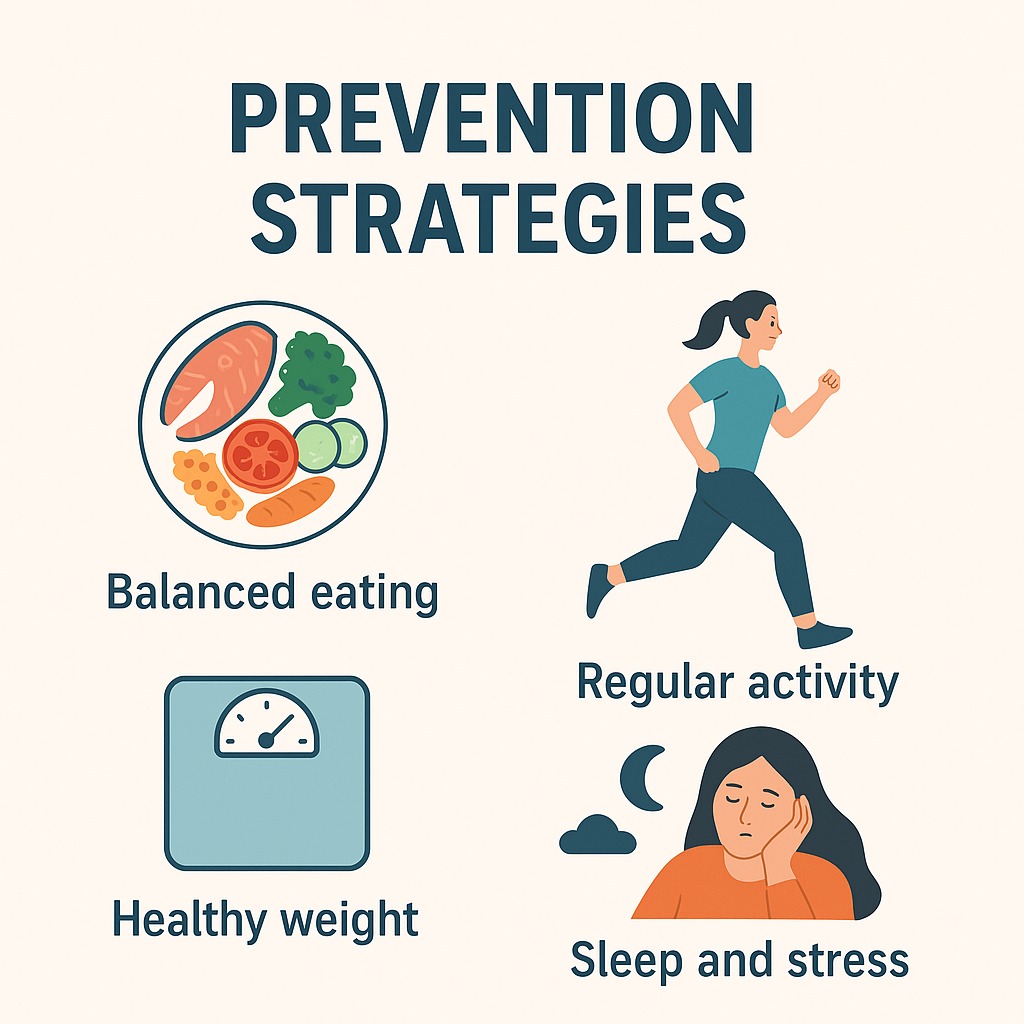
1. Balanced eating
Choosing whole foods helps the body manage insulin. Vegetables, legumes, lean proteins, and whole grains keep blood sugar steady. Pairing carbohydrates with protein or healthy fat also slows digestion and prevents rapid spikes. Reducing packaged snacks and sugary drinks is one of the simplest steps.
2. Regular activity
Exercise is one of the most effective ways to improve insulin sensitivity. Cardio workouts such as walking, swimming, or cycling support glucose use. Strength training builds muscle, which burns more glucose at rest. Even short walks after meals can reduce spikes.
3. Healthy weight
Carrying extra fat, especially around the middle, makes the body less responsive to insulin. Losing a modest amount of weight—five to ten percent—can restore better balance. Small, steady changes often work better than strict diets.
4. Sleep and stress
Lack of sleep and ongoing stress both worsen insulin resistance. Restful sleep of seven to nine hours per night supports hormone balance. Stress management through deep breathing, stretching, or short breaks during the day lowers strain on the body.
Solutions for High Insulin
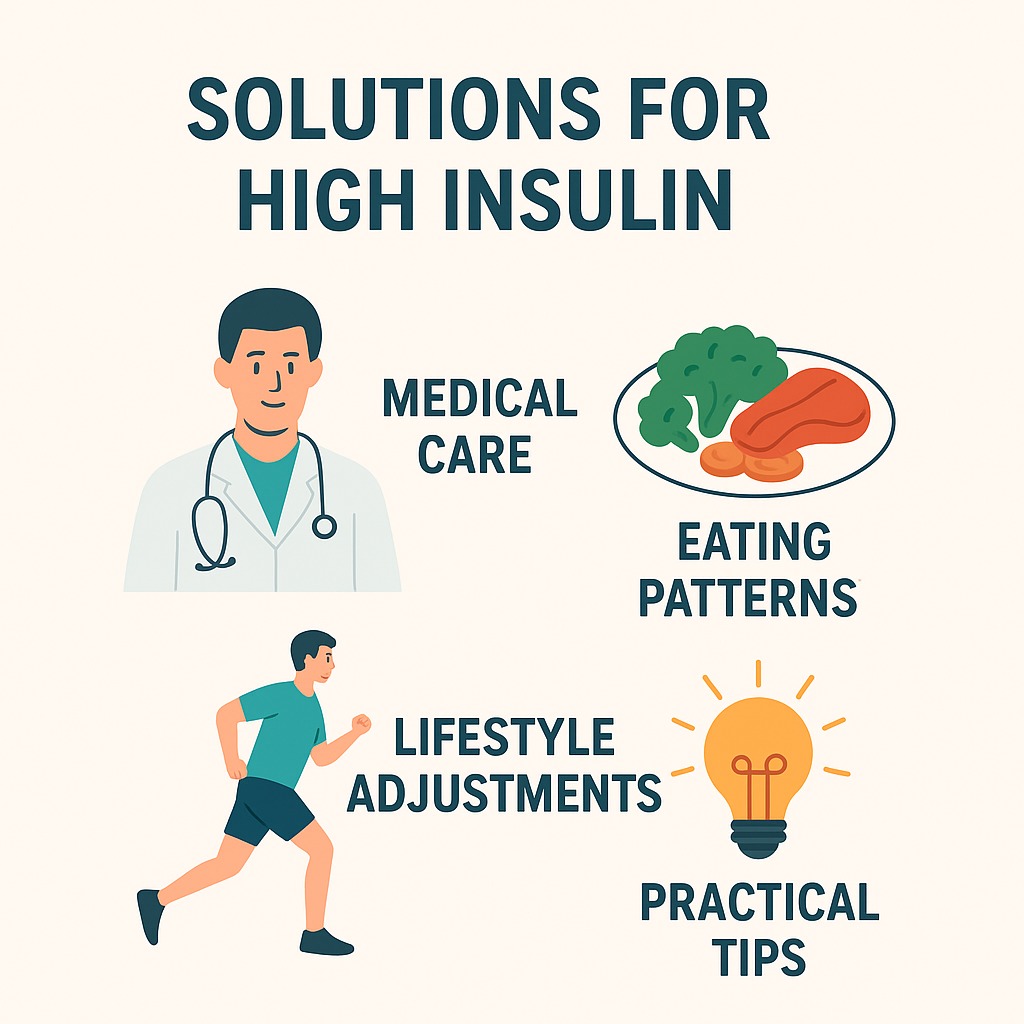
1. Medical care
If insulin levels are already high, testing is important. Doctors may order fasting insulin, glucose tolerance, or HbA1c tests. Treatments may include medications such as metformin, which improves insulin sensitivity, or GLP-1 receptor agonists, which lower insulin and support weight control.
2. Eating patterns
Spacing meals and avoiding constant snacking allows insulin to drop between meals. Intermittent fasting may also help, but it should only be tried under medical advice. Eating fiber-rich foods like vegetables, oats, or beans helps control hunger and keeps glucose steady.
3. Lifestyle adjustments
Daily habits play a large role. Staying active throughout the day, reducing alcohol, and stopping smoking all improve insulin response. Small steps like choosing stairs instead of elevators or walking during phone calls can make a difference.
4. Practical Tips
Start by replacing sweetened drinks with water or unsweetened tea. Keep simple snacks like fruit, nuts, or vegetables ready to avoid processed food. Aim for a regular bedtime and try to keep your sleep schedule consistent. Notice how your body reacts after meals. Fatigue, cravings, or mood changes may be signals worth paying attention to.
Conclusion
Insulin imbalance develops quietly but can affect health in many ways. Constant hunger, stubborn weight gain, and energy crashes are common early signs. Ignoring them may lead to bigger health problems later.
The good news is that lifestyle changes make a real difference. Eating balanced meals, staying active, sleeping well, and managing stress all help the body use insulin effectively. For those already diagnosed with high insulin, medical treatment combined with healthy daily habits provides a clear path forward.
Disclaimer
This article is for educational purposes only. It is not a substitute for professional medical advice. Always consult a healthcare provider before making changes to your diet, exercise, or medication, especially if you have health conditions or concerns about insulin levels.