
Red flowering trees have a way of stealing the spotlight in any garden. Their bold color brings life to green spaces and creates a sense of warmth that feels instantly inviting.
These trees are more than just eye-catching; they can also draw pollinators like bees and birds, helping your garden thrive. Some burst into bloom in early spring, while others hold their color well into summer or fall.
No matter the size of your outdoor space, there’s a red-flowering tree that can fit right in and brighten the view. With the right choice and a bit of care, your garden will glow with color year after year.
#1 Bottlebrush (Callistemon spp.)
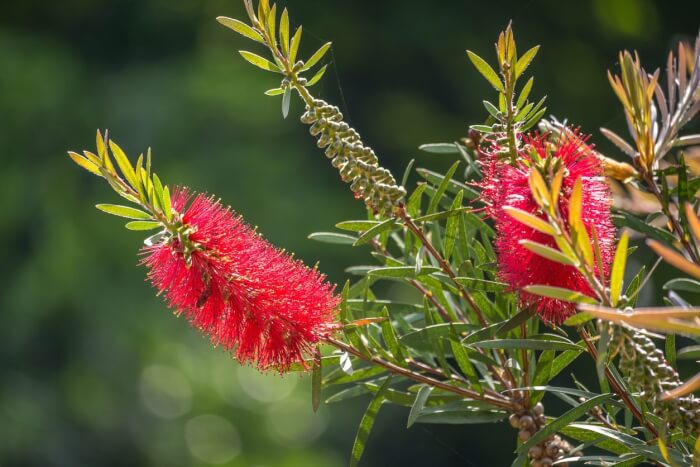
Bottlebrush trees are known for their vibrant red, brush-shaped blooms that appear from summer through fall. The flowers are rich in nectar, making them a magnet for hummingbirds and bees.
Plant in full sun with well-drained soil to encourage abundant flowering. Water regularly during the first year to establish strong roots. Prune lightly after blooming to keep the shape neat and compact.
#2 Pomegranate Tree (Punica granatum)
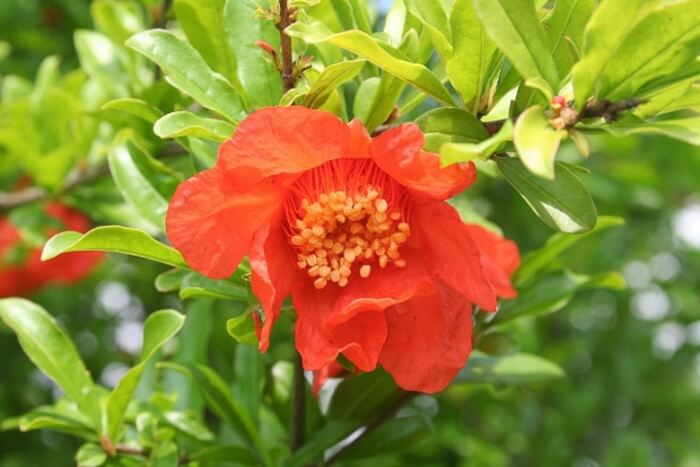
Pomegranate trees reward you with vivid red blossoms in spring and, in time, delicious fruit. They grow best in warm, sunny locations and tolerate both full sun and light shade.
Water deeply but infrequently to promote healthy roots. Mulch around the base to keep the soil cool and moist. Expect fruit production to start after about five to six years.
#3 Waratah (Telopea spp.)
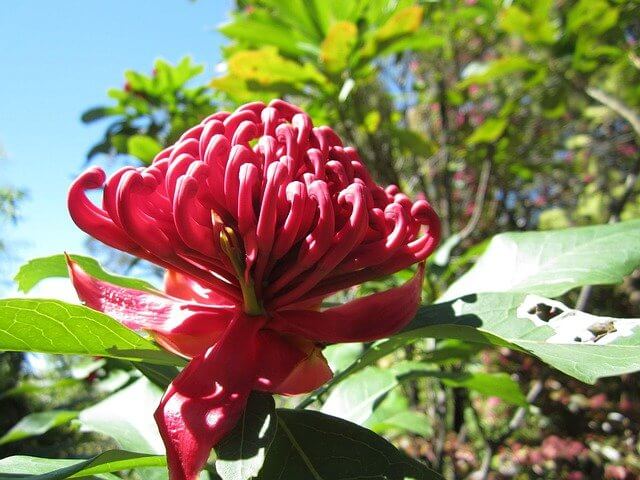
Waratah produces large, sculptural red flowers that make a dramatic garden display. They prefer morning sun with protection from harsh afternoon heat.
Keep the soil slightly acidic and well-drained for best results. Water deeply during dry spells, especially when buds are forming. Deadhead spent blooms to encourage new growth and maintain the plant’s health.
#4 Royal Poinciana Tree (Delonix regia)
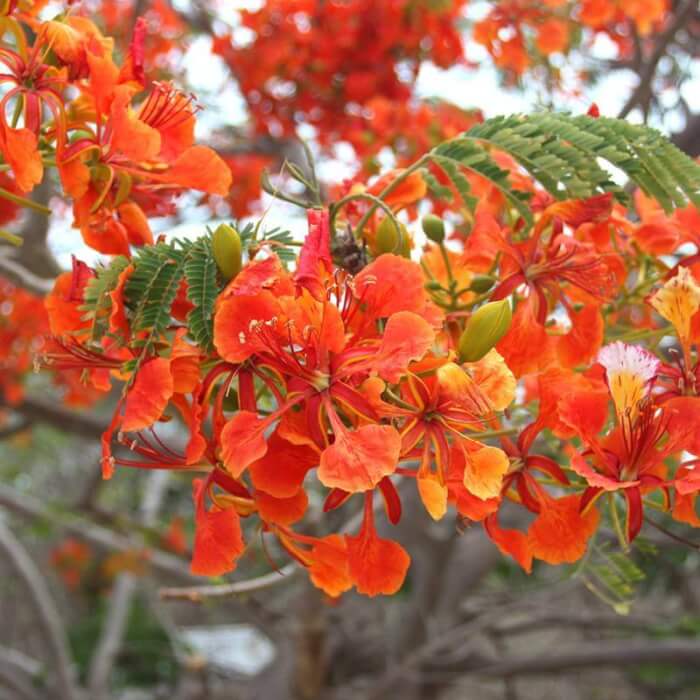
The Royal Poinciana is a breathtaking evergreen that bursts into fiery red-orange blooms in summer. It grows tall and wide, making it perfect for large gardens.
Plant in a sunny, frost-free spot with plenty of space to spread. Water regularly in the first few years, then reduce once established. Its broad canopy also provides welcome shade in hot weather.
#5 Crabapple Tree (Malus sylvestris)
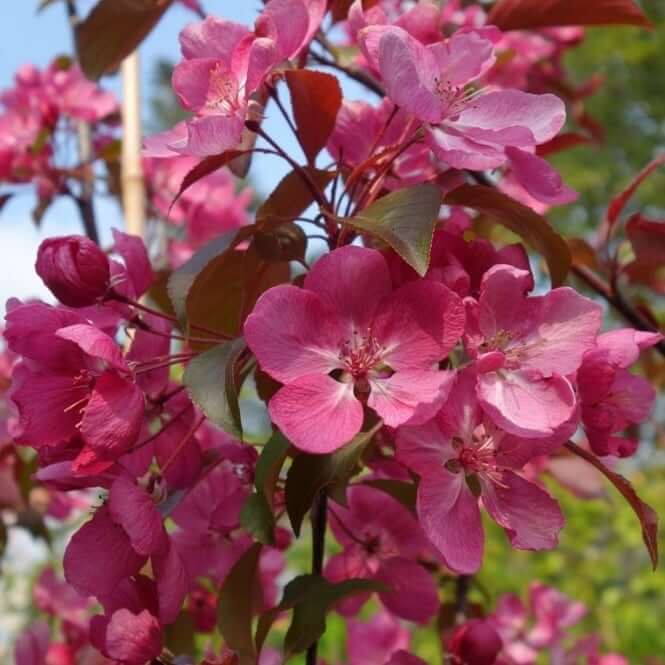
Crabapple trees bring a show of red, pink, or white flowers in spring, many with a sweet fragrance. Some varieties produce small fruits that can be turned into jams or jellies.
Choose a sunny location with fertile, well-drained soil. Prune in winter to remove crossing branches and keep the shape tidy. A light feed in spring will boost both blooms and fruit.
#6 Japanese Flowering Quince (Chaenomeles japonica)
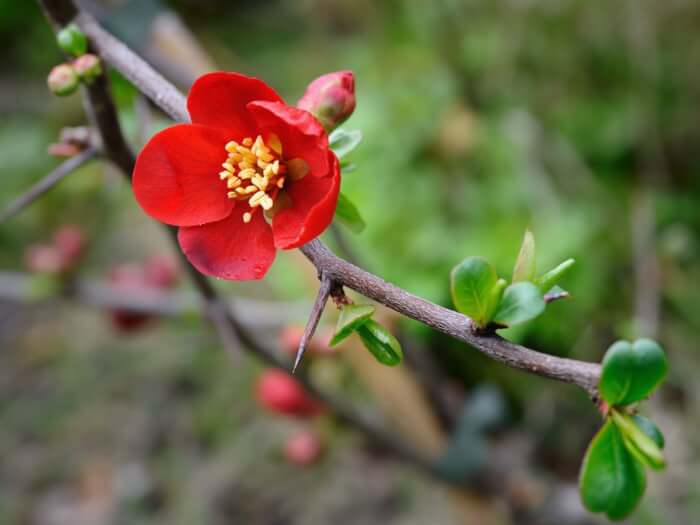
Japanese Flowering Quince bursts into color in early spring with red, orange, or pink blossoms. The plant also produces small, tart fruits that can be used in cooking.
It thrives in full sun but tolerates partial shade. Water deeply during dry periods to keep the blooms vibrant. Prune after flowering to shape the plant and encourage next year’s buds.
#7 Crape Myrtle (Lagerstroemia spp)
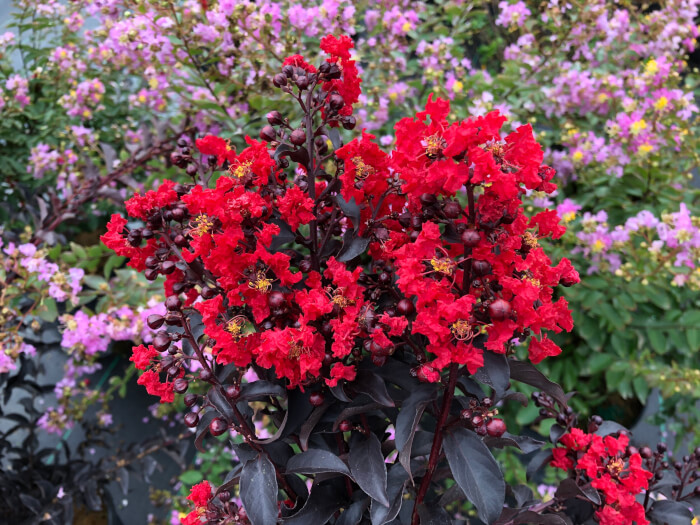
Crape Myrtle offers months of color, with red blooms that last from summer into fall. Its foliage turns shades of yellow, orange, and red before dropping in winter.
Plant in full sun for the most flowers and vibrant leaf color. Water regularly during hot weather, but let the soil dry slightly between waterings. Light pruning in late winter keeps it looking full and healthy.
#8 Red Silk Cotton Tree (Bombax ceiba)
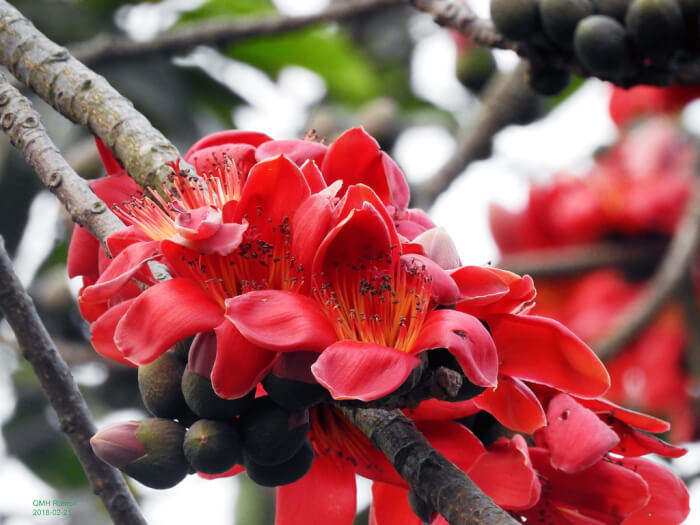
The Red Silk Cotton Tree is striking when it blooms on bare branches in late winter or early spring. Large red flowers cover the tree before new leaves appear.
It thrives in tropical climates with full sun exposure. Water regularly during dry months to support strong growth. Once established, it tolerates short dry spells well.
#9 Eucalyptus Tree
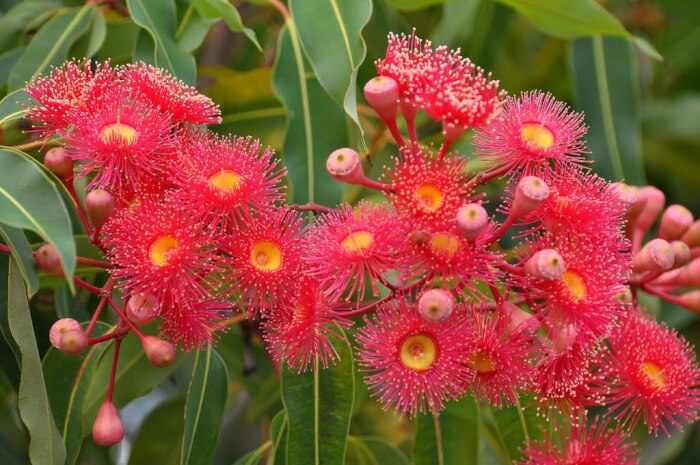
Some eucalyptus varieties produce bright red flowers alongside their fragrant foliage. They grow quickly in warm, sunny spots and prefer well-drained soil.
Water young trees deeply until they are established. Remove lower branches to create a more open shape if desired. The flowers and aromatic leaves also make them a favorite with pollinators.
#10 Dogwood (Cornus florida)
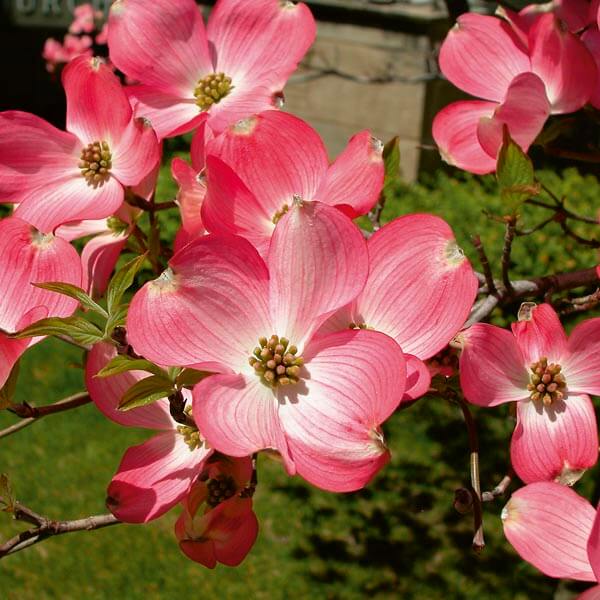
Dogwood trees bring a splash of red, pink, or white blossoms in spring, followed by vibrant red foliage in fall. They prefer partial shade in hotter climates but can handle full sun in cooler areas.
Keep the soil evenly moist and mulch to protect the roots. Prune lightly after flowering to maintain a graceful shape. Their seasonal changes make them a favorite for year-round interest.