
Flower border ideas are an easy way to transform your garden into a neat, stylish, and welcoming space. The right border design not only separates your flower beds from the lawn but also brings a decorative touch that adds character to the whole yard. A simple border can make your flowers stand out while giving your outdoor space a polished and well-planned look.
You don’t need expensive supplies to create something beautiful. Everyday items like bottles, logs, stones, or even old plates can be repurposed into eye-catching edging for your garden beds. The joy comes from finding materials that speak to your style and turning them into a project that’s both practical and artistic.
Take a walk around your home or garden, and you’ll likely discover plenty of materials waiting to be reused. Each of these ideas can help you highlight your blooms, add texture, and bring personality to your landscape. With a little time and creativity, you’ll have borders that are just as charming as the flowers they protect.
#1 Rock Flower Border
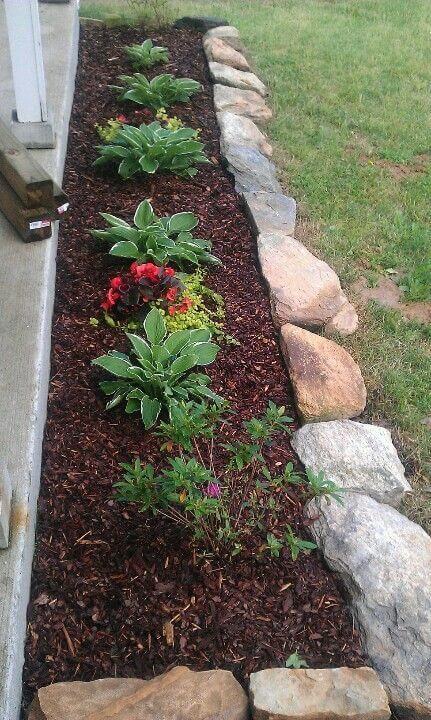
A rock border is one of the most classic and timeless choices you can make. Natural rocks frame flower beds beautifully and instantly create structure without overwhelming the plants.
Collecting stones of similar size will make the edge look neat, while mixing larger and smaller rocks gives it a rustic appeal. Lay them tightly together to prevent weeds from creeping through.
You can even dig a shallow trench to secure them in place and prevent shifting. This option is durable, low-maintenance, and blends seamlessly into any garden style.
#2 Old Roof Flower Border
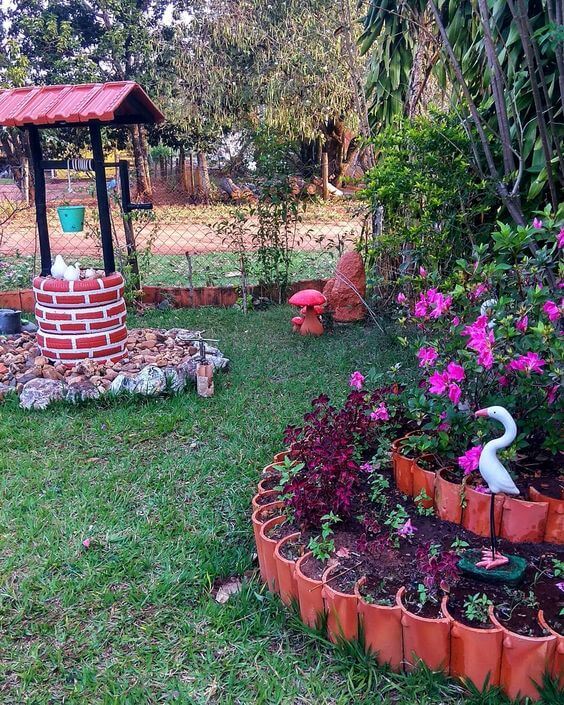
If you have leftover roofing tiles or shingles, they can be reused as a creative garden border. The flat shape allows them to be placed upright in the soil for a unique zigzag or layered pattern.
The weathered look of old roof pieces adds vintage charm to your flower beds. Simply press them into the ground at equal spacing to form a tidy edge.
This design is not only budget-friendly but also a sustainable way to reuse construction scraps. It’s a practical border idea that adds character and reduces waste.
#3 Plastic Bottle Flower Border
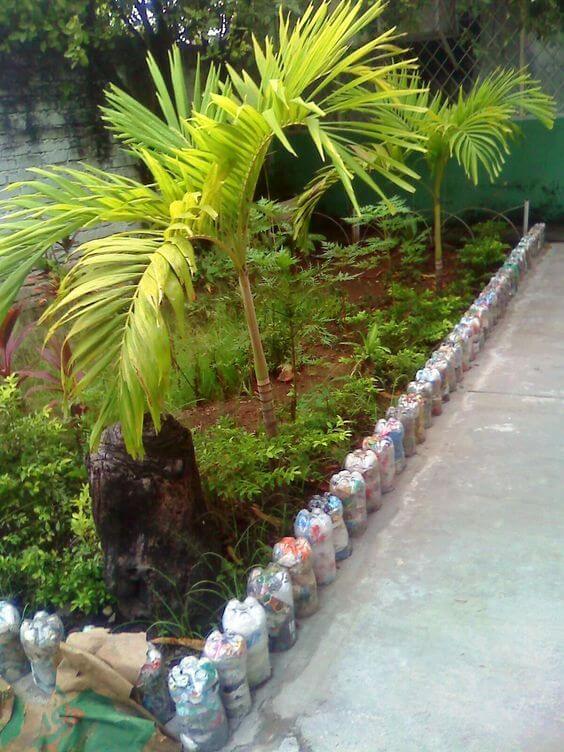
Plastic bottles can turn into colorful and functional garden borders with very little effort. Cut off the bottoms or use the full bottles, filling them with sand or soil to keep them sturdy.
You can paint them in bright shades or leave them transparent for a playful look. Arrange them upside down in the ground to create a fun and low-cost border.
This project is perfect if you want to recycle and add personality at the same time. It’s a great activity to involve kids in your gardening projects, too.
#4 Twig Border
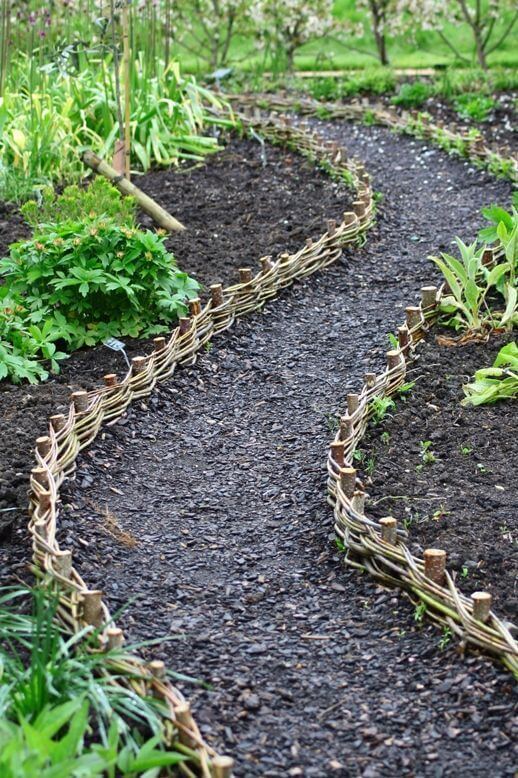
Twigs gathered from your yard can be bundled into simple fences that look charming and natural. Weave the twigs between upright stakes to form a rustic border that holds flowers in place.
This design works especially well for cottage-style or woodland gardens. You can cut the twigs to a uniform size for neatness or leave them uneven for a more organic feel.
Add a protective finish if you want them to last longer outdoors. This idea turns fallen branches into something both useful and beautiful.
#5 Bamboo Flower Border
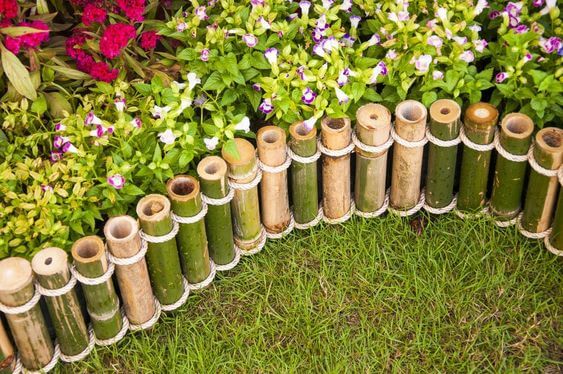
Bamboo is lightweight, durable, and gives your garden a fresh, natural appearance. Cut bamboo stalks into equal lengths and place them side by side in the soil for a simple border.
For a more decorative look, try cutting the stalks into varying heights for a playful edge. Bamboo weathers nicely over time and is strong enough to hold soil in raised beds.
Tie pieces together with natural rope for extra stability. This eco-friendly border creates a clean look while blending into greenery.
#6 Pallet Wood Used As Edging Around Flower Border
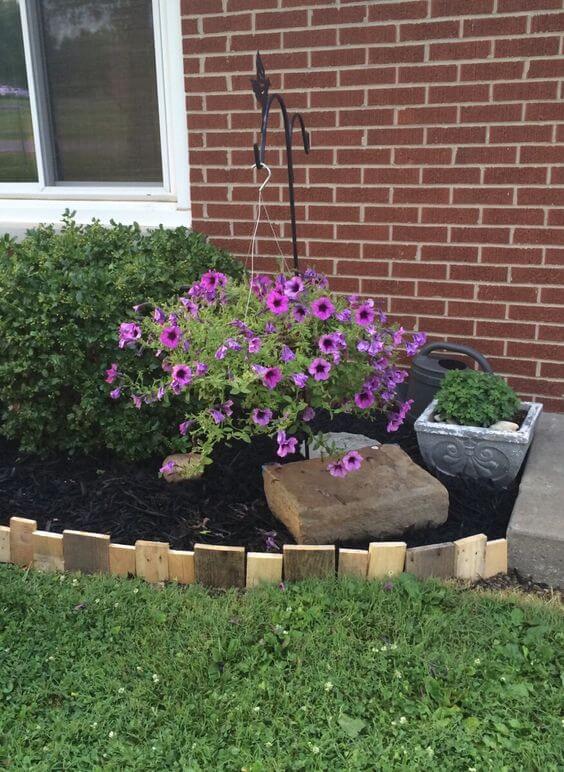
Old pallet wood can be repurposed into creative garden edging with just a few cuts. Slice the planks into short sections and arrange them vertically to form a sturdy border.
You can paint or stain the wood to match your garden’s style, or leave it natural for a rustic finish. Make sure to sand the edges to avoid splinters before installing.
This design is versatile, letting you choose between tall or short edging. It’s a budget-friendly solution that adds warmth and character to any flower bed.
#7 Natural Pebble Border
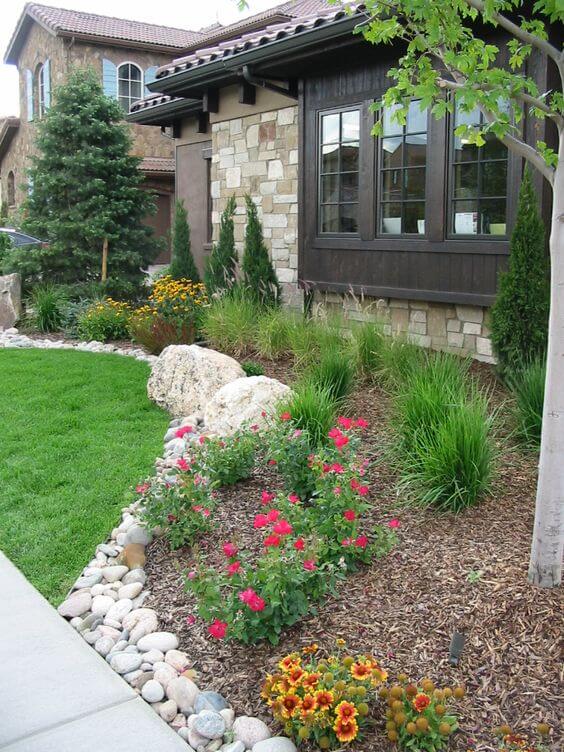
Pebbles are simple yet effective for defining a flower bed. A layer of smooth pebbles creates a soft, decorative edge that contrasts beautifully with colorful blooms.
You can choose all-white stones for a modern look or mix different colors for a playful border. Line the area with landscape fabric underneath to prevent weeds from coming through.
Rake the pebbles occasionally to keep them looking fresh. This border idea is great for adding texture while maintaining a tidy appearance.
#8 Create a Small Rock Succulent Garden For A Border
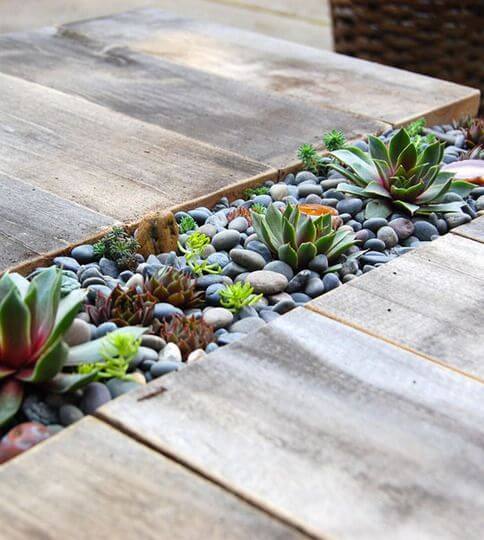
Turn a simple border into a feature by planting succulents between rocks. Use medium-sized stones to outline the flower bed and plant succulents in the gaps. The result is a living edge that looks both decorative and practical.
Succulents thrive in rocky soil, so they’ll flourish with little care. Add a layer of gravel to improve drainage and enhance the look. This border doubles as a mini garden while framing your main flower beds.
#9 Log Border
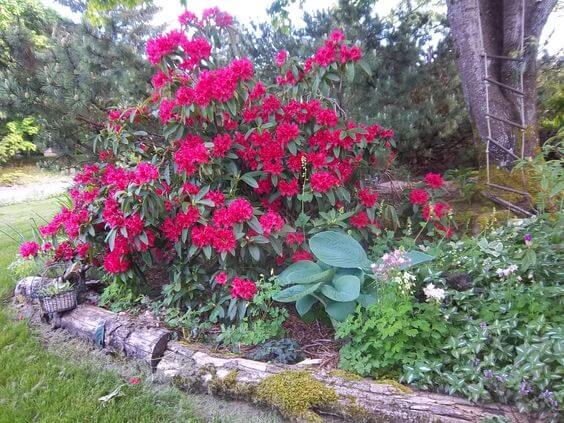
Logs cut into uniform lengths make excellent garden edging. You can stand them upright side by side to form a solid wall or lay them horizontally for a more natural look. Logs bring a rustic, woodland feel that complements flowers beautifully.
To keep them durable, choose hardwood and treat the surface with a sealant. You can even mix tall and short logs for added texture. It’s an eco-friendly option if you have fallen branches or leftover wood around.
#10 Old Clay Pot Flower Border
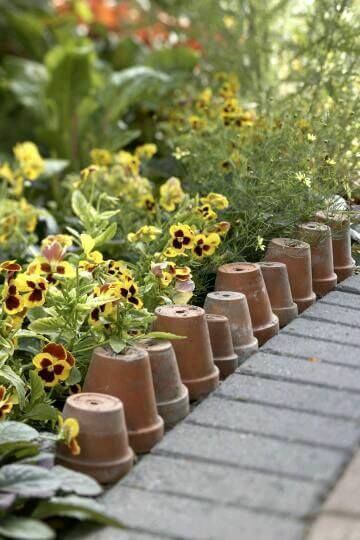
Broken clay pots can be reused as quirky and creative borders. Simply bury the halves in the soil at an angle to create a wave-like pattern. The terracotta color looks warm and earthy against green plants and bright flowers.
You can use whole pots too, laying them sideways for a playful edge. Make sure to press them firmly into the soil to keep them in place. This is a great way to give new life to damaged garden pots.
#11 Brick Border
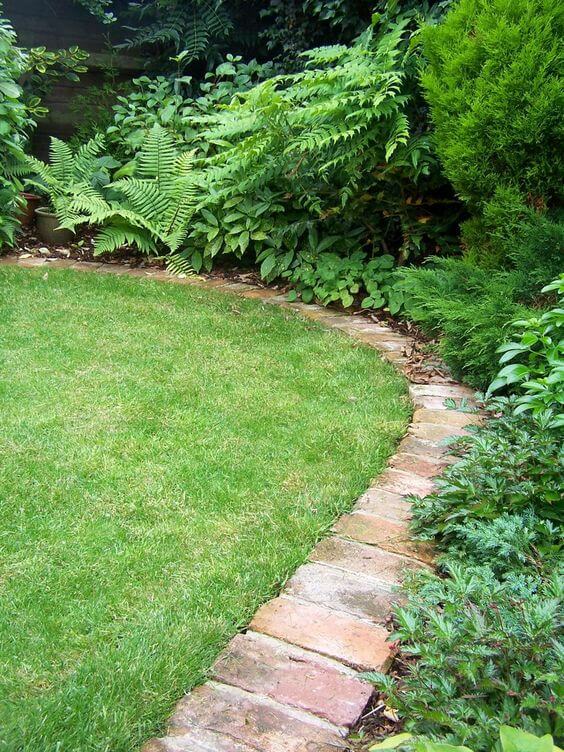
Bricks are durable, versatile, and always stylish for garden borders. You can lay them flat for a simple line or tilt them diagonally to create a zigzag effect. Bricks also hold soil well, making them perfect for raised flower beds.
Use mortar if you want a permanent edge, or leave them loose for easy rearranging. Their classic look fits both modern and traditional gardens. Over time, moss or ivy can grow around them, adding even more charm.
#12 Old Plate Border
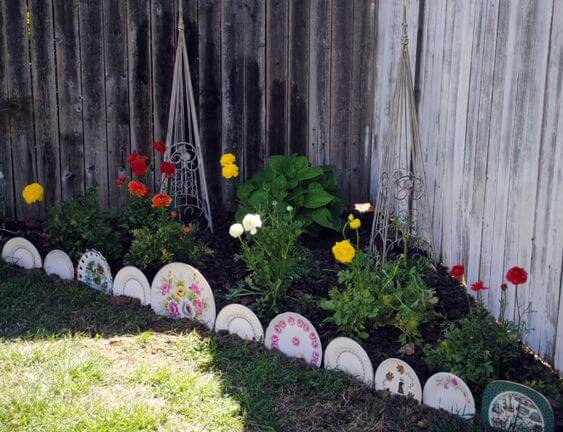
If you have chipped or mismatched plates, don’t throw them away. Instead, press them upright into the soil to form a colorful border. The patterns and colors will create a whimsical, one-of-a-kind design.
Plates work best for edging small flower beds or pathways. Space them evenly to avoid gaps and secure them deep enough to stay stable. This project is a fun way to showcase vintage kitchenware in your garden. It’s creative recycling at its best.
#13 Stone Border
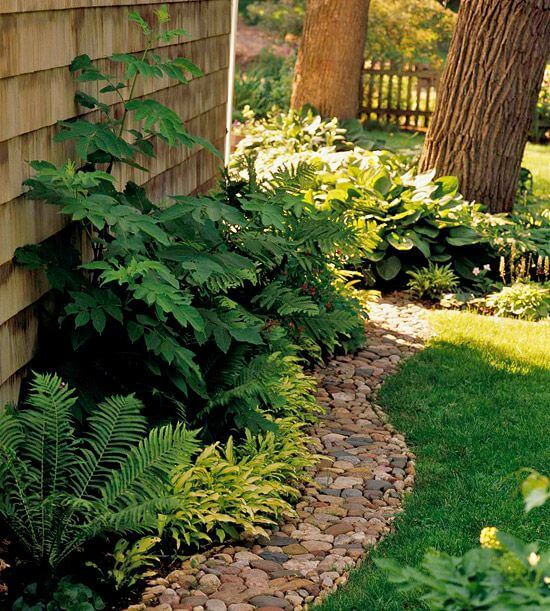
Large stones arranged neatly can form a strong, natural-looking border. Unlike smaller pebbles, big stones stay in place easily and create bold lines around flower beds. Choose stones that match the overall look of your garden for harmony.
You can place them tightly for a formal edge or loosely for a more relaxed feel. Digging a shallow trench will help keep them stable. This border looks impressive while requiring almost no upkeep.
#14 Groundcover Flowers For Border
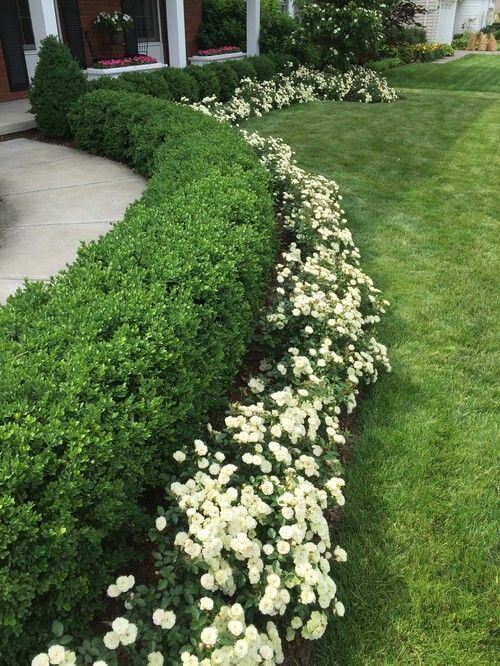
Living borders made of groundcover flowers create a soft, natural frame around your beds. Plants like alyssum, creeping thyme, or lobelia spill gently over the edges, blending flowers with greenery.
These borders add fragrance and attract pollinators too. Plant them densely so they grow into a continuous mat over time. Trim occasionally to keep them from spreading too far into walkways.
This choice makes your garden look alive and ever-changing.
#15 Wood Flower Border
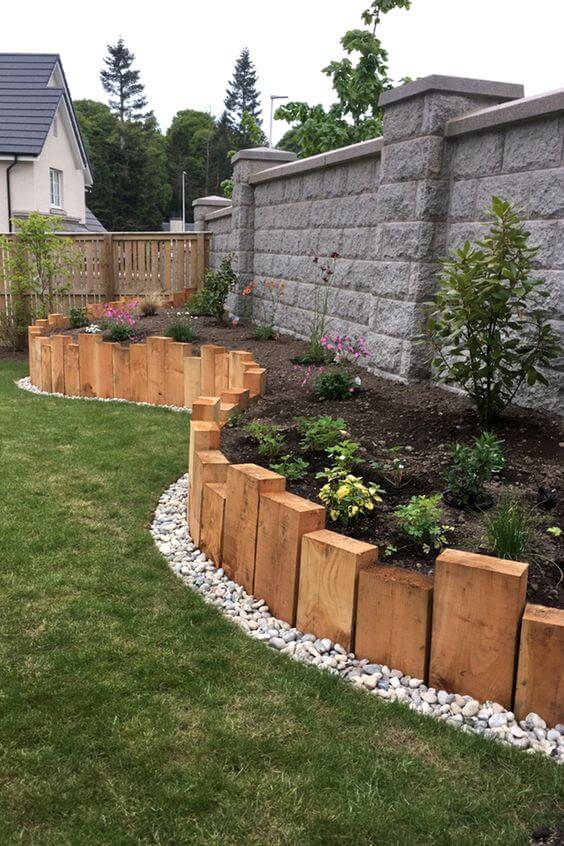
Simple wooden planks can be cut and installed to form a clean, functional border. Paint or stain them to match other wooden elements in your yard. For added charm, cut the tops into decorative shapes like points or curves.
Wooden borders work well for raised beds where you want a tidy separation. Seal the wood to extend its life in outdoor conditions. It’s an affordable idea that gives your garden a structured yet warm finish.
#16 Bowling Balls Used As A Border
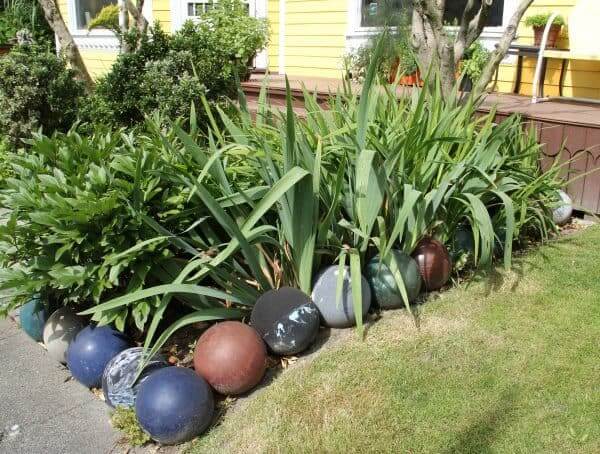
For a playful and colorful edge, old bowling balls make a striking border. Line them along a flower bed for a bold and unusual look. Their shiny surface reflects light, adding an unexpected touch of fun.
Choose different colors for variety or stick to a single tone for uniformity. To install, dig shallow holes so the balls stay half-buried and stable. This border is sure to catch the eye of every visitor.
#17 Border From Upcycled Bike Wheels
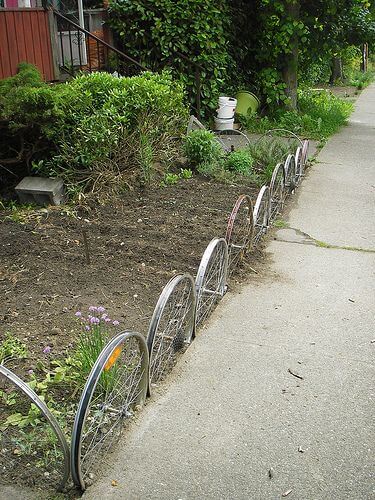
Old bike wheels can be transformed into quirky garden edging with a little imagination. Place the wheels upright in the soil to form a fence-like border. You can paint them in bright colors or leave the metal bare for an industrial look.
Plant climbing flowers nearby so they weave through the spokes over time. This design adds height and creativity to your flower beds. It’s a clever way to reuse materials while showcasing personality.
#18 Mulch Border
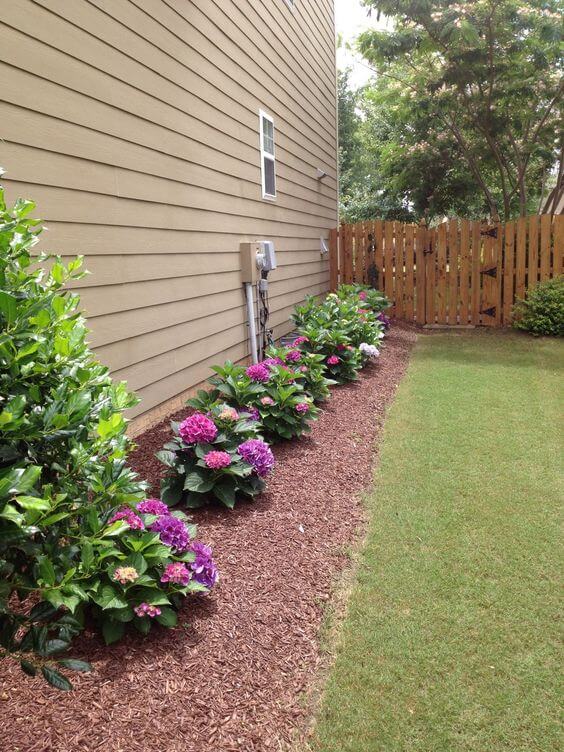
Mulch isn’t just for covering soil; it can also be used as a soft border. A thick line of mulch around your flower beds creates definition while improving soil moisture. Choose bark chips or shredded wood for a natural appearance.
Refresh the mulch regularly to maintain its color and effectiveness. This idea is easy to apply and budget-friendly. It keeps your garden tidy while benefiting your plants at the same time.
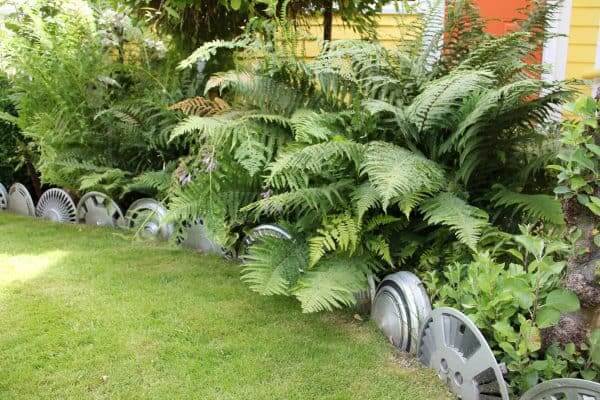
#19 Collected Hubcaps Made Into Edging
Mulch isn’t just for covering soil; it can also be used as a soft border. A thick line of mulch around your flower beds creates definition while improving soil moisture. Choose bark chips or shredded wood for a natural appearance.
Refresh the mulch regularly to maintain its color and effectiveness. This idea is easy to apply and budget-friendly. It keeps your garden tidy while benefiting your plants at the same time.
#20 Herb Border
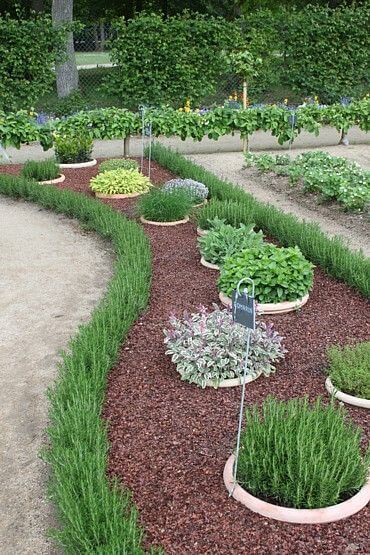
Herbs make a functional and fragrant border that doubles as a kitchen garden. Plant rosemary, lavender, or thyme along the edge of your flower bed. They create a natural frame while filling the air with wonderful scents.
Trim them regularly to maintain shape and encourage fresh growth. This living border also attracts pollinators, making your whole garden healthier. It’s a practical and beautiful way to combine gardening with cooking.