
Some plants are happy to grow on their own, but others need a little boost to stay strong and reach their full potential. A good garden support not only helps your flowers and veggies grow tall and healthy, but it also adds beauty and charm to your space.
Whether you’re training vines, keeping heavy fruits off the ground, or simply making your garden look more interesting, there’s a smart and creative solution here for you.
These 17 clever DIY garden supports are perfect for gardeners who like to mix function with a little flair. You’ll find everything from rustic wood frames to recycled ladders, wine bottles, and even old chandeliers.
Each one is simple to build and full of personality. Scroll through and get inspired to give your plants the sturdy, stylish support they deserve!
#1 Arbor Garden Trellis
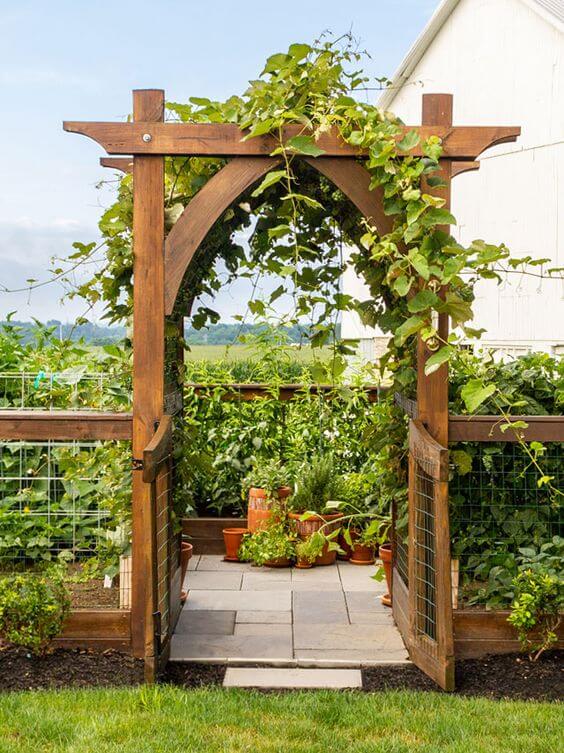
This wooden arbor instantly brings structure and charm to your garden while giving climbing plants a sturdy frame to grow on.
As the vines fill in, it creates a natural, leafy archway that feels like a secret entrance into your own green oasis. It’s perfect for grapes, clematis, or climbing roses that love to stretch upward.
To build something similar, use treated lumber for outdoor durability and anchor the posts firmly into the ground. Add wire mesh between the posts for extra support if your plants need more to grab onto.
Over time, your arbor will turn into a beautiful, living gateway that welcomes you in every time you step outside.
#2 Bottle Tree Trellis
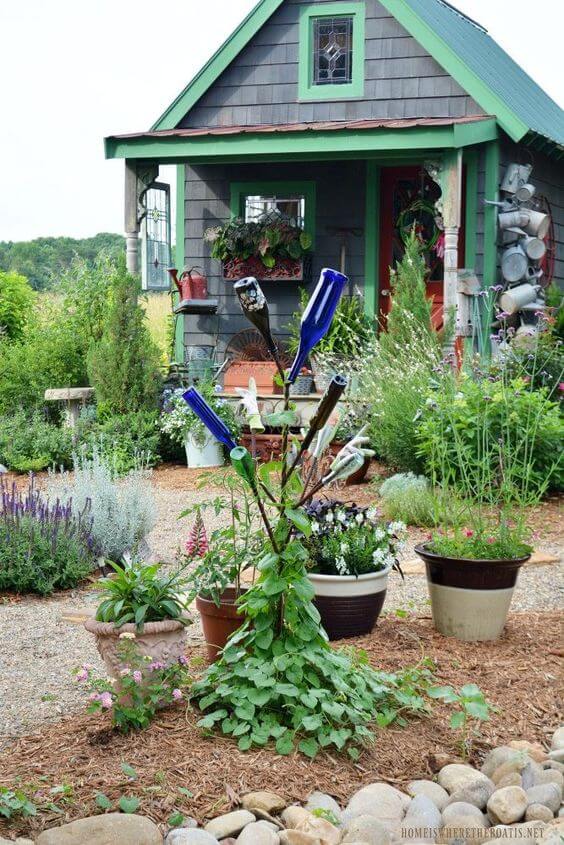
This creative trellis adds color and personality to your garden while giving your vines a place to climb. By repurposing old wine bottles and sturdy metal rods or rebar, you get a support system that doubles as garden art.
The glass catches the sunlight beautifully, creating sparkling accents among your flowers and foliage. To make one, anchor metal rods into the ground and angle them outward slightly.
Slide bottles onto the ends securely and plant a climber like sweet peas or morning glories at the base. It’s a playful and eye-catching way to recycle while helping your plants grow tall and strong.
#3 Branch Support
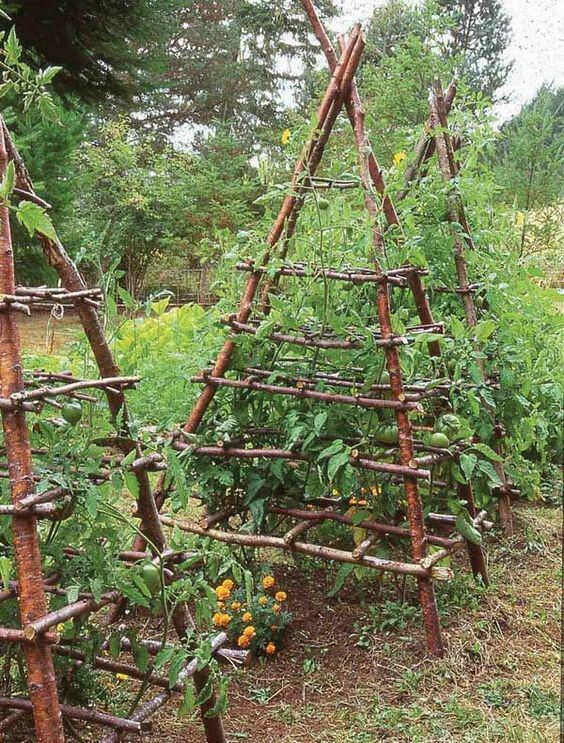
If you love a rustic, nature-inspired garden, this trellis made from branches fits in perfectly. It’s not only functional but also blends beautifully with the landscape, especially among vegetables like tomatoes or beans.
The A-frame shape provides a stable base, and the horizontal branches offer plenty of spots for vines to latch onto. To build it, gather strong branches of similar thickness and tie them securely with twine or garden wire.
Position the frames over your planting rows and adjust as your plants grow. It’s simple, affordable, and gives your garden a charming, handmade touch.
#4 Iron Gate Trellis
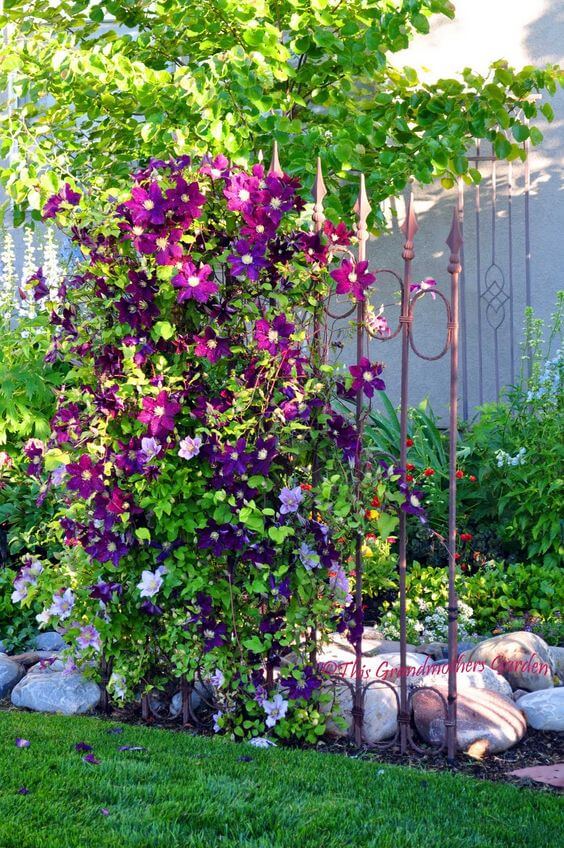
An old iron gate can be more than just garden décor; it makes a striking and sturdy trellis for flowering vines like clematis.
The vintage metalwork adds a romantic charm, and the tall structure gives your climbers plenty of room to spread and bloom. Over time, the plants weave through the bars, creating a living wall of color.
To use one, anchor it securely in the soil or against a fence. Train the vines upward by gently tying new growth with garden twine. It’s a creative way to give new life to something forgotten while giving your flowers a gorgeous place to thrive.
#5 Pergola Trellis
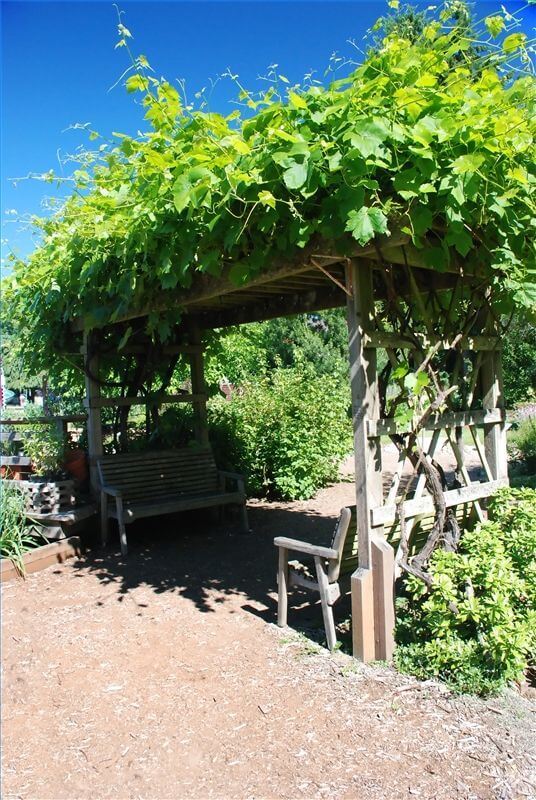
A pergola trellis adds both shade and beauty to your outdoor space, especially when it’s covered with lush grapevines or flowering plants.
It creates a peaceful spot to relax under a living canopy while giving your climbing plants plenty of vertical room to stretch. The wooden frame provides strong, lasting support and fits naturally into almost any garden style.
To build your own, use thick posts for stability and crossbeams to support the vines. Plant climbers like grapes, wisteria, or jasmine at each corner and guide them upward with soft ties.
Over time, your pergola will become a cool, leafy hideaway that feels like a secret garden retreat.
#6 Rope and Stick Trellis
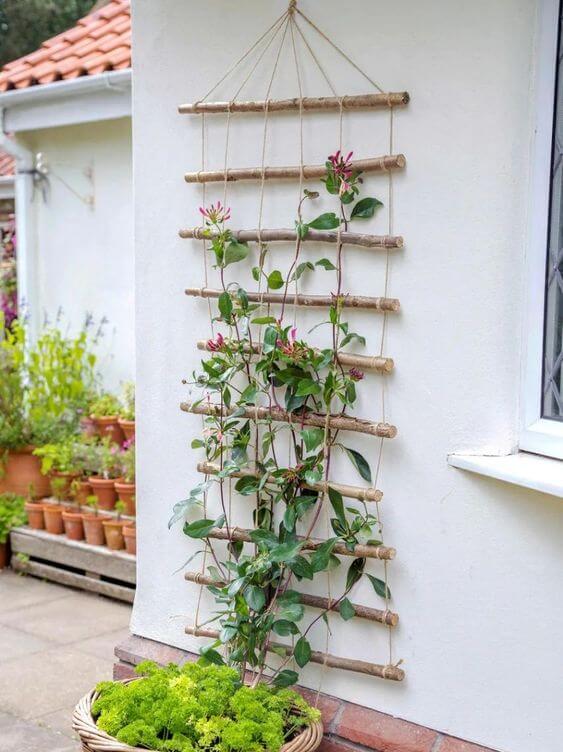
This rope and stick trellis is charmingly simple and perfect for small spaces or container gardens. It hangs neatly against a wall and gives your climbing plants just the right amount of structure to grow tall without taking over.
With its natural textures, it blends in beautifully with outdoor surroundings. To make one, gather thin branches or dowels and some sturdy rope. Tie the sticks horizontally and space them evenly, then anchor the top with a hook or nail.
It’s a lovely way to guide sweet peas, morning glories, or honeysuckle while adding a soft, rustic touch to your garden nook.
#7 Pallet Support
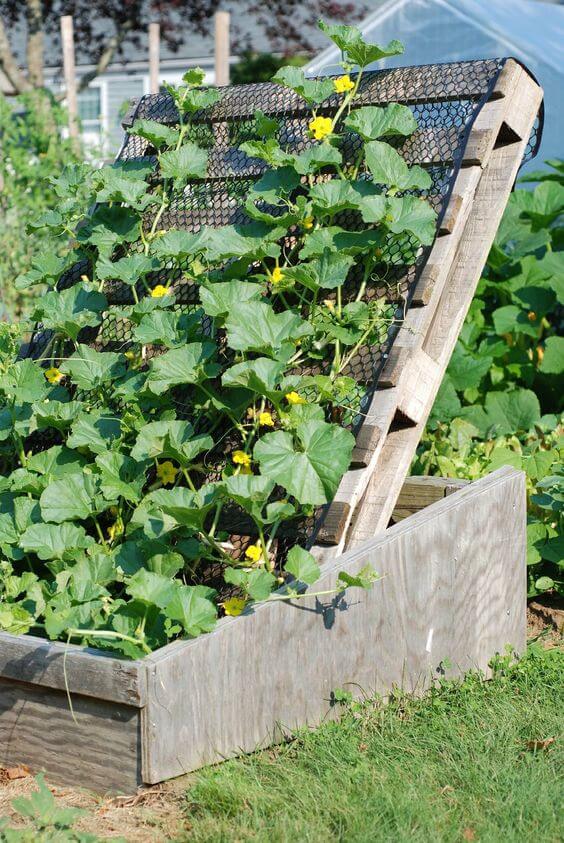
This angled pallet support is a smart, space-saving way to grow vine crops like cucumbers or melons. It keeps your plants off the ground, helping with air circulation and sun exposure while making harvesting a whole lot easier.
The frame lifts your vines gently upward, preventing rot and keeping your garden tidy. To build one, lean a pallet against a wooden raised bed and staple on some garden netting or chicken wire for extra grip.
Anchor it well so it holds steady through wind and rain. It’s a super practical setup if you’re short on space but big on fresh harvests.
#8 Ladder Support
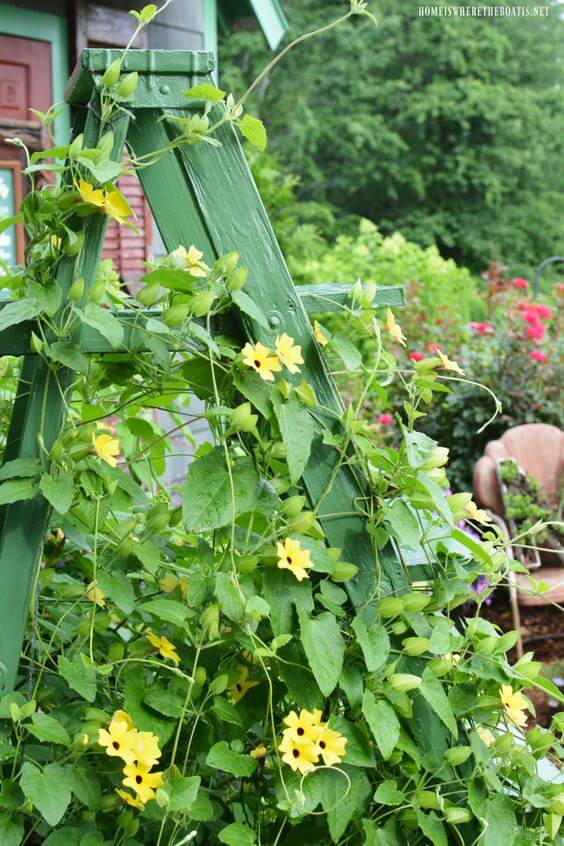
This repurposed ladder trellis adds charm and character while giving your climbing flowers or vines the perfect place to stretch.
The step rungs work like built-in supports, making it easy for tendrils to grab on and grow upward. A fresh coat of paint helps it pop against all that green.
To try this idea, open up a wooden step ladder and position it near your flowering vine or trailing plant. You can even tuck a small pot on a step to mix things up. It’s a lovely way to turn something old into something wildly beautiful.
#9 Mattress Springs Trellis
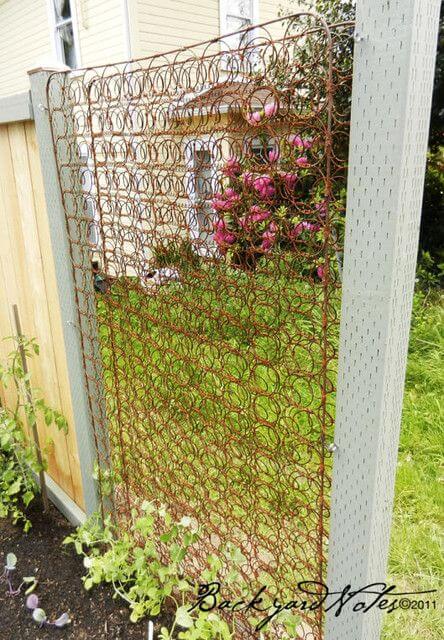
If you’ve got an old mattress headed for the dump, here’s a creative twist: turn the metal springs into a vertical trellis. The tightly coiled loops offer plenty of grip for climbing plants like peas, morning glories, or beans.
Plus, that rustic, rusty look adds vintage charm to your garden bed. To make it work, simply remove the fabric and padding to expose the metal core, then attach the frame securely between posts or to a fence.
You’ll want to anchor it well so it holds steady as your plants grow tall. It’s an easy, upcycled solution that keeps your garden fun and functional.
#10 Coat Rack Trellis
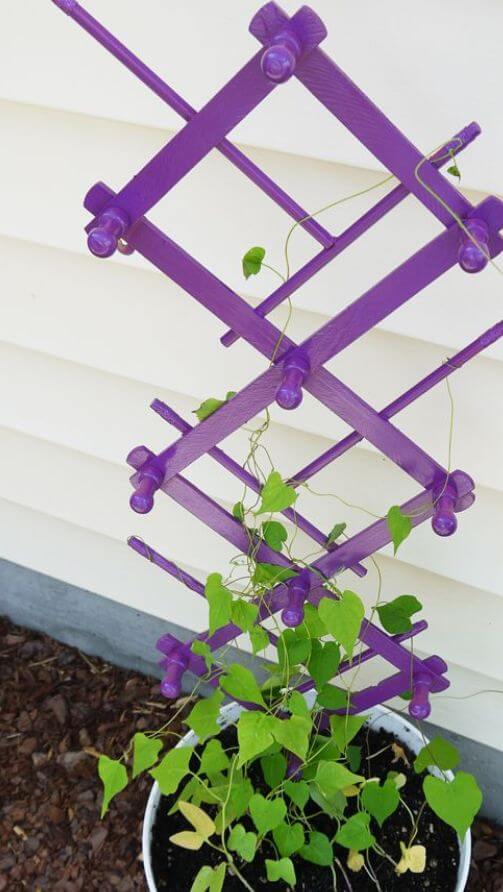 Source: Gertrude West
Who knew an old accordion-style coat rack could make such a quirky plant support? Its expandable form is just right for guiding delicate vines like sweet peas or morning glories.
Plus, painting it a bold color like this cheerful purple instantly brightens up a patio or balcony. To use it, stretch the rack to your desired width and mount it on a wall or fence.
Make sure it’s secured tightly so it can handle the weight of growing greenery. This one’s perfect if you’re working with limited space and want something playful yet practical.
#11 Chandelier Trellis
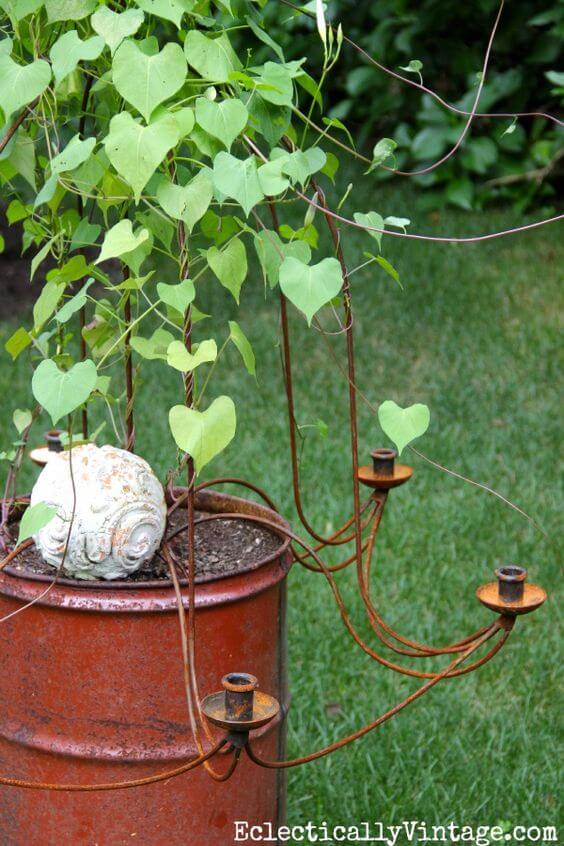
If you love turning the unexpected into garden charm, this chandelier trellis is such a creative twist. The curving arms of the old fixture give vines something whimsical to climb, while adding a vintage, sculptural touch.
As your plants grow, they wrap around the frame like living artwork. To recreate this, simply remove the wiring and hang or stake the chandelier into a large pot or garden bed.
Give it a quick coat of weatherproof spray paint to help it last longer outside. This is a fun, artistic option for anyone who enjoys upcycling with personality.
#12 Bike Wheel Dome Trellis
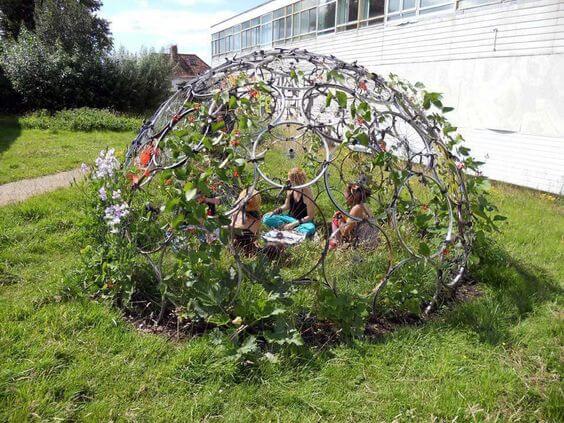
This creative dome made from old bike wheels is a brilliant blend of garden art and plant support. The circular frames connect to form a greenhouse-like shape, offering sturdy spots for climbing vines to spread and bloom.
Once the plants fill in, it becomes a magical little hideaway that feels like a living sculpture. You can weld or tie the wheels together with strong wire to shape the dome.
Place it in a sunny patch of grass and plant climbers like morning glories, sweet peas, or even beans at the base. It’s not just a trellis, it’s a playful garden nook perfect for relaxing or gathering.
#13 Netting Plant Support
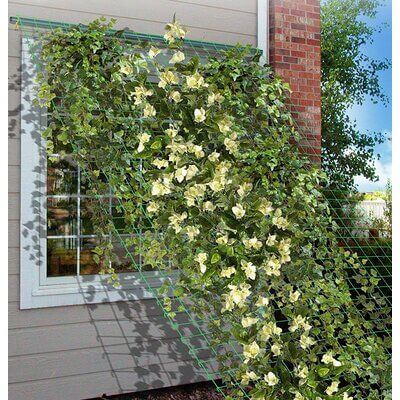
This simple netting setup is one of the easiest ways to give climbing plants the lift they need. Draped from the wall at a slant, it turns a blank exterior into a vertical garden bursting with blooms.
The open weave gives tendrils plenty of room to cling and stretch, creating a full, lush display. All you need is a strong garden net, a few hooks, and a sturdy frame or anchor points along your wall and base.
Fasten the top near a window or under an eave, then stretch it diagonally to the ground. It’s lightweight, space-saving, and perfect for morning glories, peas, or sweet potato vines.
#14 Trellis From Old Crib Sides
 Source: Ktr Ross
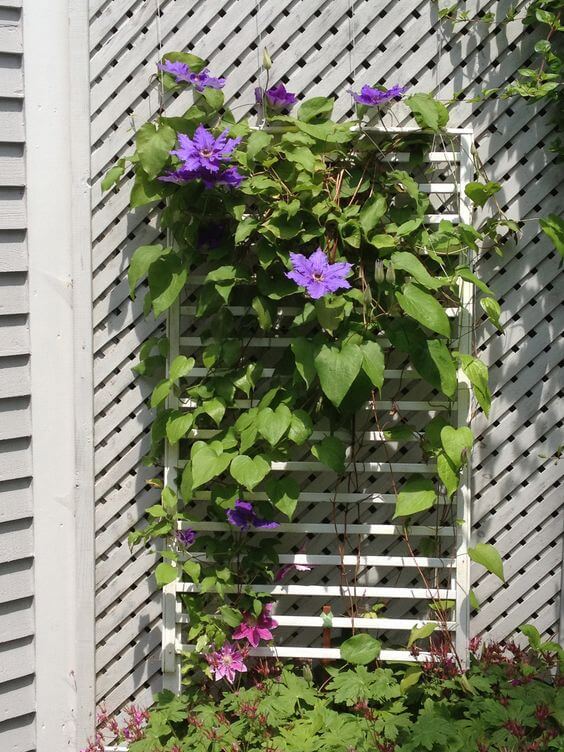
If you’ve got an old crib collecting dust, here’s a clever way to give it new life. A crib side turned vertical becomes a charming trellis that blends beautifully into any garden corner.
The slats are spaced just right for vines like clematis to climb and weave through. You can paint it to match your fence or leave it with a weathered finish for a rustic touch.
Simply mount it on a wall or hang it from hooks and let your favorite flowering vines take over. It’s budget-friendly, practical, and a sweet nod to upcycling with purpose.
#15 Wooden Garden Gate Trellis
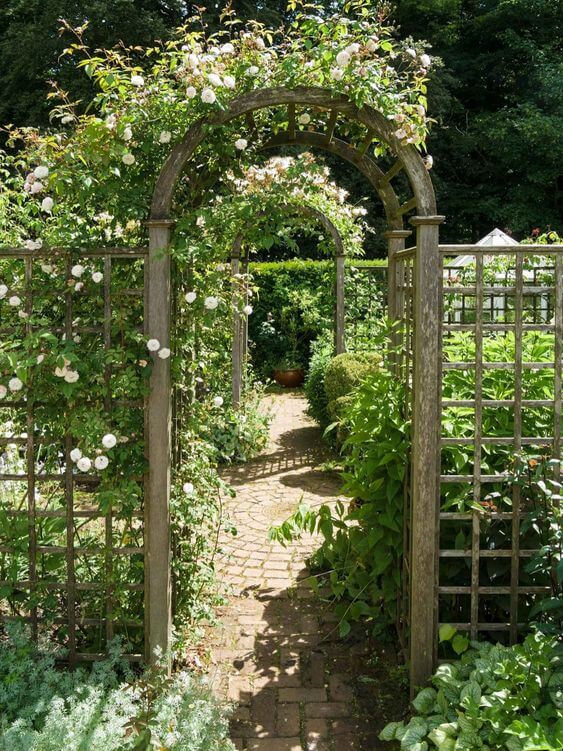
This classic wooden garden gate trellis brings charm and structure to your landscape. It guides the eye and the path while giving climbing roses or clematis plenty of room to show off.
The arched top adds a romantic, old-world feel that’s perfect for cottage-style gardens. To build one, use lattice panels and sturdy vertical supports, then anchor it into the soil or pathway.
Plant your climbers at the base and train them along the sides and over the arch. It’s a timeless addition that transforms any garden into a dreamy escape.
#16 Support From Garden Fence
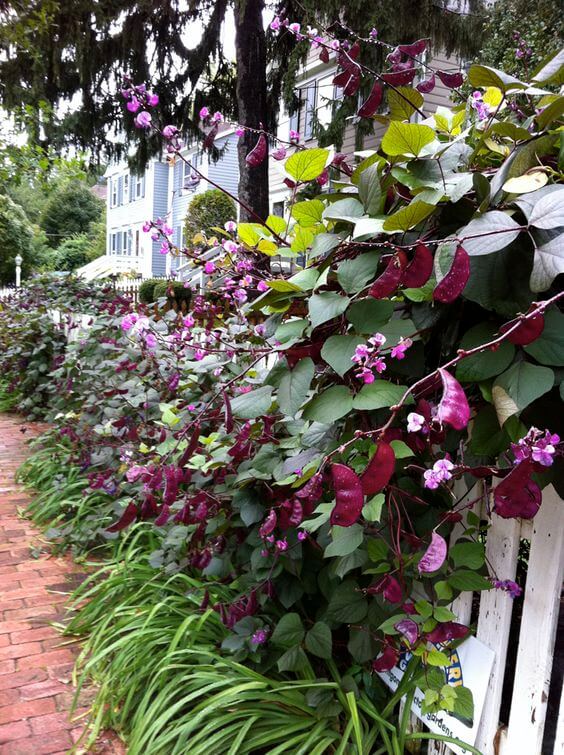
Let your garden fence do double duty by transforming it into a stunning backdrop for trailing vines. This idea is perfect for vibrant climbers like hyacinth bean or morning glory that thrive when they can stretch wide and tall.
The result is a lush living wall that adds both privacy and personality to your outdoor space. To try it, secure soft garden ties or twine to guide the stems along the fence slats. Give your vines a good start with rich soil and consistent watering.
Before you know it, you’ll have a colorful display that turns an ordinary fence into a blooming feature.