
Beneficial flowers for your vegetable garden do more than add color; they help your crops thrive. Companion planting with flowers is a simple way to improve soil fertility, attract pollinators, and naturally deter pests without relying on chemicals.
By adding the right blooms, you can create a thriving garden where vegetables and flowers work together.
Many of these plants not only repel harmful insects but also invite beneficial species like bees, butterflies, and lacewings that boost harvests. Plus, they bring charm and fragrance to your garden beds.
Here are 10 of the best beneficial flowers you can plant alongside your vegetables to keep your garden healthy, vibrant, and productive all season long.
#1 Cosmos
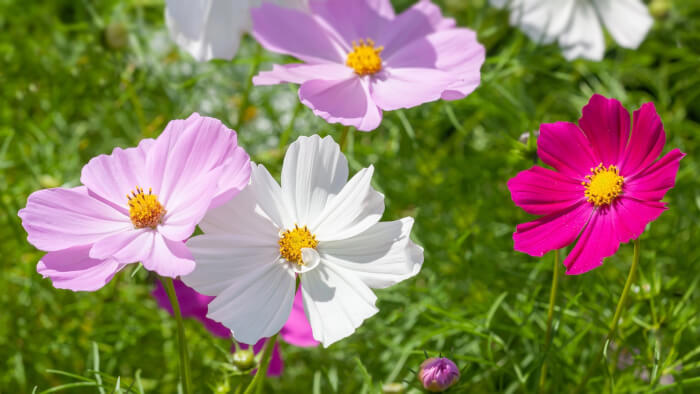
Cosmos add cheerful bursts of orange, yellow, or white to your vegetable beds while quietly working behind the scenes. These blooms attract green lacewings, insects that devour common pests like aphids and thrips.
You can sow seeds directly in spring, and they’ll germinate quickly in well-drained soil. Deadhead spent flowers to keep them blooming longer.
Plant cosmos around tomatoes or cucumbers, and you’ll notice fewer problems with sap-sucking insects. Their airy stems also make them an easy filler for cut flower arrangements.
#2 Marigold
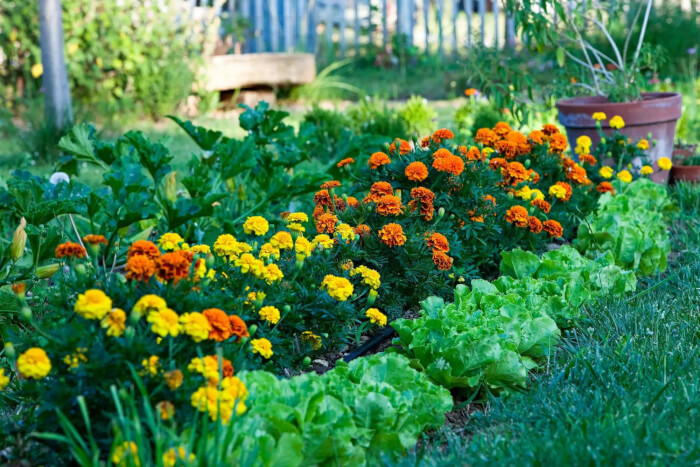
Marigolds are powerhouses in any vegetable patch, offering both beauty and protection. Their roots release compounds that suppress nematodes, and their flowers repel whiteflies, hornworms, and squash bugs.
Simply scatter marigold seedlings between your vegetable rows to form a natural defense line. They thrive in full sun with moderate watering.
Besides their pest-fighting role, their fiery blooms keep your beds cheerful all summer. Pair them with tomatoes or potatoes to see the best results.
#3 Sunflower
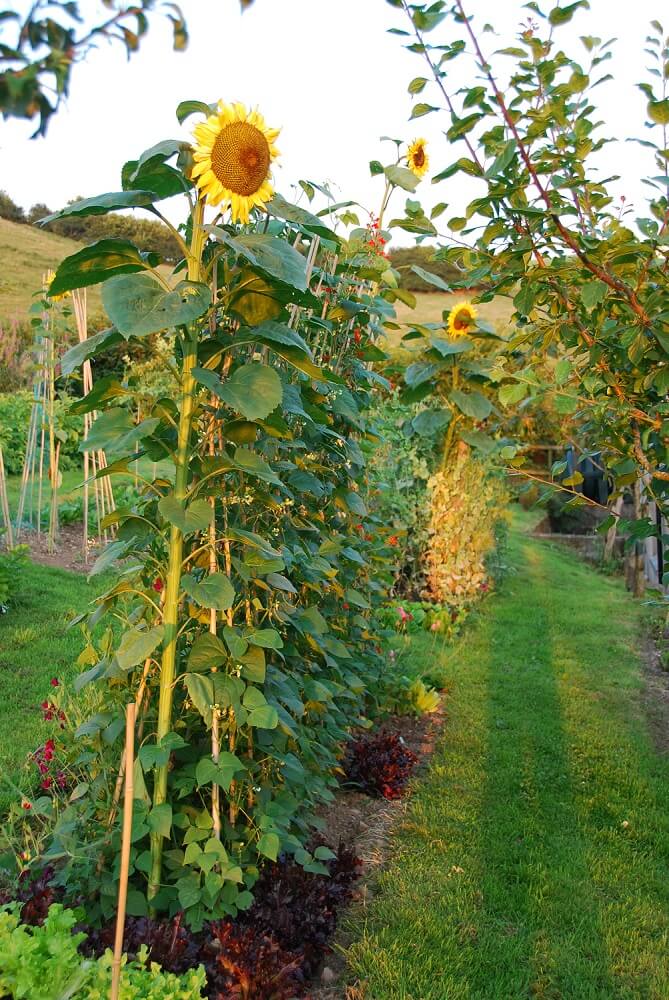
Sunflowers tower over the garden, offering shade, support, and pollinator appeal all in one. Bees flock to their nectar, while birds enjoy the seeds later in the season. You can use tall varieties as living trellises for climbing beans or cucumbers.
Sow them directly in the soil after frost for easy growth. Their strong scent even helps deter squirrels from raiding your garden. By mid-summer, their golden faces create a warm backdrop for leafy greens and squash.
#4 Pot Marigold
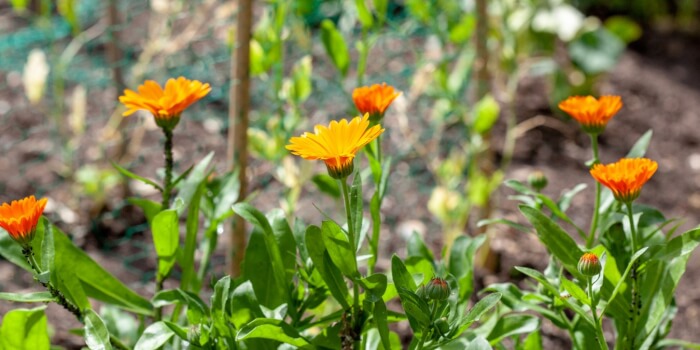
Often called calendula, pot marigold is both ornamental and functional in a vegetable garden. The bright orange and yellow blooms repel asparagus beetles and tomato hornworms, making them a smart companion for tomatoes and carrots.
Their petals are also edible, adding color to salads and teas. Start them from seed in spring, and they’ll reward you with blooms until frost. These hardy flowers self-seed easily, ensuring you’ll have them year after year.
#5 Sweet Pea
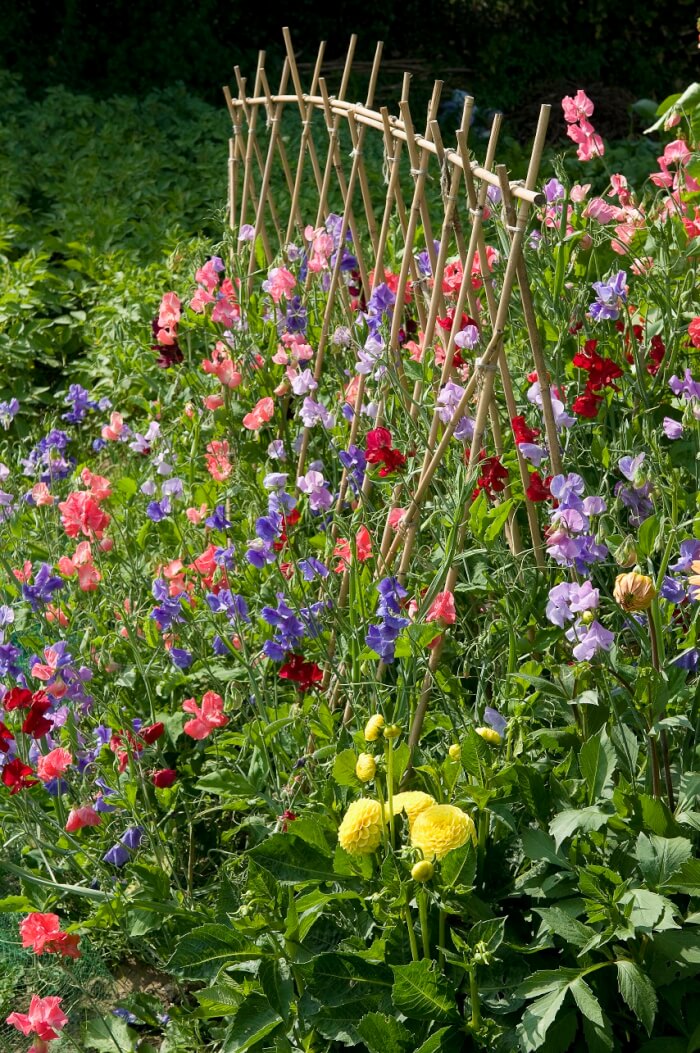
Sweet peas bring a delicate fragrance and vibrant blooms that brighten vegetable beds. Their climbing habit makes them useful along fences or trellises near beans, carrots, and celery.
Bees and butterflies are irresistibly drawn to the flowers, helping with pollination across your garden. Keep in mind that the seeds are toxic, so handle them carefully if you have children or pets.
With regular watering and support, they’ll fill your garden with color and charm.
#6 Borage
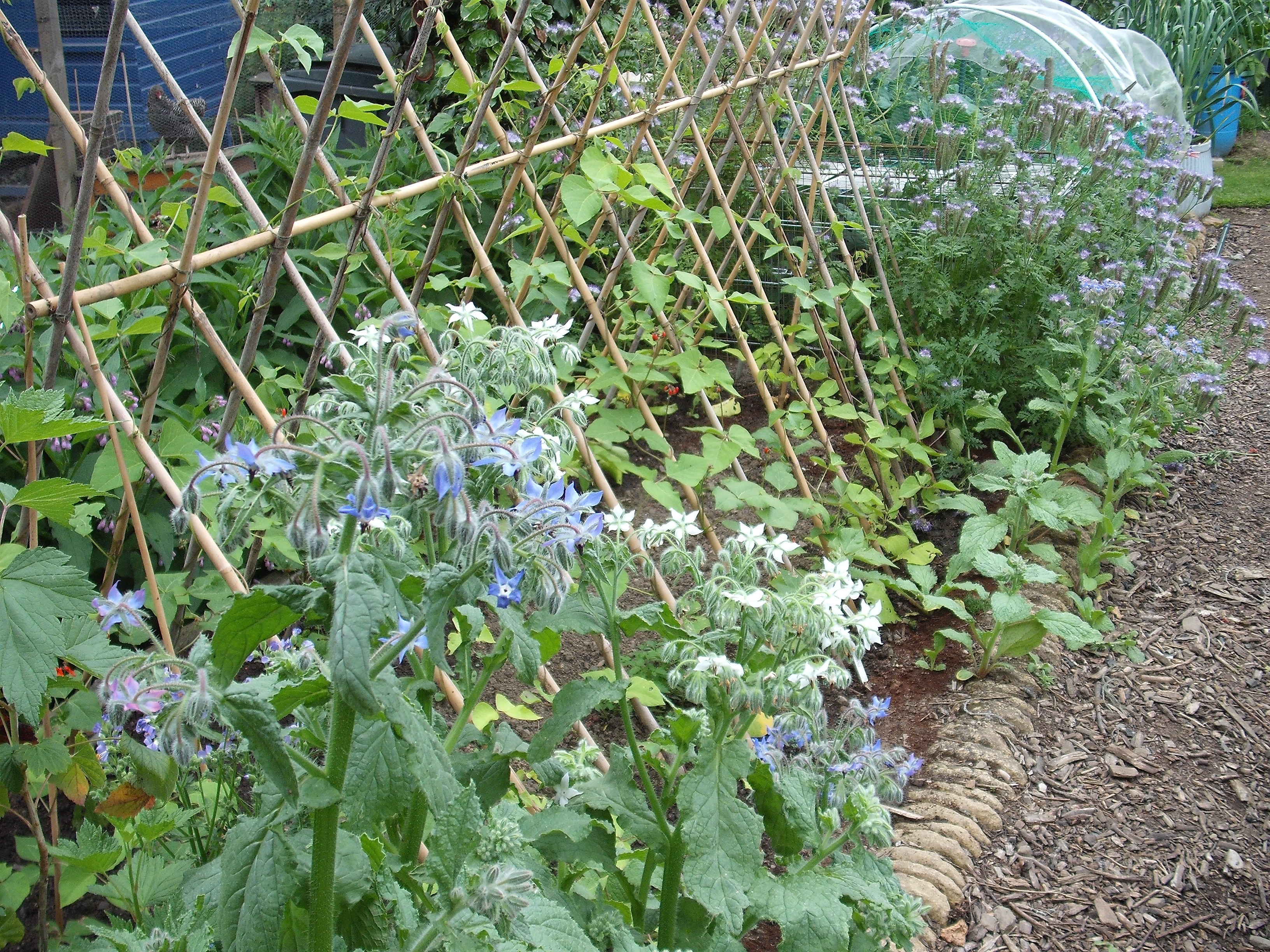
Borage is a gardener’s secret weapon thanks to its star-shaped blue blooms and cucumber-scented leaves. This plant attracts pollinators while discouraging tomato and cabbage worms.
Grow it near squash, strawberries, or tomatoes to improve yields. The leaves and flowers are edible, making a refreshing addition to salads or drinks.
It grows quickly from seed and needs little care beyond occasional watering. Once established, borage will reseed itself for seasons to come.
#7 Nasturtium
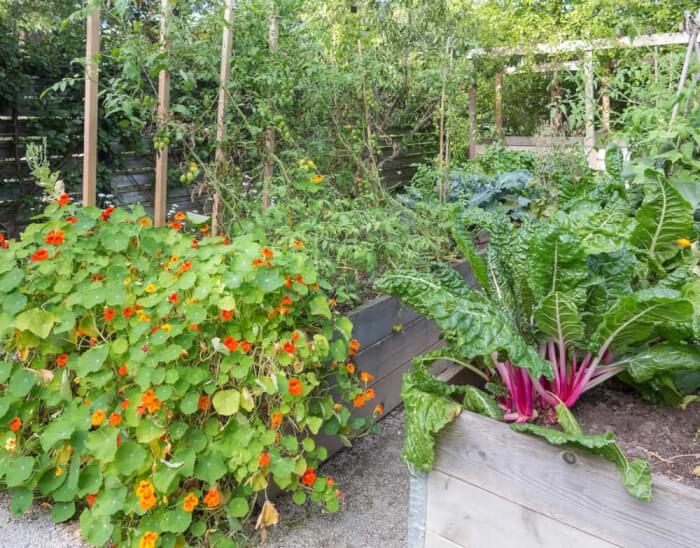
Nasturtiums are both ornamental and practical, spilling over beds with bright red, orange, or yellow flowers. They act as trap crops, luring aphids and beetles away from more vulnerable vegetables.
Their edible leaves and flowers add a peppery kick to salads. Sow them around cucumbers, broccoli, or pumpkins for natural pest control.
They thrive in poor soil, making them one of the easiest flowers to grow. Just give them full sun and watch them flourish.
#8 Zinnia
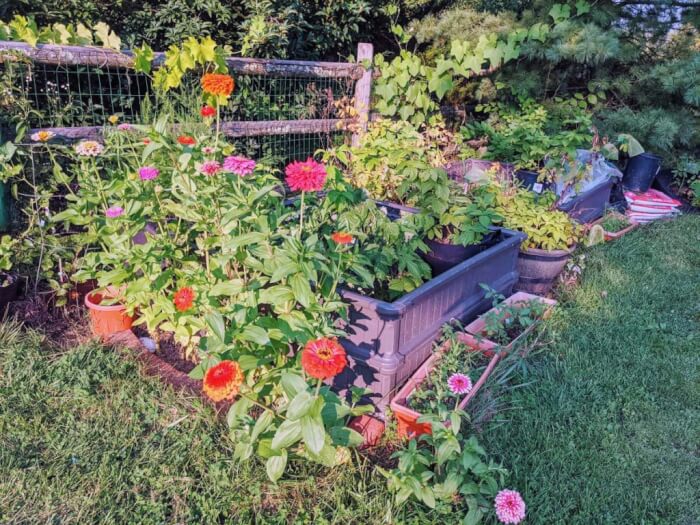
Zinnias bloom boldly with pink, red, orange, and purple flowers that attract hummingbirds and bees. These pollinators will ensure better yields for beans, tomatoes, and potatoes.
Zinnias are heat-tolerant and thrive in sunny spots, even in dry conditions. Sow seeds directly into the garden for a quick burst of color.
Deadhead faded blooms to extend the flowering season. Their long stems also make them perfect for cut flower arrangements to brighten your home.
#9 Lavender
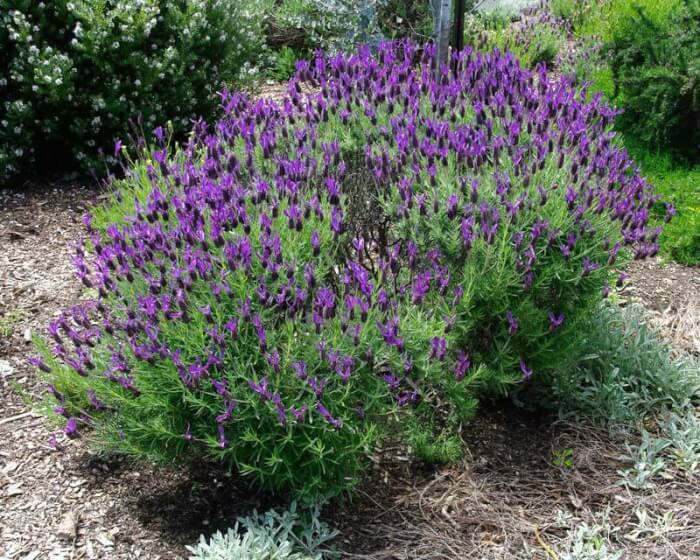
Lavender offers more than fragrance; it helps keep pests like moths, fleas, and even mice at bay. Plant it alongside herbs, cabbage, or cauliflower to create a natural defense barrier.
The silvery-green foliage and purple blooms also bring structure and beauty to your vegetable beds. Lavender prefers full sun and well-drained soil, so avoid overwatering.
Harvest the flowers to make sachets, teas, or even infused oils. Its soothing aroma makes time in the garden more enjoyable.
#10 Clover

Clover enriches the soil while supporting your vegetables with natural nitrogen. As a ground cover, it prevents weeds and maintains soil moisture. Its small flowers attract bees, which help pollinate nearby crops.
Clover grows easily between cabbage, broccoli, and cauliflower, where it improves soil fertility. You can sow it directly or mix seeds into your lawn for a lush, green carpet. Once it’s established, clover requires little care but provides big benefits.