
You’re dreaming of a peaceful backyard retreat, but the feeling of being watched by neighbors is a constant buzzkill. DIY garden privacy screens are your perfect solution, offering an affordable way to carve out a secluded sanctuary right in your own yard.
They’re more than just a barrier; they’re an opportunity to inject style and personality into your outdoor living space.
Forget spending a fortune on pre-made panels; with a little resourcefulness, you can craft a beautiful and functional screen that promises the privacy you deserve. Get ready to transform your garden into a serene, secret haven that’s entirely your own.
#1 A Living Screen
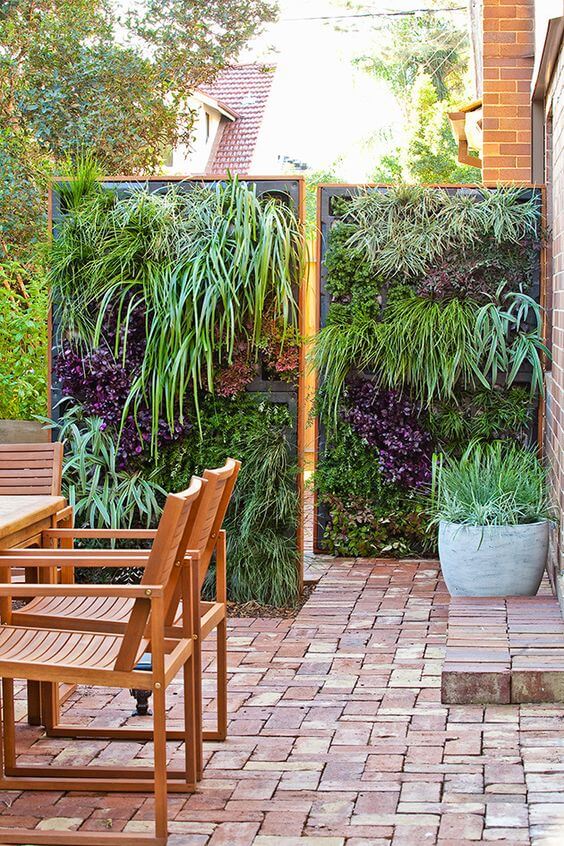
Imagine stepping into your garden and being greeted by these lush, vibrant living screens! They offer incredible privacy and bring an explosion of natural beauty to your outdoor dining area.
Each panel is a vertical garden, bursting with various plants that create a soft, organic barrier. You can choose a mix of trailing greens and colorful foliage for dynamic texture.
To create your own, simply attach planters to a sturdy wooden or metal frame. Remember to select plants suitable for vertical growing and your local climate.
#2 Garden Outdoor Privacy Screen Bamboo Screening Idea
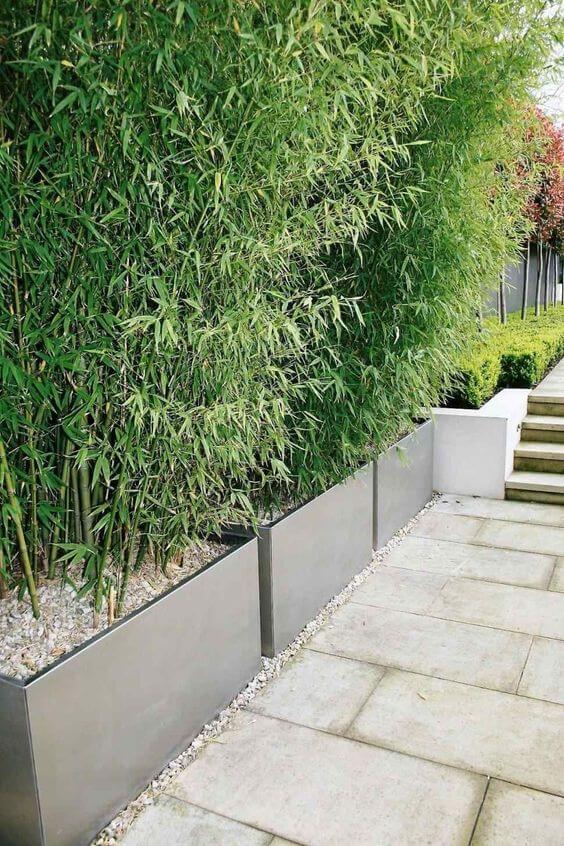
Create a sleek, modern boundary with a row of beautiful bamboo in contemporary planters. This design is perfect for adding a natural yet refined touch to your patio or walkway.
The tall, slender bamboo offers excellent privacy and a gentle rustling sound on breezy days.
You will need long, narrow planters that match your outdoor aesthetic. Choose a clumping bamboo variety to keep it contained and easy to manage. Make sure your planters have good drainage to keep your bamboo healthy and thriving.
#3 Living Privacy Screen By Growing Flowers
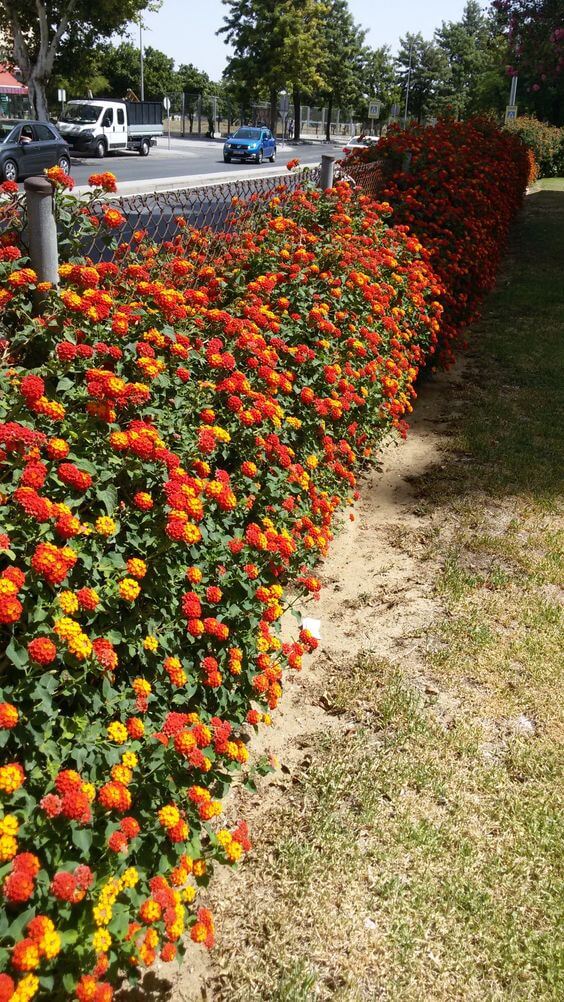
You can transform a simple chain-link fence into a breathtaking wall of color with vigorous blooming plants. This living privacy screen is a stunning, high-impact way to block unwanted views.
The abundant orange and yellow flowers cascade over the fence, creating a dense, textural boundary. Find a fast-growing, mounding shrub or vine that loves to flower in your area.
Periodically trim the plants back to encourage fullness and more blooms. With the right selection, you will have a vibrant, flowering screen all season long.
#4 Growing Bush
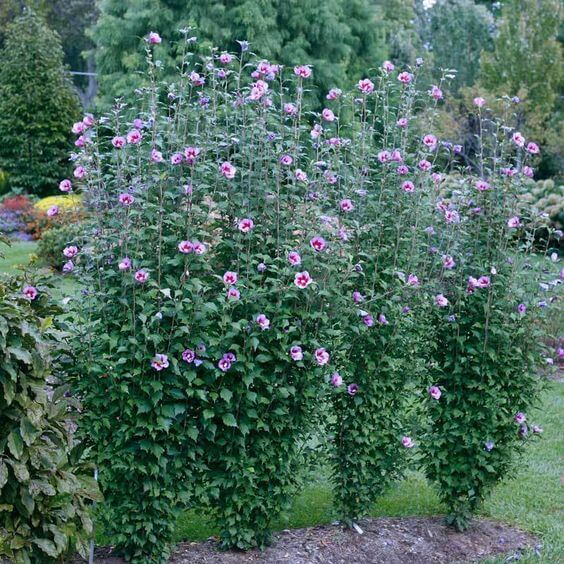
Opting for tall, dense shrubs is a classic and beautiful way to create a natural privacy screen in your yard. These flowering bushes provide continuous privacy from the ground up with their thick foliage and height.
They’re a wonderful, soft alternative to a solid fence and introduce a romantic feel with the delicate blooms. Choose a columnar variety that grows upright, like Rose of Sharon, to maximize your vertical coverage without taking up too much ground space.
You can encourage a dense screen by pruning the tops regularly when the plants are young. Be sure to select a shrub species that is known for being fast-growing in your region.
#5 A Wood Design and Growing Bamboo
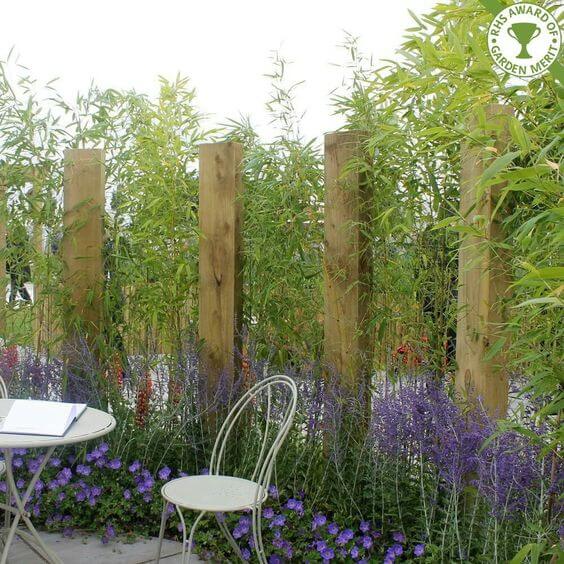
Combine the warmth of natural wood posts with the airy grace of growing bamboo for a stunning, semi-transparent privacy screen. The vertical wooden beams introduce architectural interest and stability to your garden design.
The bamboo creates a light, textured, and living barrier that gently sways in the breeze. Be sure to use pressure-treated or weather-resistant wood for your posts to ensure longevity.
Plant a clumping bamboo variety to prevent it from spreading aggressively throughout your garden. Place your posts and bamboo strategically to define your seating area while maintaining a connection to nature.
#6 A Fabric Screen
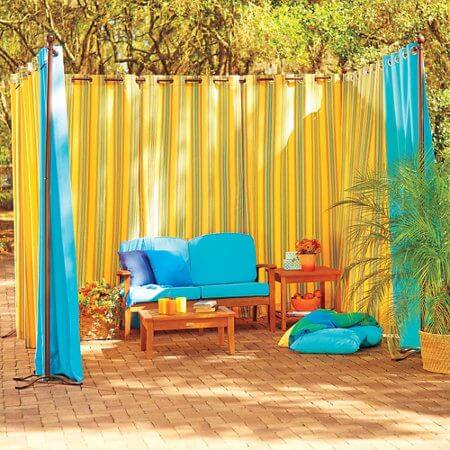
For an instant, flexible, and colorful privacy solution, you should consider a fabric screen or outdoor curtains. This option offers maximum versatility, allowing you to quickly enclose your seating area when you want solitude and open it up when you don’t.
The vibrant yellow and turquoise stripes bring a fun, resort-like feel to your patio. Simply hang durable, weather-resistant curtains from a sturdy wire or tension rod supported by vertical posts.
Choose a heavy outdoor fabric to ensure it withstands the elements and provides adequate visual blockage. You can easily switch out the colors and patterns to refresh your space each season.
#7 Upcycled Screen Made From Old Bottles
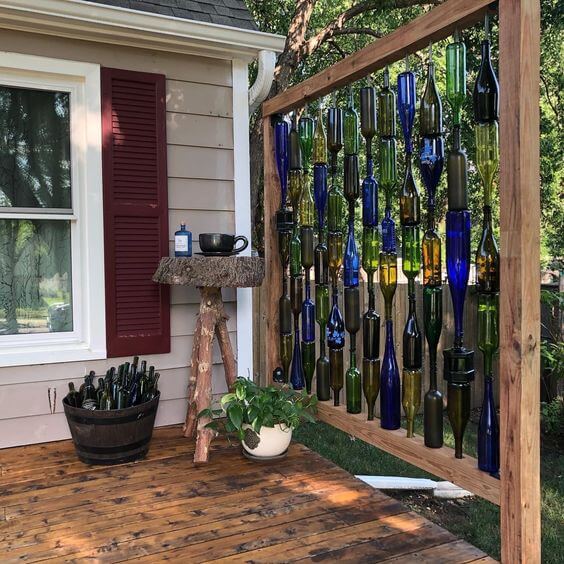
Here is an incredibly creative and artistic way to achieve privacy by creating an upcycled screen from colorful glass bottles. This unique design allows light to filter through, casting beautiful colored shadows onto your deck or patio.
The varying shades of blue, green, and brown glass bottles create a stunning mosaic effect. You will need to build a sturdy wooden frame and then drill holes through the centers of the bottles.
Thread the bottles onto metal rods or heavy wire and suspend them within the frame. This project is a fantastic statement piece that’s sure to spark conversation.
#8 Grow A Large Flower Shrub
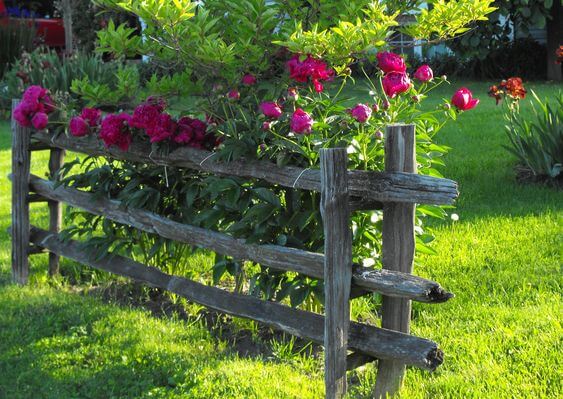
A clever way to achieve natural privacy is by using a low, rustic fence as a beautiful frame for a large, dense shrub. The combination of the weathered wood and the lush foliage provides an enchanting, cottage-garden feel.
A sturdy fence gives the plant structure and prevents it from flopping over onto the lawn. You should choose a vigorous, mounding shrub like Peony or Lilac that offers good, dense coverage.
Plant your shrub close to the fence so the branches can intertwine with the rails as it grows. This layered approach creates an effective, visually appealing barrier without feeling imposing.
#9 A Blooming Screen
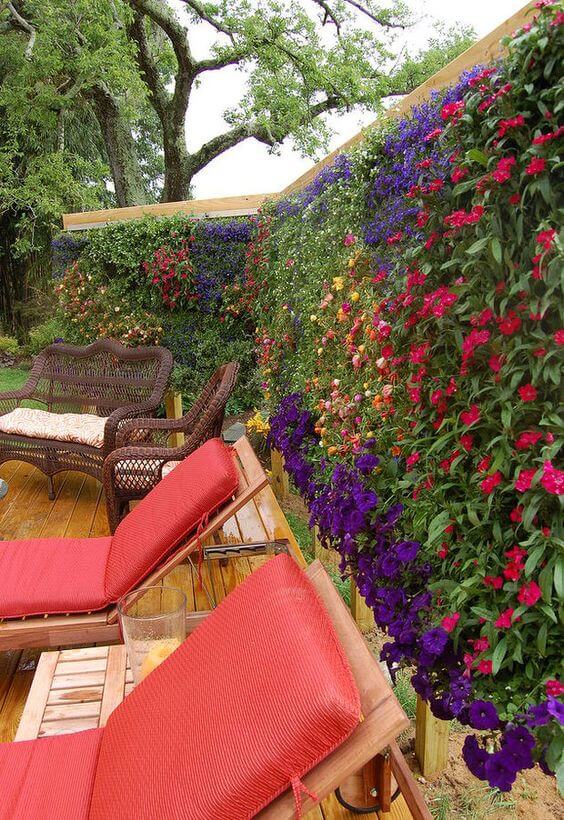
Create a truly magical, secret garden atmosphere with a towering blooming screen packed with vibrant color. This design uses vertical garden panels or a trellis system to support an abundance of flowering annuals and trailing plants.
The mix of reds, pinks, purples, and yellows provides a breathtaking, dense wall of privacy that completely transforms your deck. You can install a simple wood frame against an existing fence or wall to act as your support structure.
Plant a variety of cascading and climbing flowers in containers along the base to encourage full, dramatic coverage. Regular watering and feeding will keep your beautiful, flowery barrier looking spectacular all season long.
#10 A Grid Screen And Plant Vines Up It
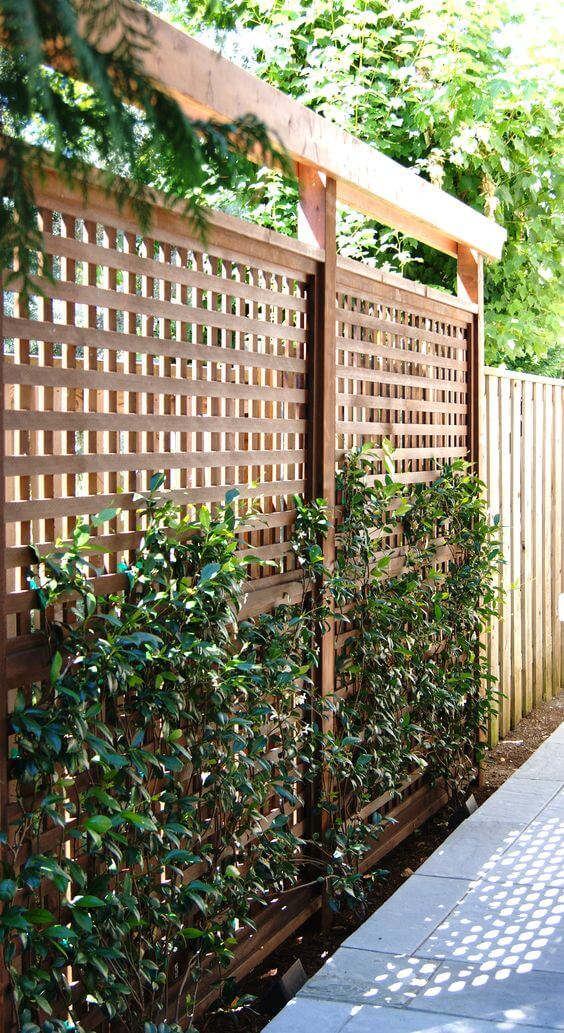
This gorgeous grid screen offers immediate, partial privacy while serving as an ideal vertical support for climbing plants. The handsome lattice panels are framed with sturdy wood posts and a top beam, giving the structure a finished, high-end look.
The small, young shrubs you see planted at the base will soon grow up the trellis, offering complete, layered privacy. Install a simple wooden lattice screen along your property line for an affordable foundation.
Choose a vigorous, non-invasive climbing vine, like a Clematis or Climbing Rose, to cover the screen over time. Guide the initial growth of the plant onto the grid to encourage even coverage.
#11 A Raised Wooden Planter Box
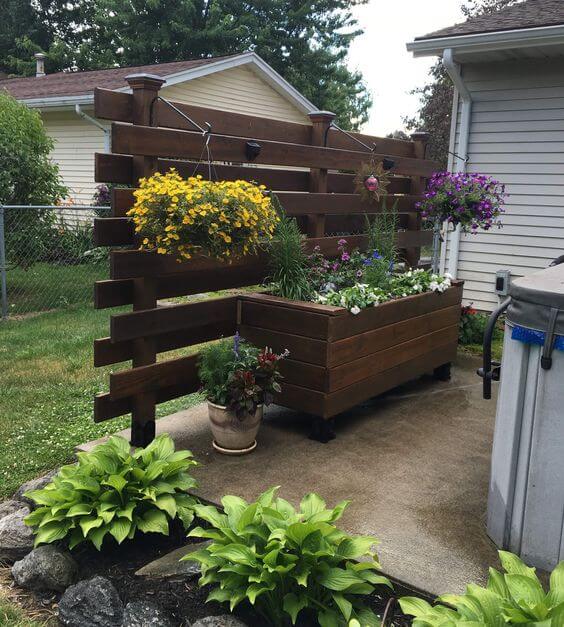
This clever design combines a functional raised wooden planter box with an eye-catching slatted screen for layered privacy. The large planter provides plenty of space for flowers, herbs, or small shrubs, adding a beautiful pop of color to your patio.
The slatted wood screen is built right into the back of the box, offering stylish, immediate visual blockage. Construct the planter box first using treated lumber or cedar, ensuring you add drainage holes in the bottom.
Then, build the angled screen section by attaching staggered horizontal boards to sturdy vertical posts. You can further enhance the look by hanging colorful baskets of trailing flowers from the top of the screen.
#12 A Functional Vertical Garden
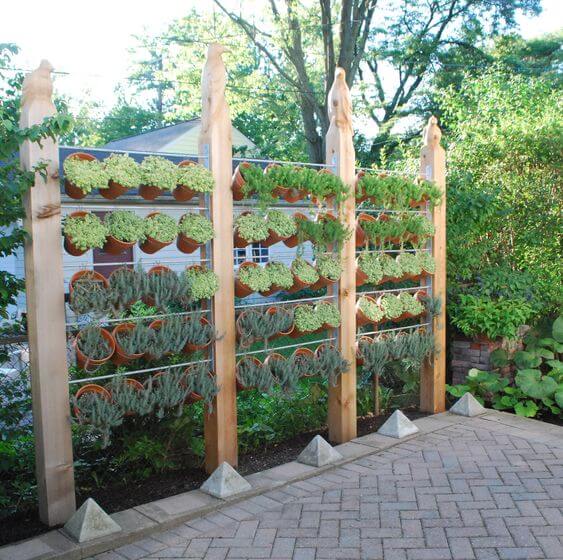
Turn your need for privacy into a productive and decorative feature with this functional vertical garden screen. The design uses sturdy wooden posts and horizontal metal rods to suspend rows of terracotta pots, creating a dense, textured wall of plants.
This unique approach is excellent for growing herbs, succulents, or shallow-rooted flowers while blocking neighbors’ views. You’ll want to use strong, weather-resistant materials for the frame to support the weight of the pots and soil.
Secure the posts firmly into the ground or heavy concrete bases for stability. Arrange your plants by size and color to create an appealing visual pattern.
#13 Woven Willow Screen
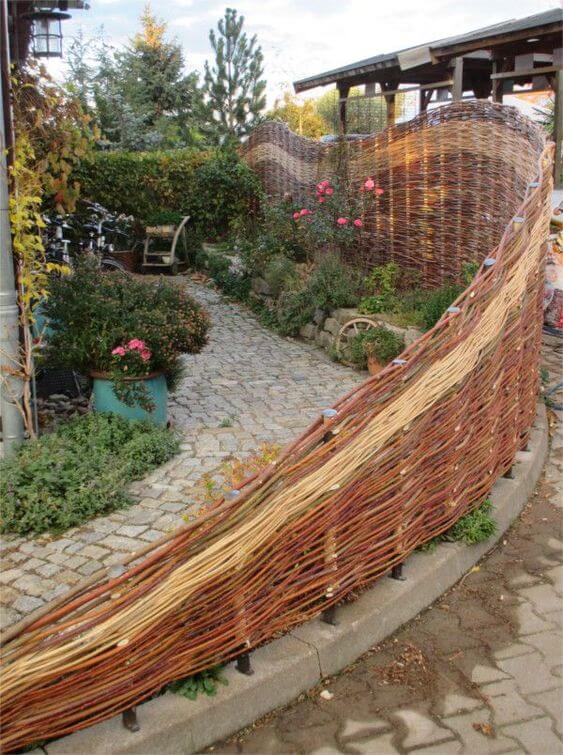
Embrace a rustic, organic look with a beautifully woven willow screen that follows the contours of your garden path. The natural material and varied brown and tan tones give this boundary a charming, handcrafted quality.
It provides a dense, sturdy screen that looks beautiful from both sides. This type of screen is often made using live willow whips, which is a surprisingly meditative and satisfying DIY project.
You will need to pound vertical wooden stakes into the ground to act as your main supports. Then, simply weave the flexible willow branches horizontally between the stakes to build up the fence. This unique privacy solution adds texture and old-world charm to your outdoor space.
#14 DIY Privacy Screen Planter Box
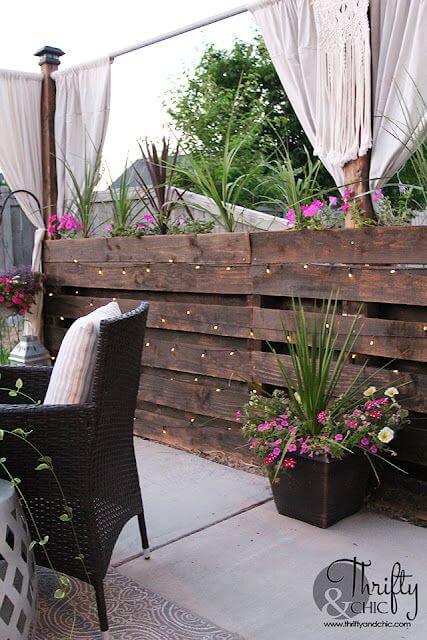
This beautiful design combines two rustic DIY privacy screen planter boxes to create a cozy, layered boundary for a patio seating area. The distressed wood gives the screens a rich, inviting look that adds texture and warmth to your outdoor space.
Plants inside the boxes offer a soft, natural barrier above the wood, while the sheer curtains provide a final touch of elegant, adjustable privacy. Build simple rectangular boxes using reclaimed wood or stained fence boards for an inexpensive option.
Place the boxes end-to-end to form a continuous screen and plant a mix of tall grasses and trailing flowers inside. Draping string lights over the wood adds a charming, magical glow for evening relaxation.
#15 An Old Brick Fence
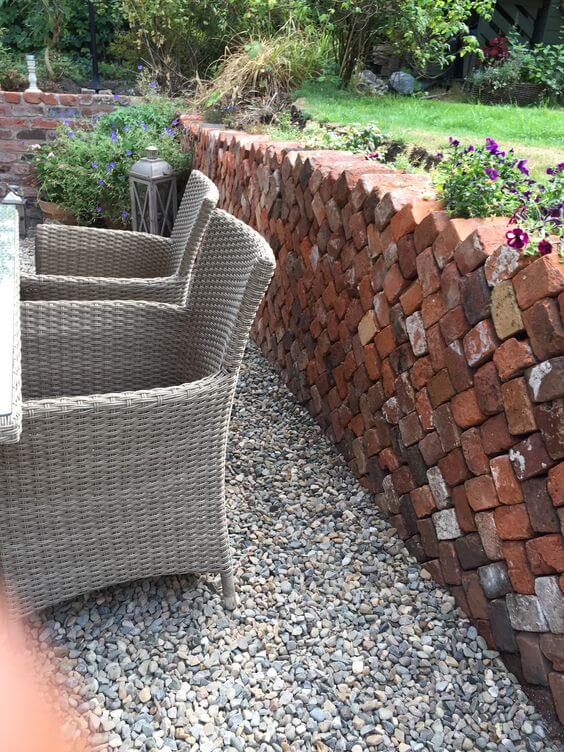
You can create an incredibly unique and rustic boundary by stacking old bricks on their corners to form a textured, low wall. This pattern creates a captivating zig-zag effect, giving the wall an artistic flair that’s far more interesting than a typical brick structure.
The rough, reclaimed bricks introduce warm color and historic character to your patio area. This screen provides great visual privacy while still allowing air to circulate through the small gaps.
To build it, you will need to start with a level foundation and secure the bottom row of bricks with mortar. Then, you can stack the remaining bricks at an angle, letting their corners support one another for a dry-stack appearance.
#16 A Gabion Design Using Wood Slices
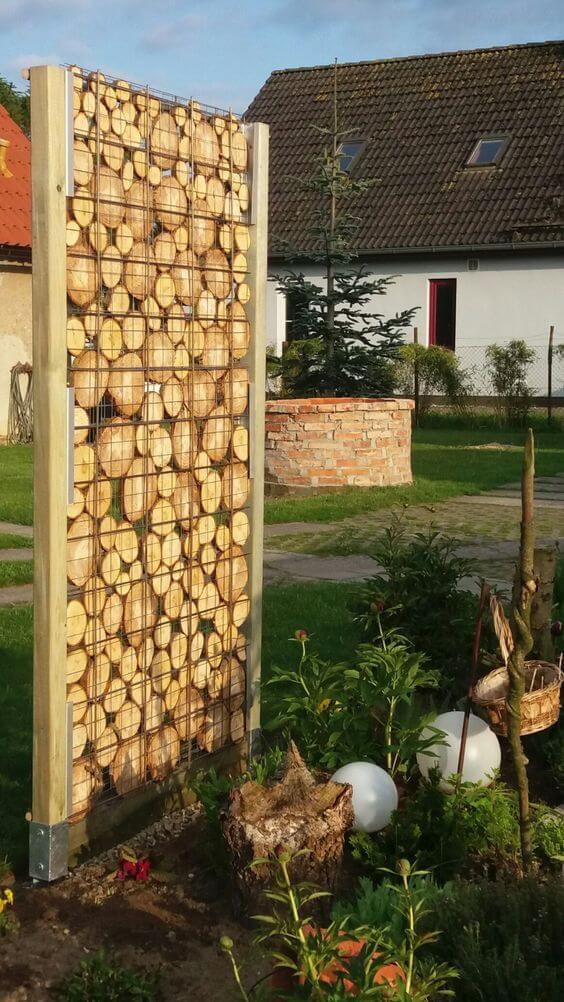
Here is a brilliant twist on the traditional gabion, creating a striking privacy screen by filling the wire cage with neatly cut wood slices. The light wood rounds introduce a warm, natural texture that is both modern and rustic.
This design is incredibly sturdy and provides excellent visual blockage while allowing light to filter through the gaps. You will need a simple frame made of posts and metal mesh or wire panels, securely fastened together.
Collect or purchase many uniform wood slices to fill the entire cage completely. You should treat the wood with a protective sealant to preserve its natural color and resist rot.
#17 A Rustic Screen
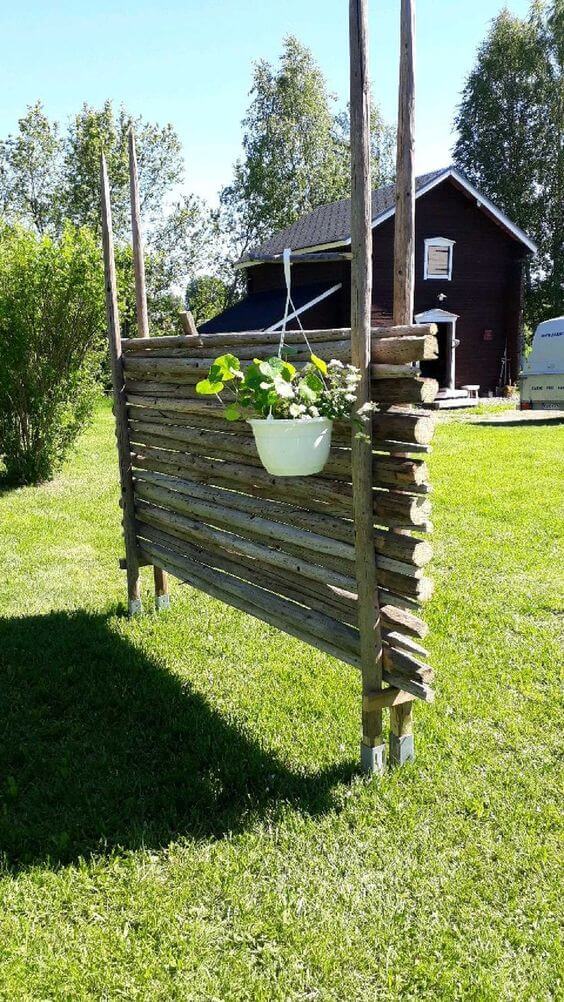
Achieve a charming, simple look with this deeply rustic screen made from horizontally stacked pieces of reclaimed wood or small branches. The uneven edges and varied thickness of the wood give the screen wonderful texture and an authentic, natural aesthetic.
It provides a solid barrier for privacy while introducing a cozy, cabin-in-the-woods feel to your backyard. You should secure two or more sturdy vertical posts in the ground, perhaps with metal anchors to prevent rot.
Simply stack the horizontal wood pieces between the posts, alternating the alignment as you go to create a tight fit. You can personalize your screen by adding a simple hook for a hanging basket of plants.
#18 Gabion Design
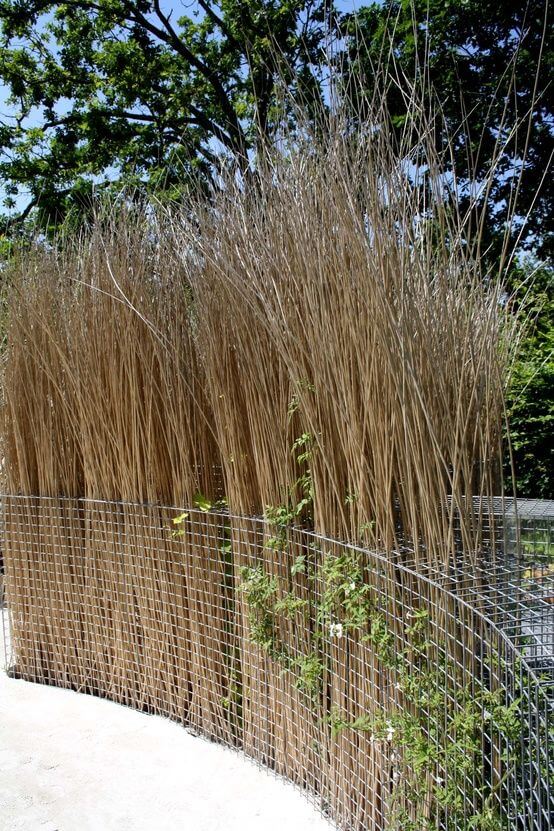
This unique take on the gabion design uses a wire cage to hold hundreds of natural, vertical reeds or tall sticks, creating a dramatic, textural screen.
The dry, light-colored stalks are bundled together, offering a tall, dense barrier that is entirely natural and very effective for privacy. The bottom section uses a tighter-mesh wire, giving the screen a modern, structured base.
You should purchase or bend durable wire mesh panels to create a sturdy enclosure or fence line. Then, tightly pack the vertical stalks inside the wire cage, ensuring they stand upright and offer maximum density. This design looks incredible with low-growing vines planted at the base to soften the metal.
#19 A Privacy Screen Planter
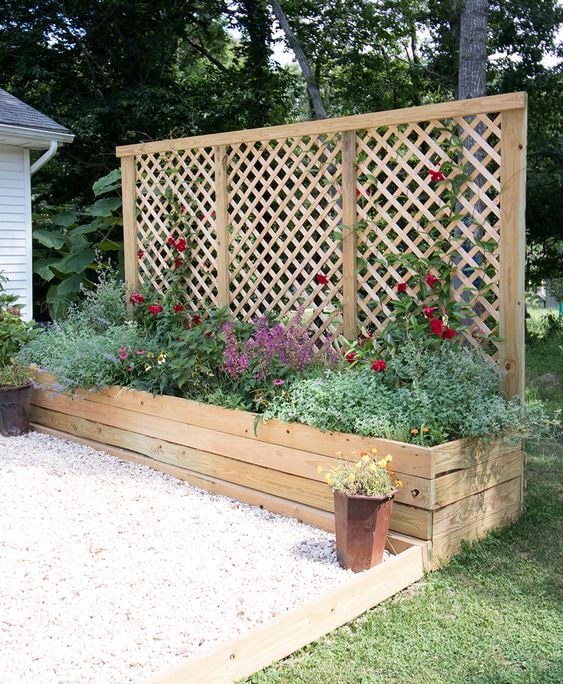
You can create a harmonious, multi-layered privacy solution with this fantastic combination of a raised planter box and lattice screen. The sturdy, natural wood construction feels light and airy, perfectly defining your outdoor space without feeling heavy.
The low-slung, tiered planter box provides deep space for a gorgeous mix of mounding flowers and creeping vines. As the roses and vines climb the tall lattice, they will quickly fill the gaps and provide excellent visual blockage.
Build the base planter box first using treated lumber, ensuring all sides are tightly screwed together. Secure the lattice panels to the back of the planter to create the vertical screen element. Plant a mix of blooming climbers to enjoy a beautiful, living wall.
#20 A Willow Fencing
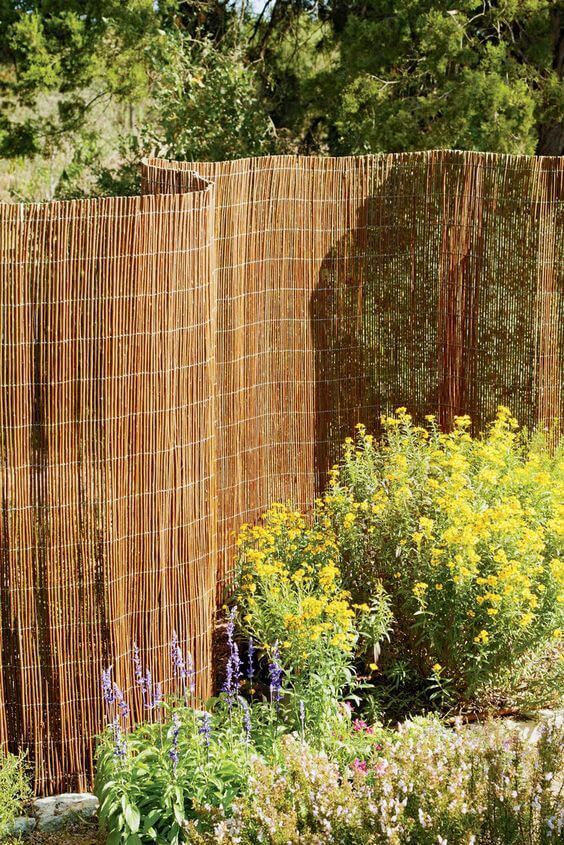
A rolled willow fence is one of the quickest and most affordable ways to achieve natural-looking privacy in your garden instantly.
The closely woven, slender branches create a textured, opaque barrier that blends beautifully with the surrounding landscape. The natural brown color introduces a warm, rustic backdrop for bright flowering shrubs and perennials.
To install this fence, simply unroll the panel and secure it to existing fence posts or metal stakes with garden wire. You can use multiple panels to create a continuous screen of any length. This simple solution completely blocks neighboring views while still allowing a gentle breeze to pass through.