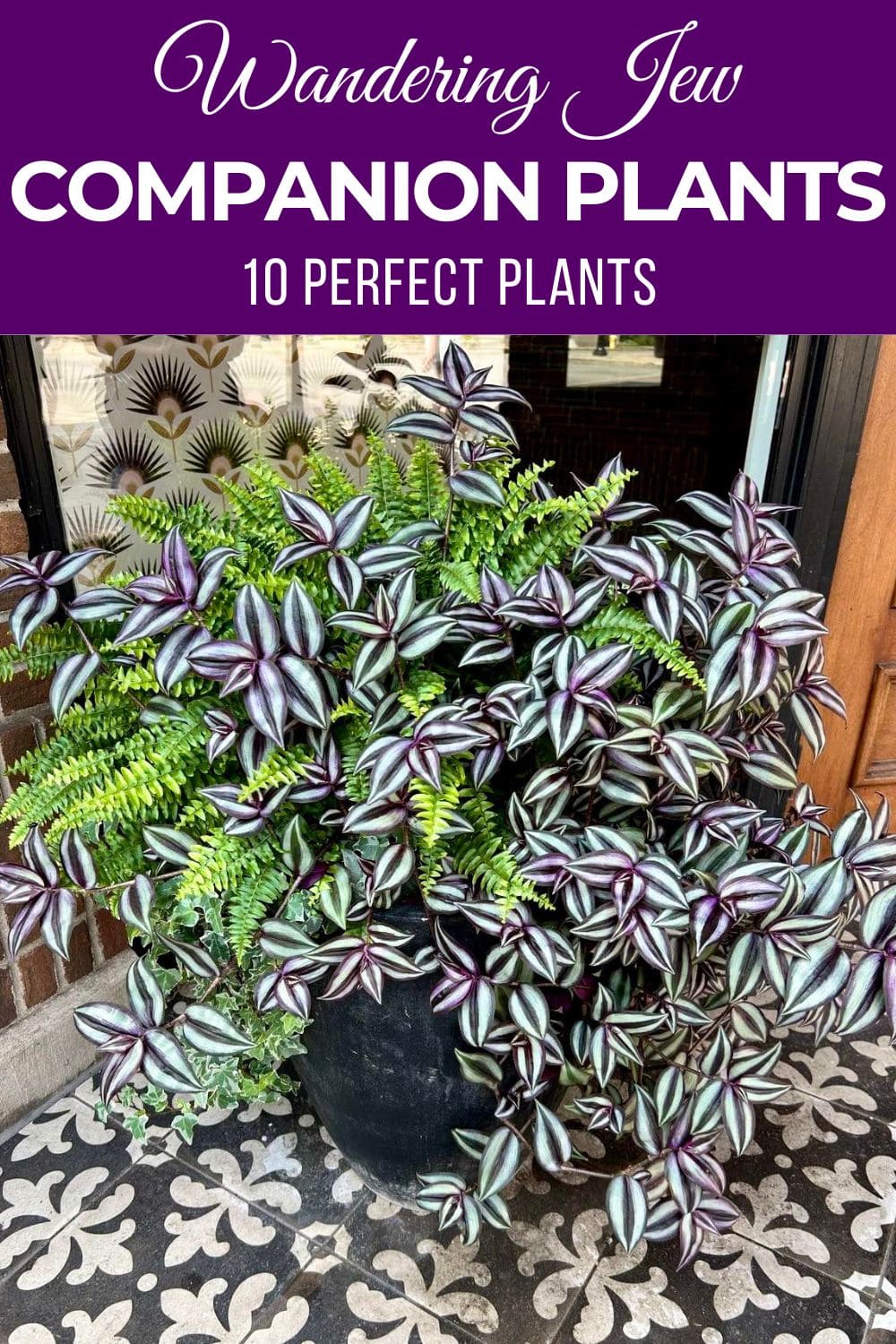
Wandering Jew, with its striking purple-striped foliage and fast-growing vines, is a favorite among indoor gardeners. But did you know it looks even better when paired with the right companion plants?
Choosing plants that share similar light and water needs not only makes care easier but also creates a lush, balanced display.
By mixing textures, colors, and growth habits, you can turn a simple corner into a vibrant plant sanctuary.
Here are 10 perfect companion plants that thrive alongside Wandering Jew and make your collection even more stunning.
1. Spider Plant (Chlorophytum comosum)
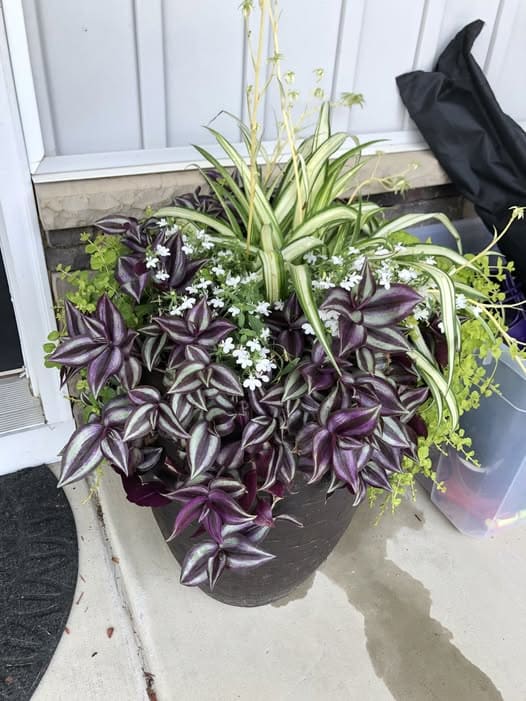
The spider plant is a classic houseplant that pairs beautifully with wandering jew. Both plants thrive in bright, indirect light and share a love for moderate watering.
Spider plants add a playful touch with their cascading green-and-white striped leaves, which look stunning next to the purple stripes of Tradescantia.
As spider plants produce little offshoots, they can spill gracefully alongside wandering jew vines, creating a layered, full display. Plus, spider plants are air purifiers, making them not only attractive but also beneficial for healthier indoor air.
2. Pothos (Epipremnum aureum)
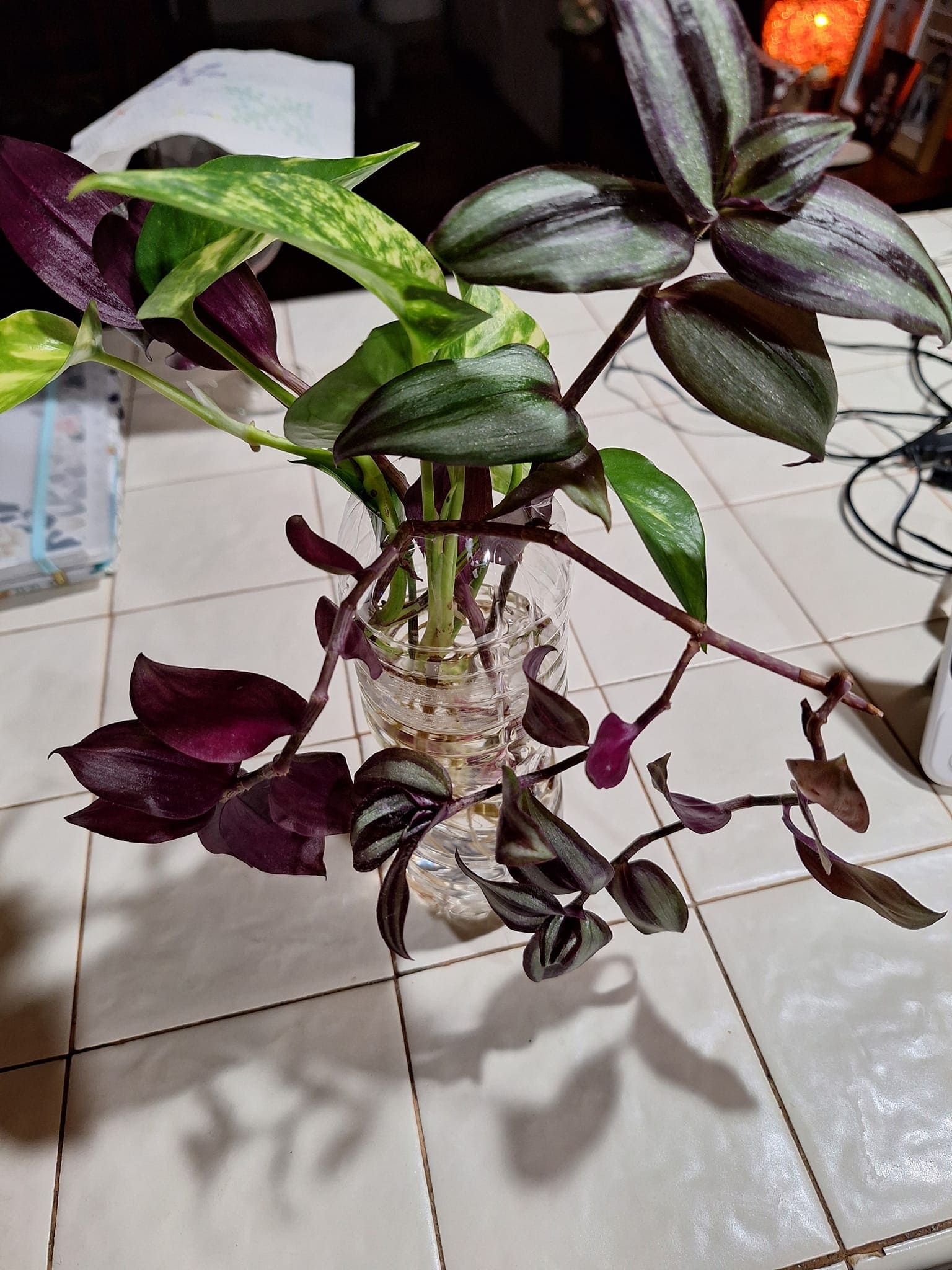
Pothos is one of the easiest houseplants to grow and complements wandering jew perfectly. Both are trailing plants that thrive in similar conditions like bright, indirect light but tolerant of lower light, and occasional watering.
The green-and-gold marbled leaves of pothos contrast nicely with the purple stripes of Tradescantia, creating a vibrant display.
When grown together in a hanging basket, the two vines intermingle beautifully. Their low-maintenance care routines also make this pairing ideal for beginners who want a striking yet fuss-free combination indoors.
3. Philodendron (Heartleaf Type)
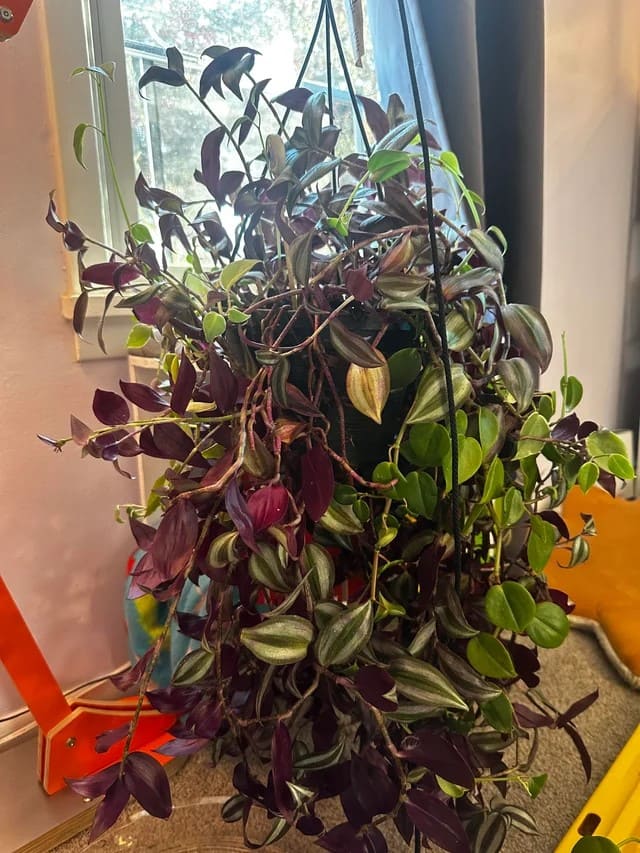
Heartleaf philodendron is another trailing plant that makes an excellent partner for wandering jew. With its glossy, heart-shaped green leaves, it adds a softer texture to the vibrant striped foliage of Tradescantia.
Both plants thrive in similar humidity and indirect light conditions, which means you won’t need to juggle different care routines.
The philodendron’s steady growth and resilience also complement the fast-growing nature of wandering jew, allowing you to enjoy a lush, cascading display that feels balanced and harmonious over time.
4. Coleus (Plectranthus scutellarioides)
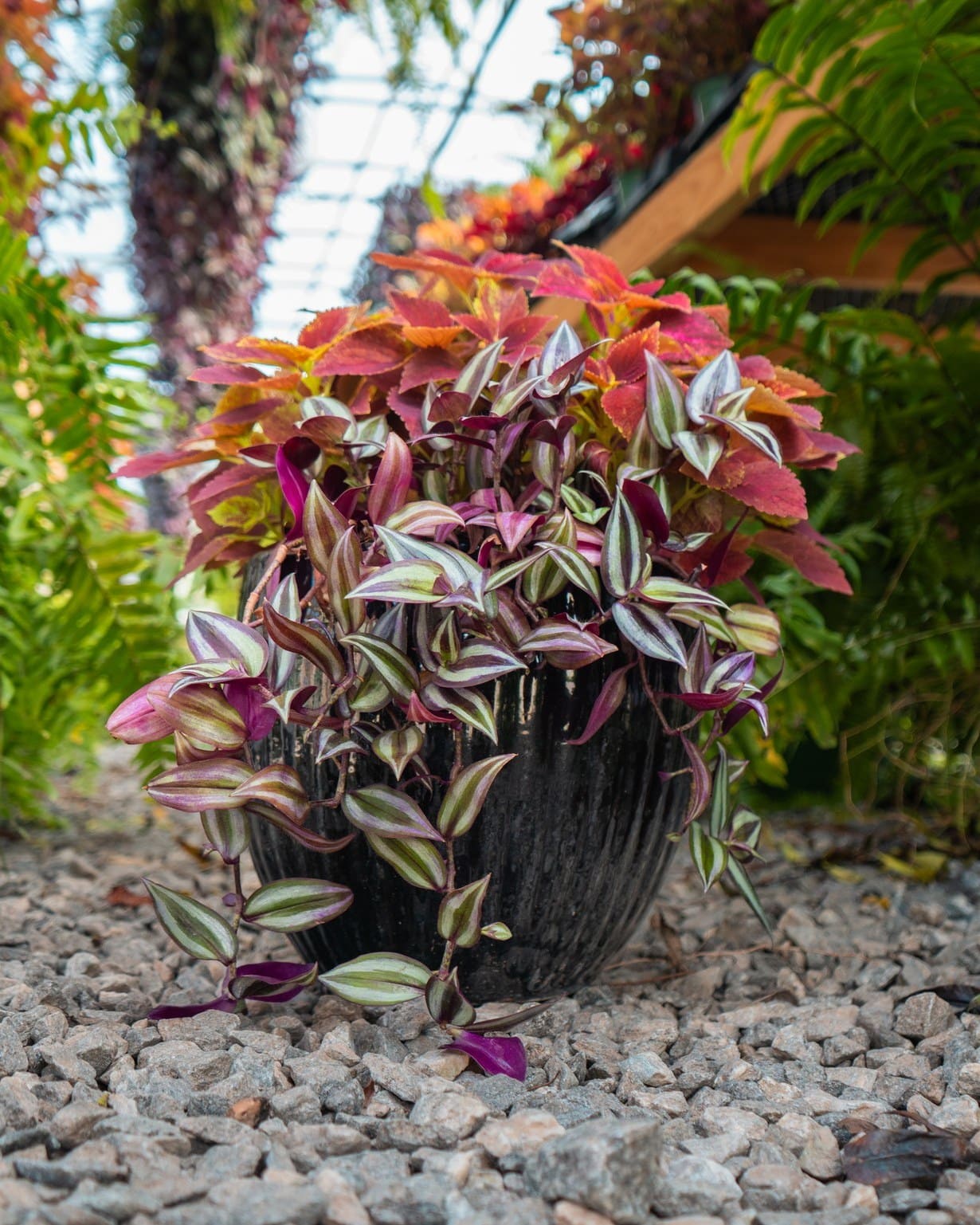
If you want to take your indoor plant display to another level of color, coleus is a great match for wandering jew.
With its dramatic foliage in shades of pink, red, yellow, and green, coleus brings out the purple tones of Tradescantia even more.
Both plants thrive in bright, indirect light and need consistent moisture, making them compatible companions.
Coleus tends to stay more bushy and upright, balancing the trailing growth of Wandering Jew. Together, they create an eye-catching mix that feels vibrant and artistic.
5. Calathea (Prayer Plant Family)
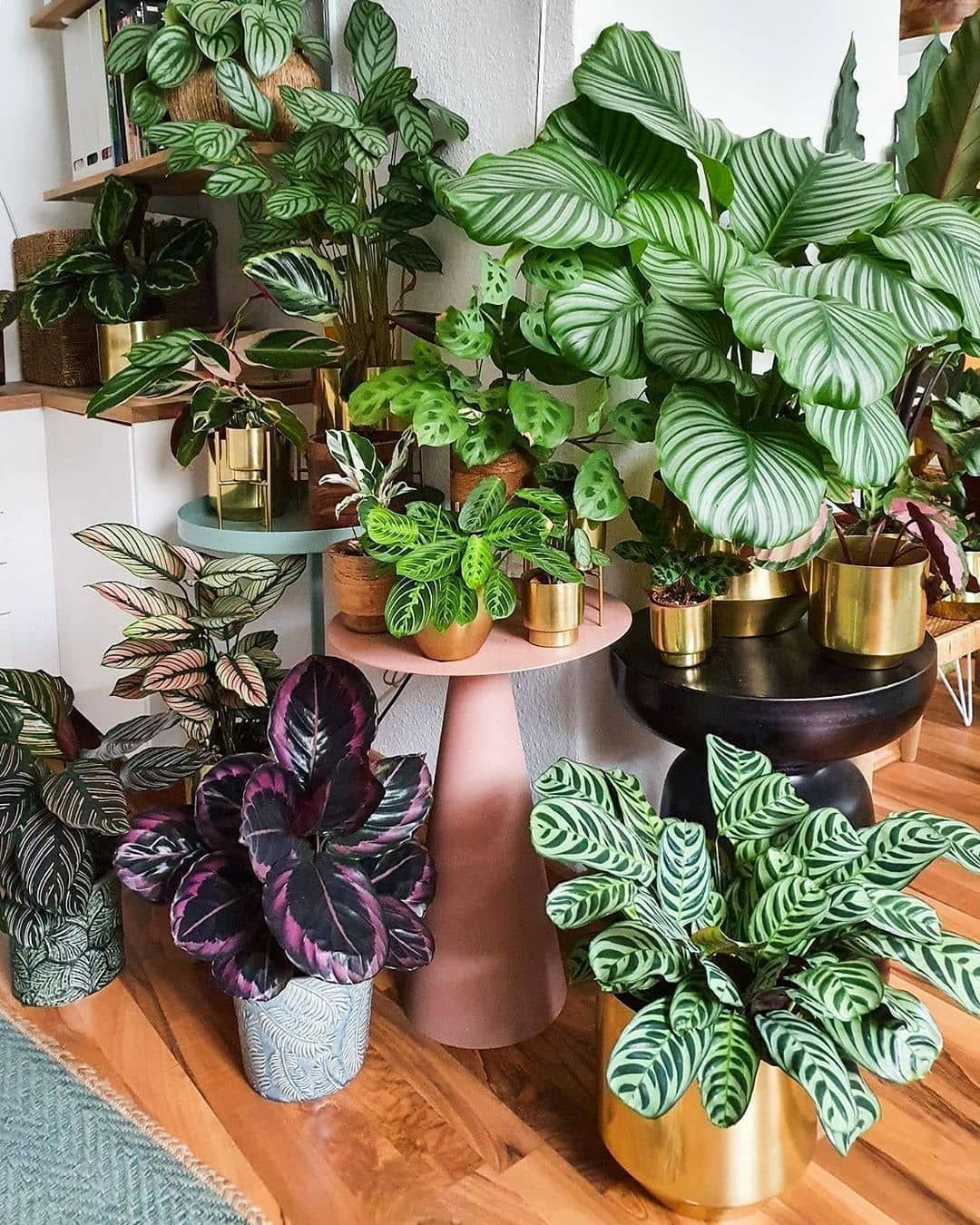
Calatheas, often called prayer plants, are known for their intricately patterned leaves and love of humidity, making them an excellent companion for wandering jew.
Both plants thrive in bright, indirect light and slightly moist soil. Calathea’s bold patterns of green, cream, and sometimes pink look striking next to the purple-striped foliage of Tradescantia.
Since both plants enjoy higher humidity levels, they are especially well-suited for bathrooms or kitchens where the air tends to be more humid. Together, they create a tropical, lush indoor display.
6. Ferns (e.g., Boston Fern)
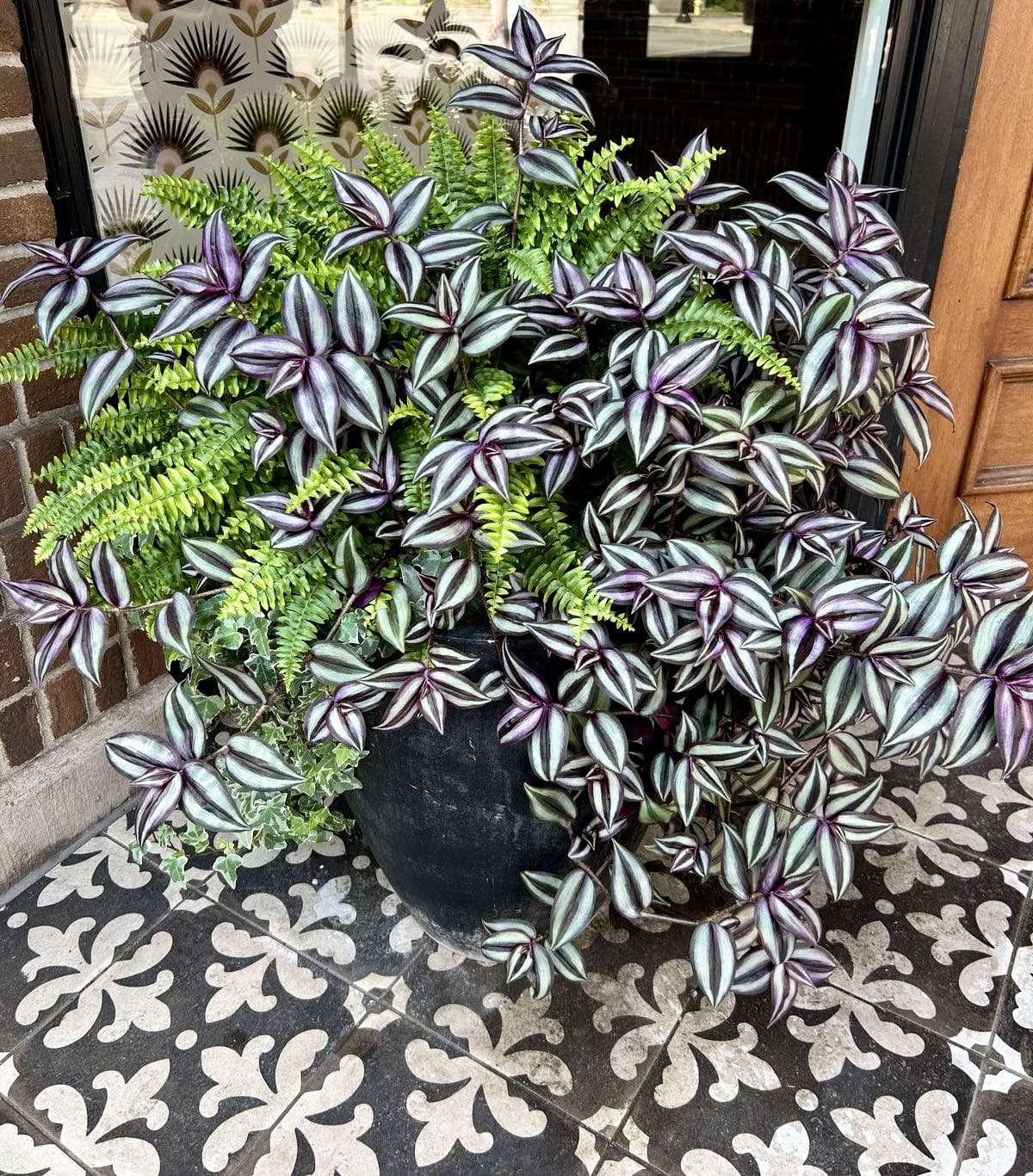
Ferns, especially Boston ferns, bring soft, feathery textures that contrast beautifully with the sharp, striped look of wandering jew.
Both plants thrive in bright, indirect light and appreciate consistent moisture, though ferns may need a bit more humidity.
The bushy, airy appearance of ferns balances the trailing nature of Tradescantia, creating a visually layered and lush arrangement.
Adding a fern alongside wandering jew also helps create a woodland-inspired feel indoors, making your plant display look more natural and calming.
7. Begonias (Rex or Cane Type)
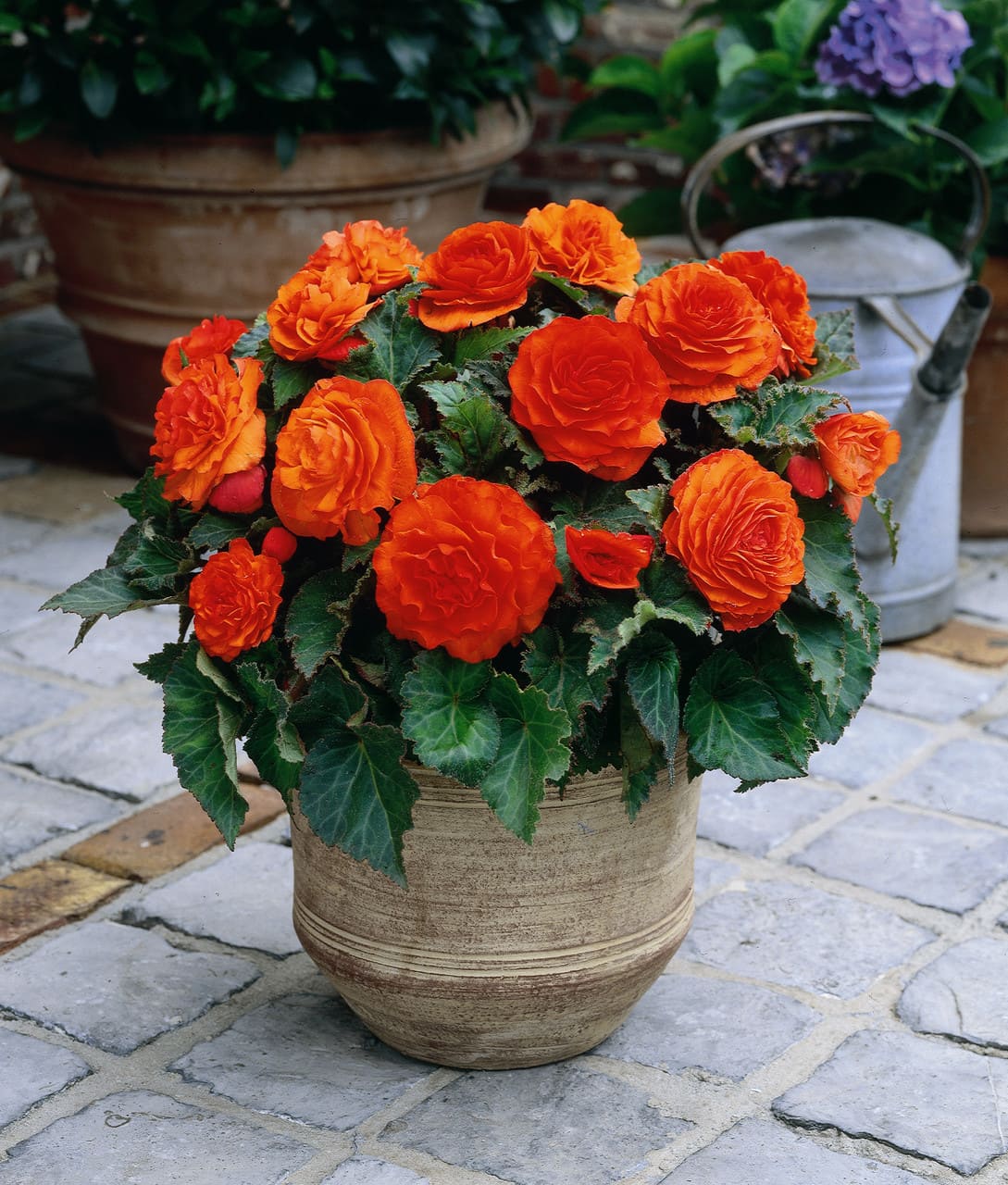
Begonias, with their unique leaf shapes and vibrant colors, make a dramatic partner for wandering jew.
Rex begonias, in particular, showcase striking patterns in silver, purple, and green that echo and enhance the jewel tones of Tradescantia leaves.
Cane begonias, with their dotted foliage and upright growth, provide contrast to wandering jew’s trailing vines. Both plants thrive in bright, indirect light and enjoy moderate watering.
Pairing begonias with wandering jew brings texture, variety, and a true collector’s feel to any indoor space.
8. Syngonium (Arrowhead Plant)
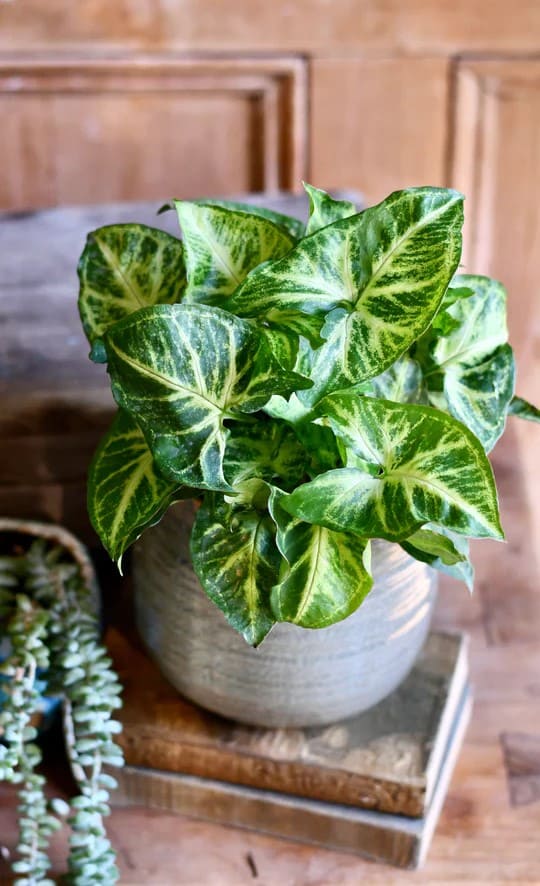
The arrowhead plant is a versatile grower that pairs seamlessly with wandering jew. Its arrow-shaped leaves come in shades of green, white, and even pink, offering a fresh contrast to Tradescantia’s purple stripes.
Syngoniums start upright but can trail as they mature, complementing the cascading growth habit of wandering jew. Both plants enjoy bright, indirect light and moderate watering, so their care routines align perfectly.
Together, they form a colorful, easy-care combination that adds variety and charm to your indoor plant collection.
9. Snake Plant (Sansevieria/Dracaena trifasciata)
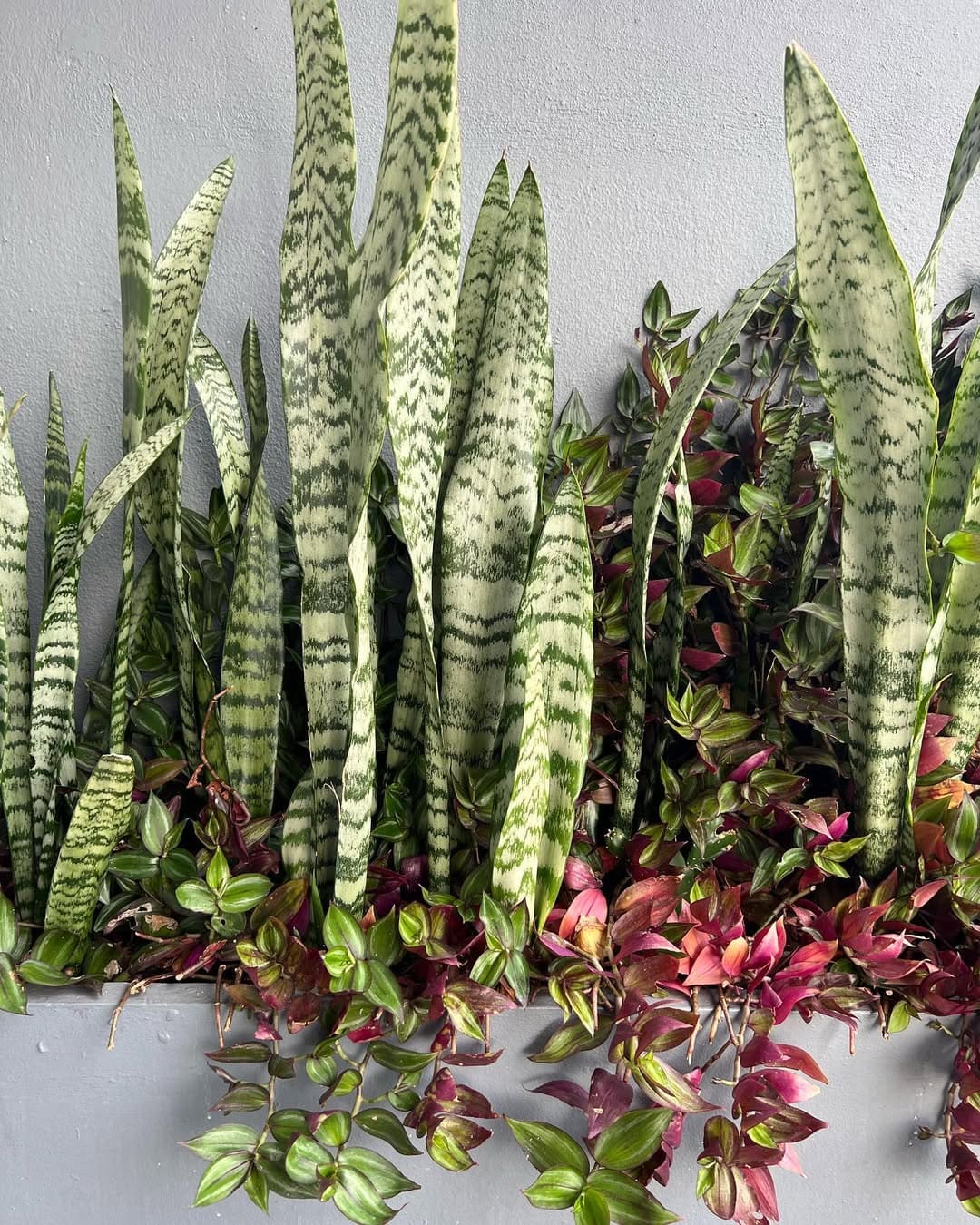
Snake plants are known for their upright, sword-like leaves that provide the perfect structural contrast to Wandering Jew’s trailing vines.
While Tradescantia cascades down beautifully, the snake plant stands tall, creating balance in a mixed plant display. Both are hardy plants, but the snake plant prefers to stay on the drier side, so be cautious when watering if they share the same pot.
Together, they create a dynamic display of textures and forms that looks modern, stylish, and incredibly low-maintenance.
10. English Ivy (Hedera helix)
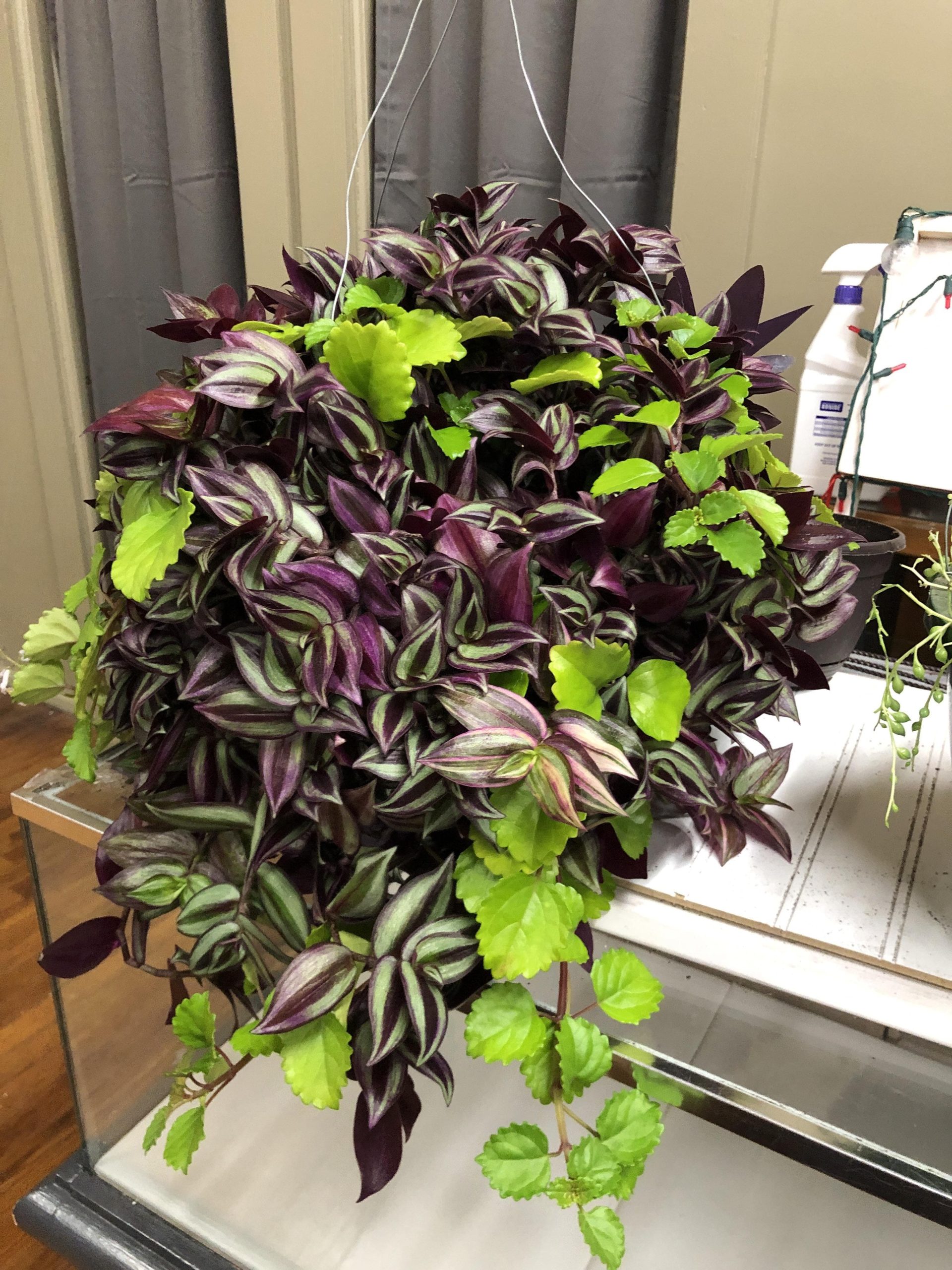
English ivy is another trailing plant that partners well with wandering jew. Its small, classic green leaves create a subtle backdrop that lets the bold purple stripes of Tradescantia shine.
Both plants thrive in bright, indirect light, and while ivy prefers slightly cooler conditions, it adapts well indoors.
When grown together in a hanging basket, their intertwined vines create a lush, cascading effect that’s both charming and timeless. Just keep ivy trimmed, as it can be more aggressive in its growth compared to wandering jew.
See also: 10 Best Companion Plants For Rosemary