
Snake plant blooms are one of the most surprising and delightful sights in houseplant care. Known scientifically as Sansevieria and now part of the Dracaena genus, this plant is loved for its sword-shaped leaves, easy care, and ability to thrive in almost any environment.
Most people grow it for foliage, but with the right conditions, it can also reward you with clusters of fragrant, delicate flowers.
Seeing a snake plant bloom is rare since many go decades without flowering indoors. Still, by creating the right balance of light, soil, and water, you can gently encourage it to produce these elegant blooms.
Here are the key steps to help your snake plant move beyond leaves and into a new phase of beauty.
#1 Watering

Snake plants thrive on neglect when it comes to water. Overwatering can quickly cause root rot, so the best approach is to let the soil dry out completely before watering again.
Use your finger to check the top inch of soil; if it feels dry, then it’s time to water. Deep watering once every few weeks is usually enough, especially during winter when growth slows.
Consistency in this routine helps the plant stay stress-free, which in turn makes it more likely to flower.
#2 Light

Light plays a major role in encouraging snake plant blooms. While they survive in low light, flowering only happens in brighter conditions.
Place your plant near a sunny window with indirect light, where it can soak in energy without scorching its leaves. Rotate the pot every couple of weeks to ensure even exposure.
If natural sunlight is limited, you can supplement with a grow light for a few hours daily. With this setup, your snake plant has the energy to produce its rare blossoms.
#3 Soil and fertilizer
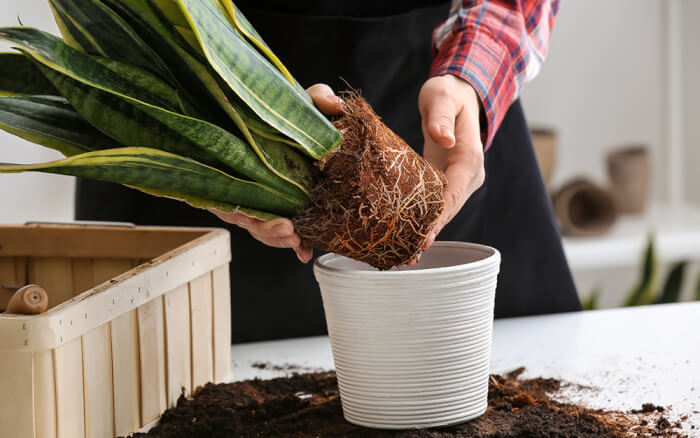
Well-draining soil is non-negotiable for snake plants. A cactus or succulent mix works well, or you can amend potting soil with sand or perlite to improve drainage. Avoid heavy soil that holds water for too long.
To support blooming, use a balanced liquid fertilizer once every two to three months during the growing season. Go easy on the feeding; too much fertilizer promotes foliage instead of flowers.
By keeping the roots dry and the nutrients balanced, you give your plant the conditions it needs to push out blooms.