
You’re definitely familiar with this symbol—the ayn al-hasud, malocchio, nazar, or evil eye—because it’s having a serious moment.
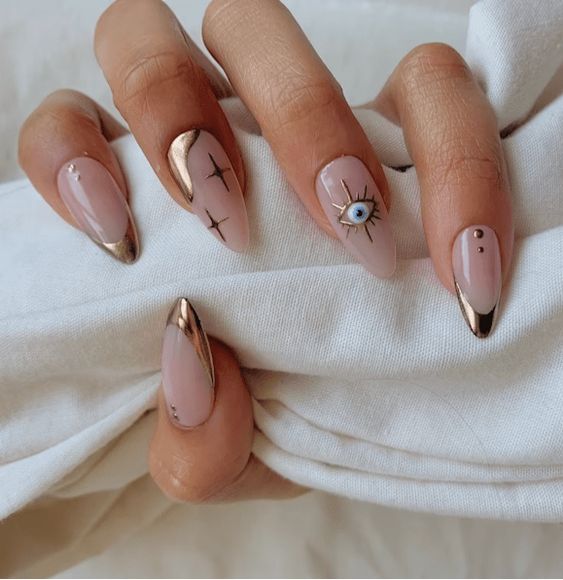
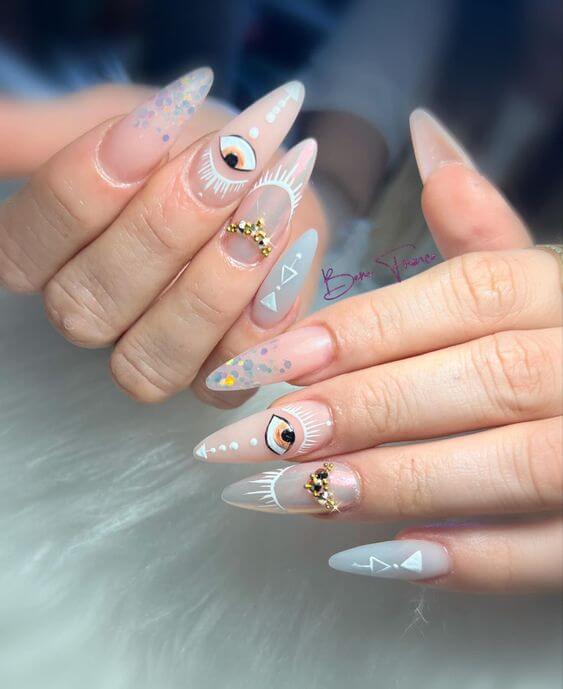
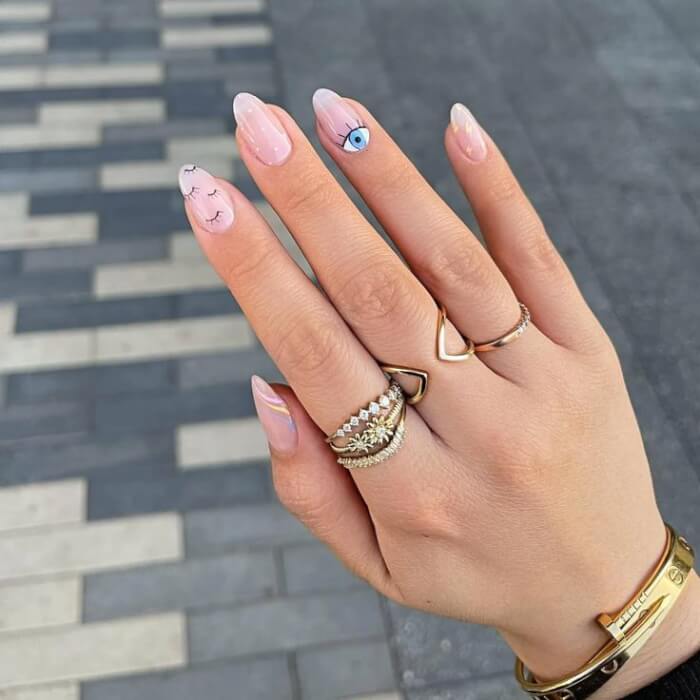
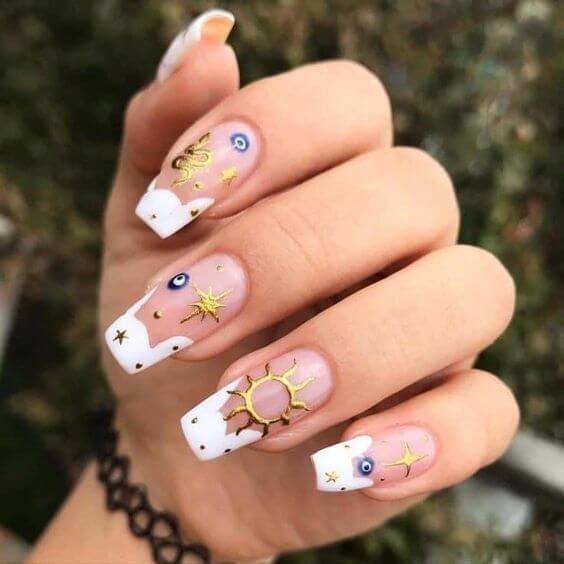
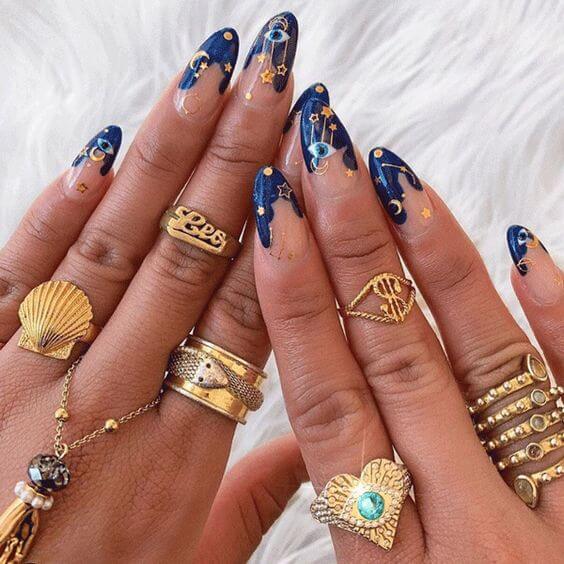
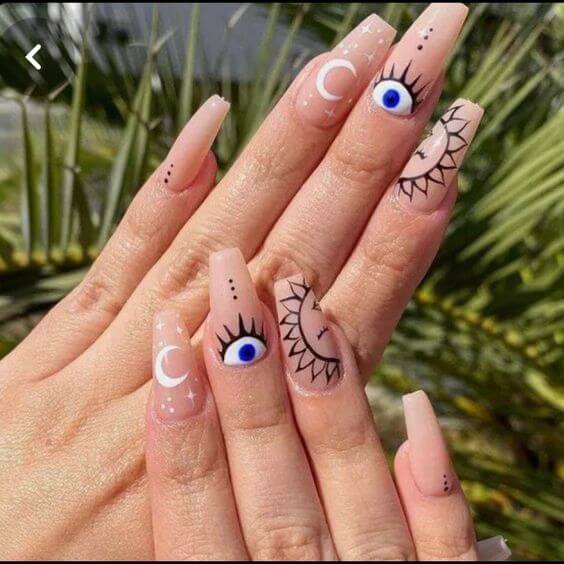
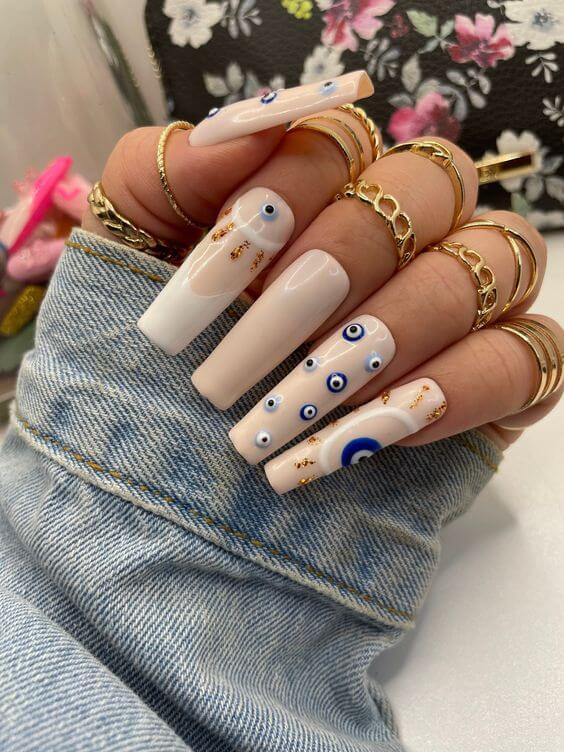
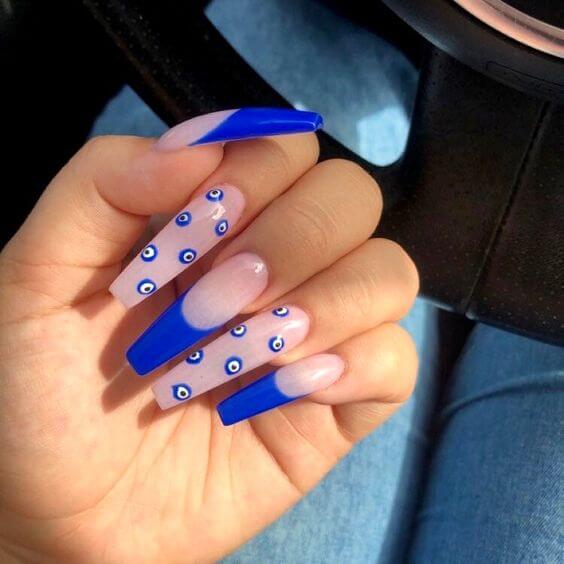
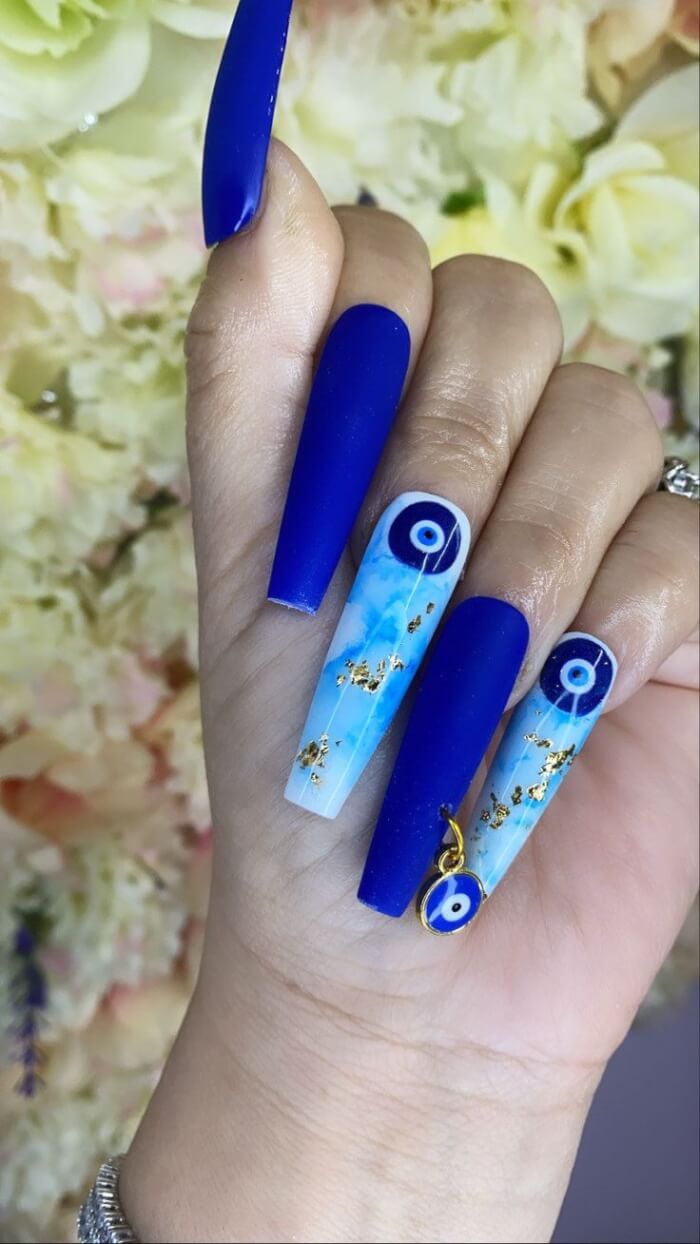
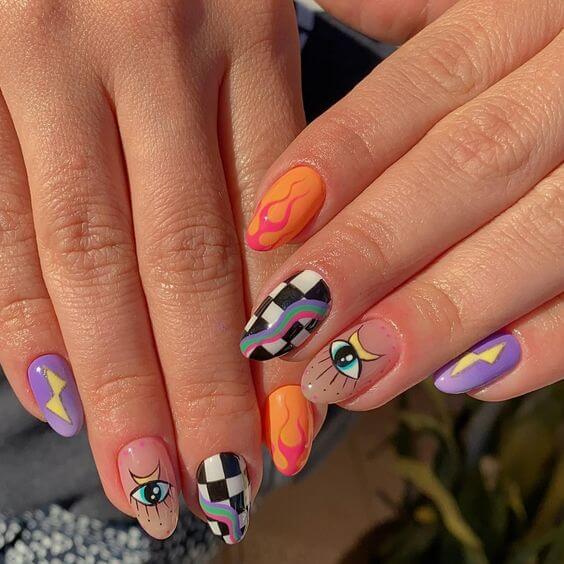
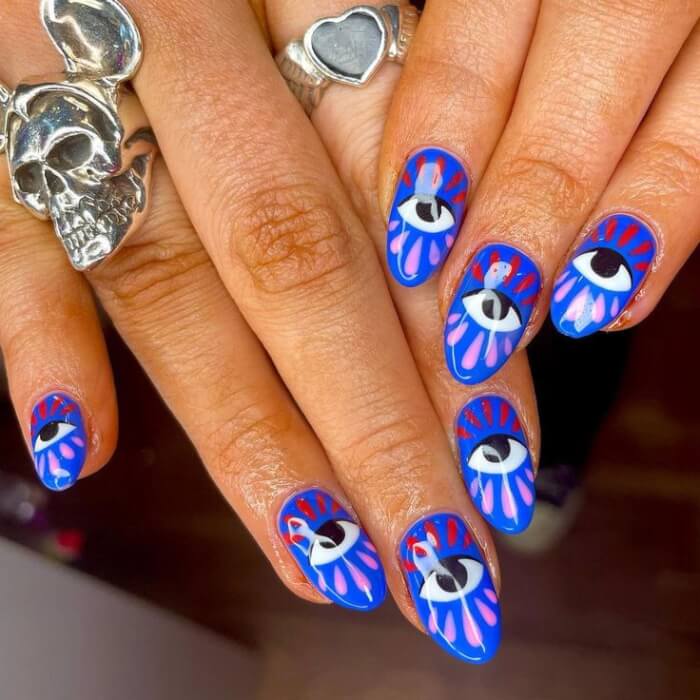
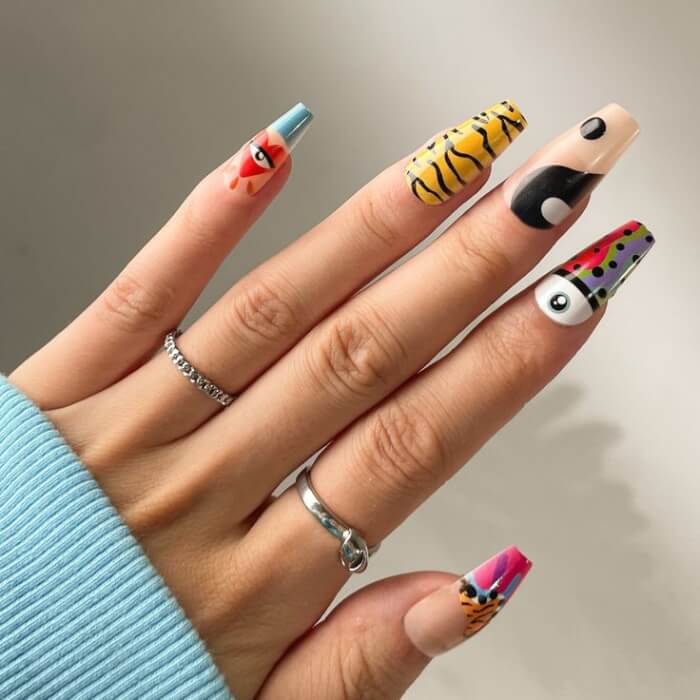
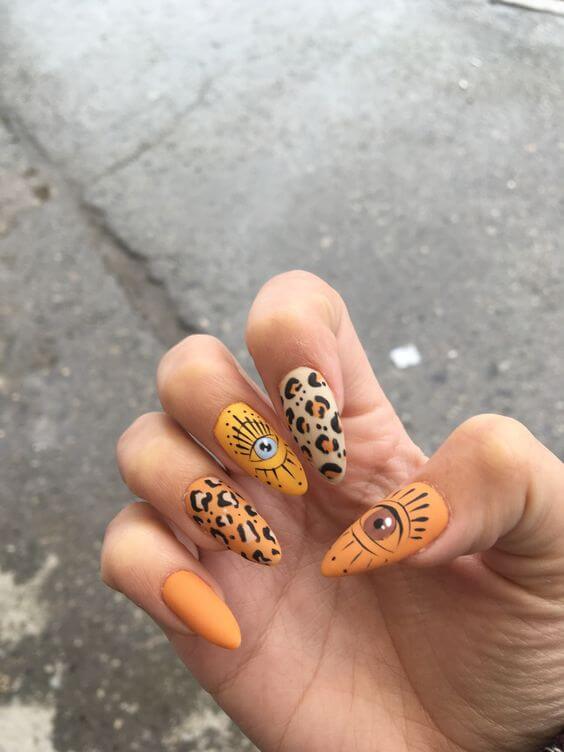
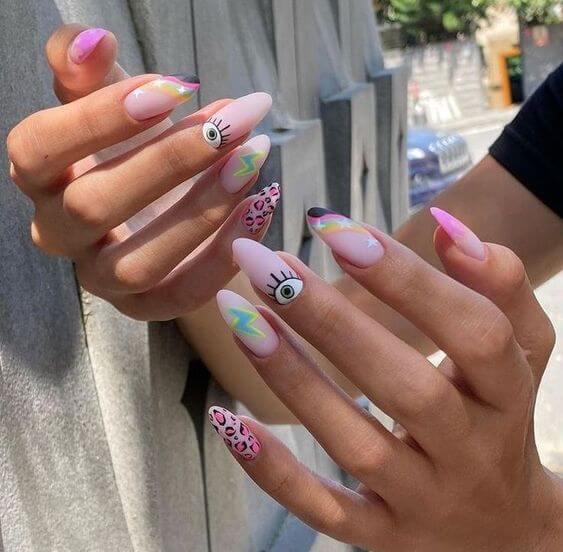
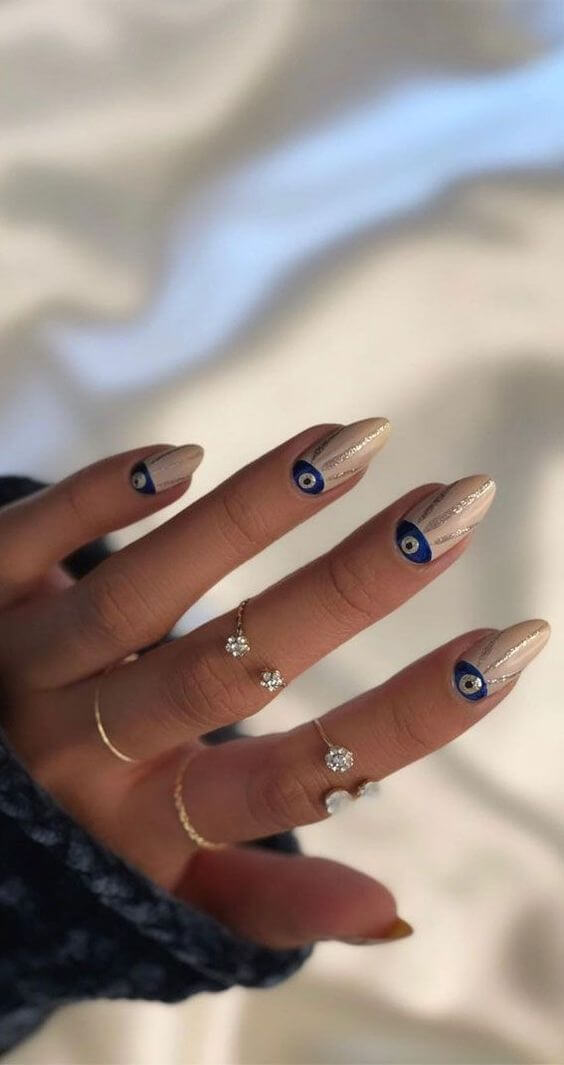
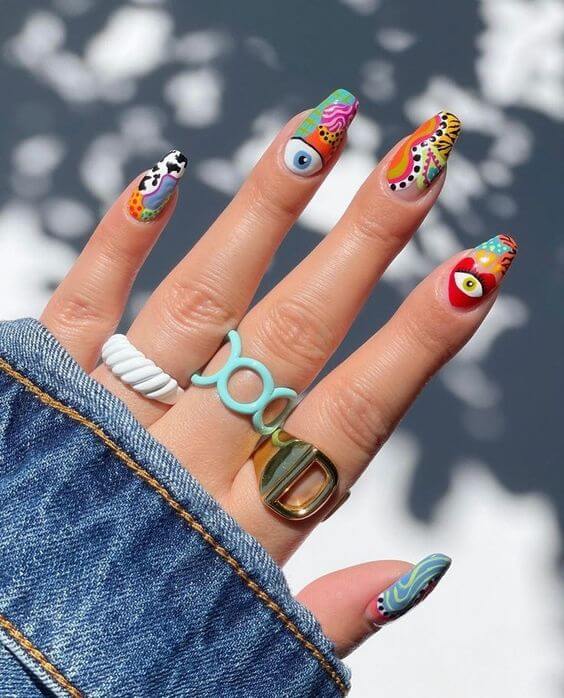
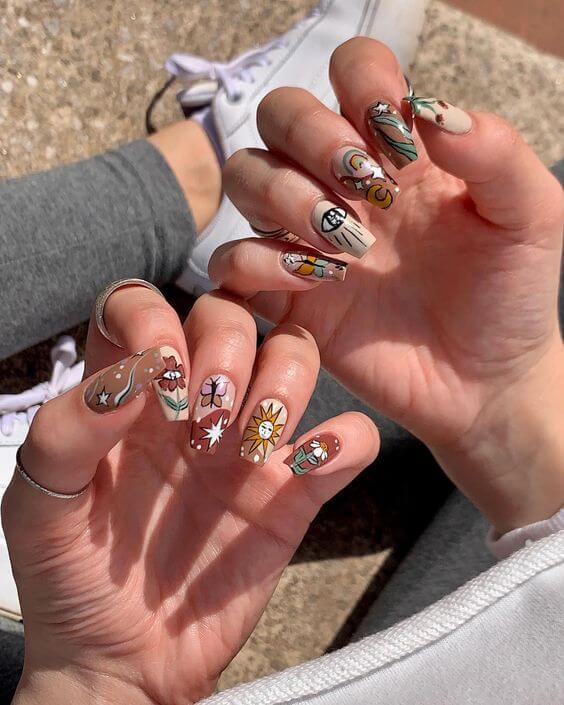
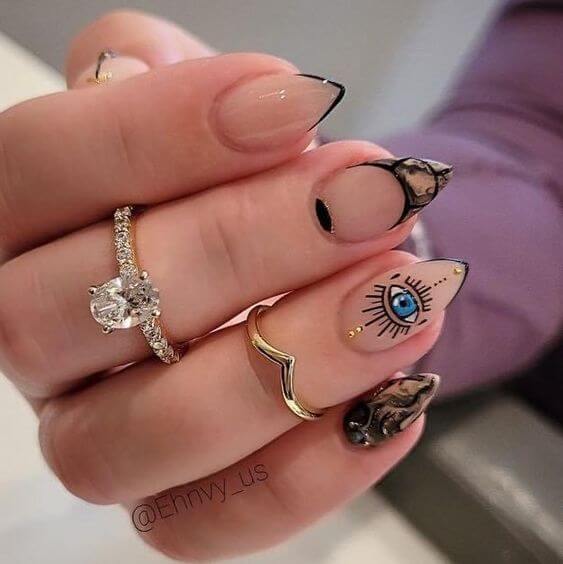
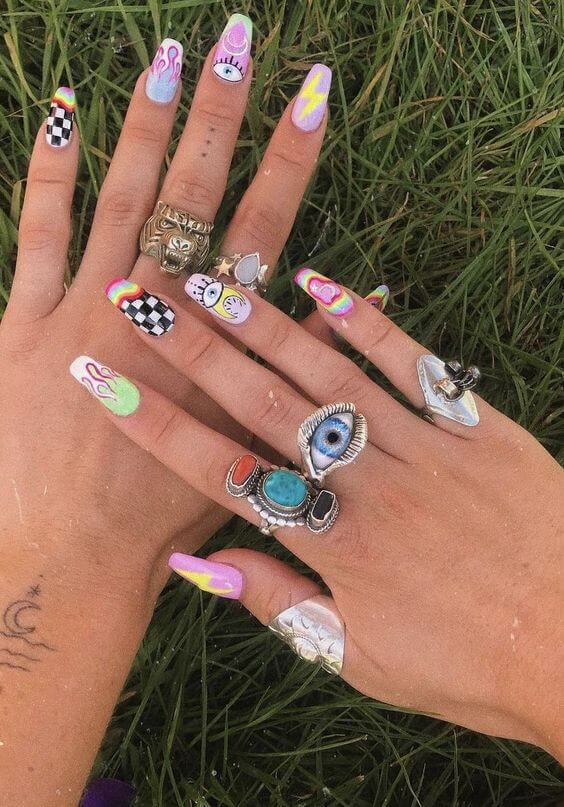
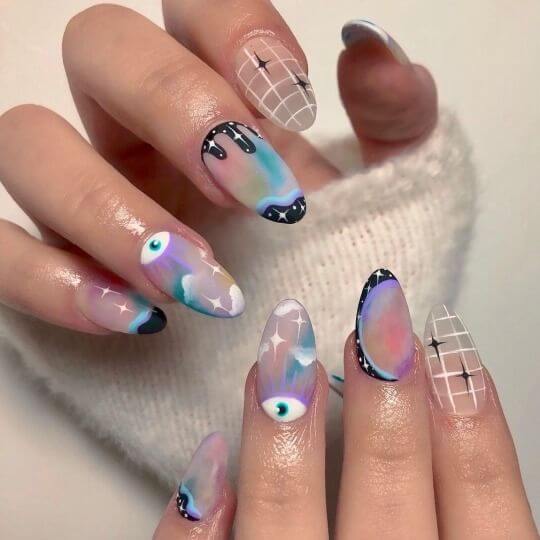
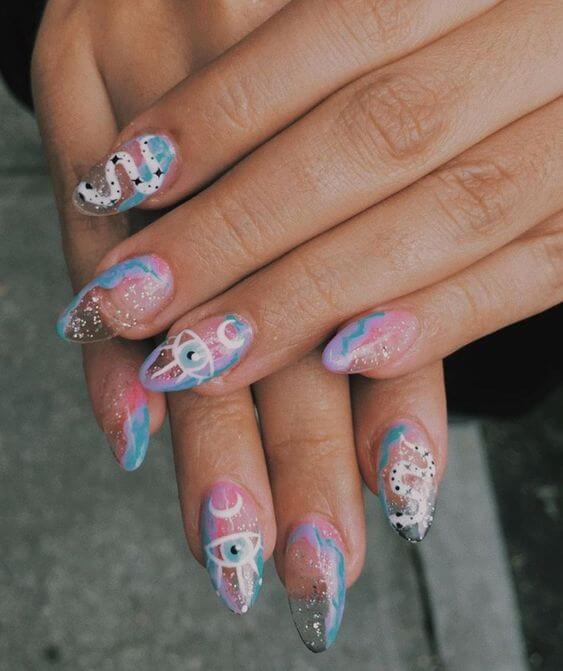
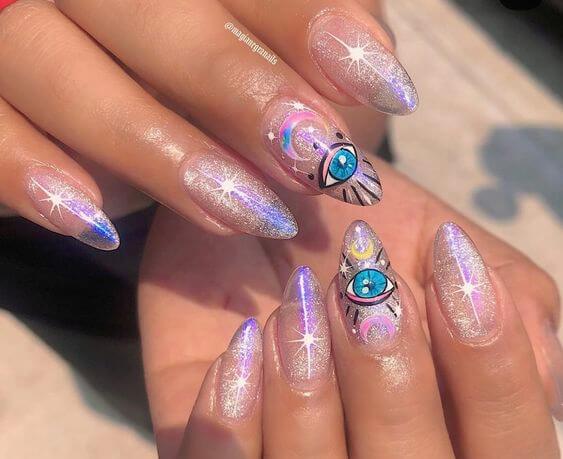
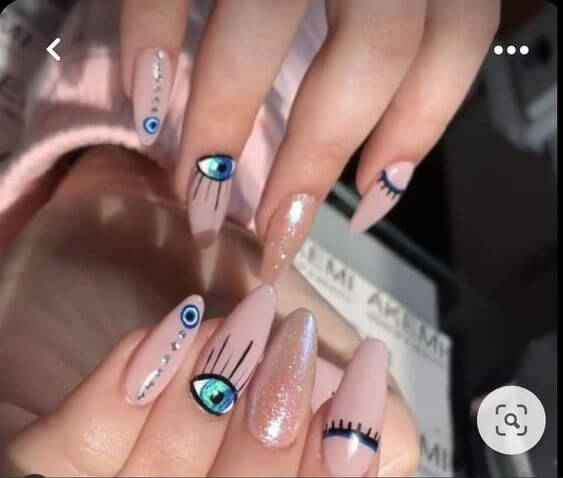
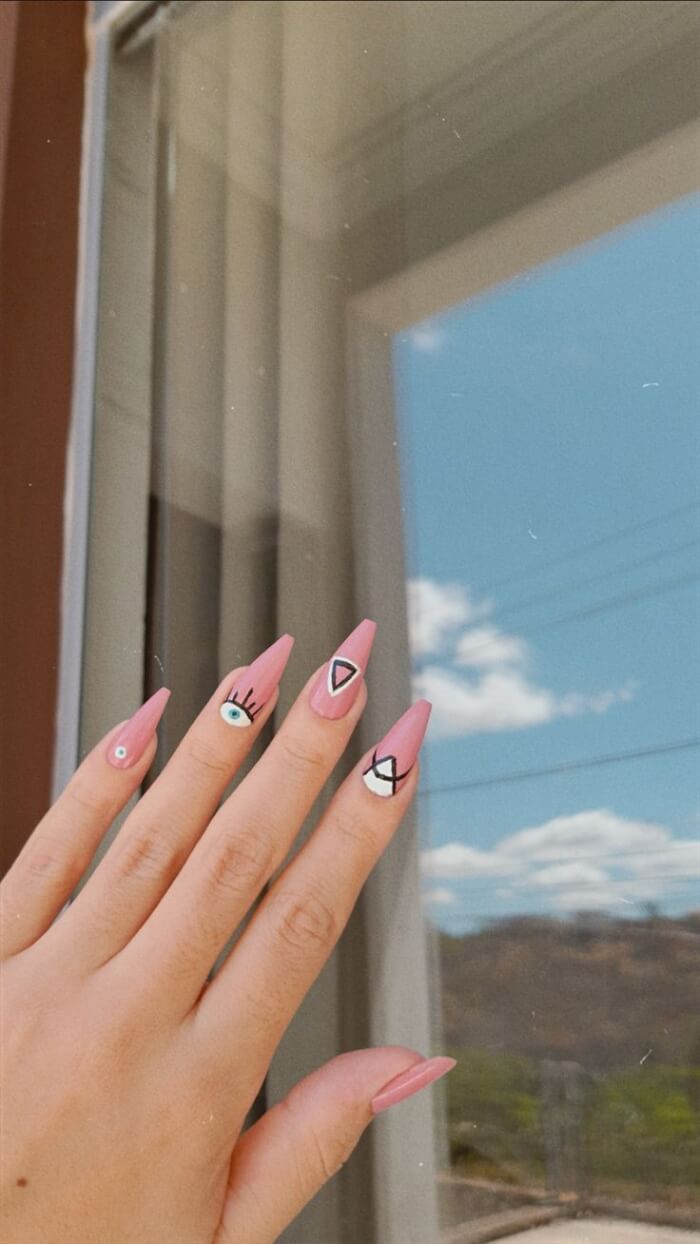
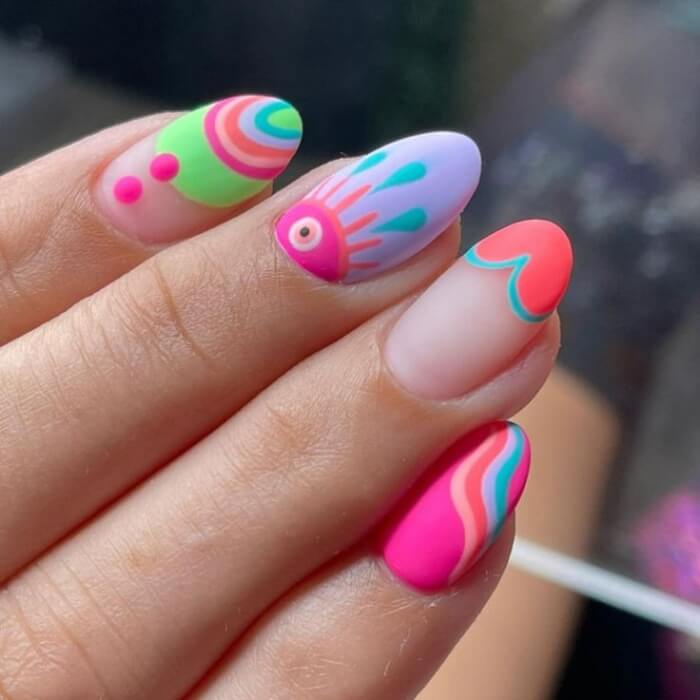
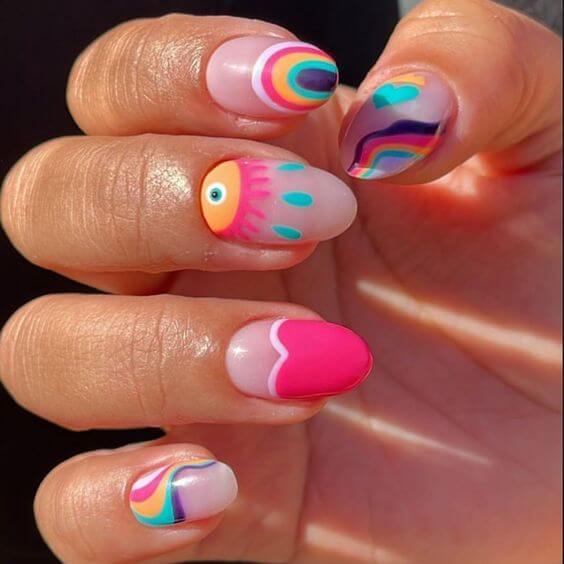
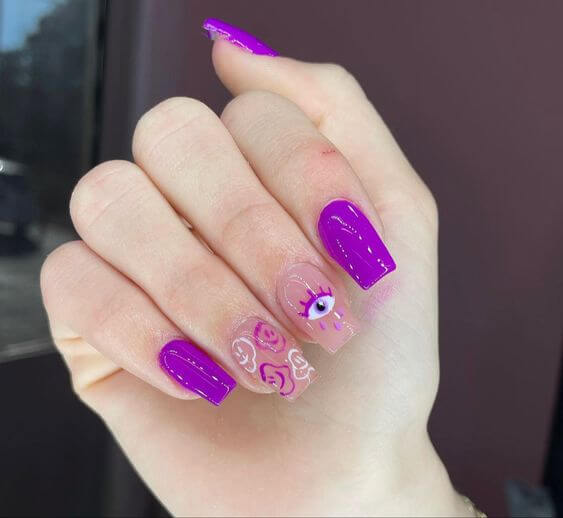
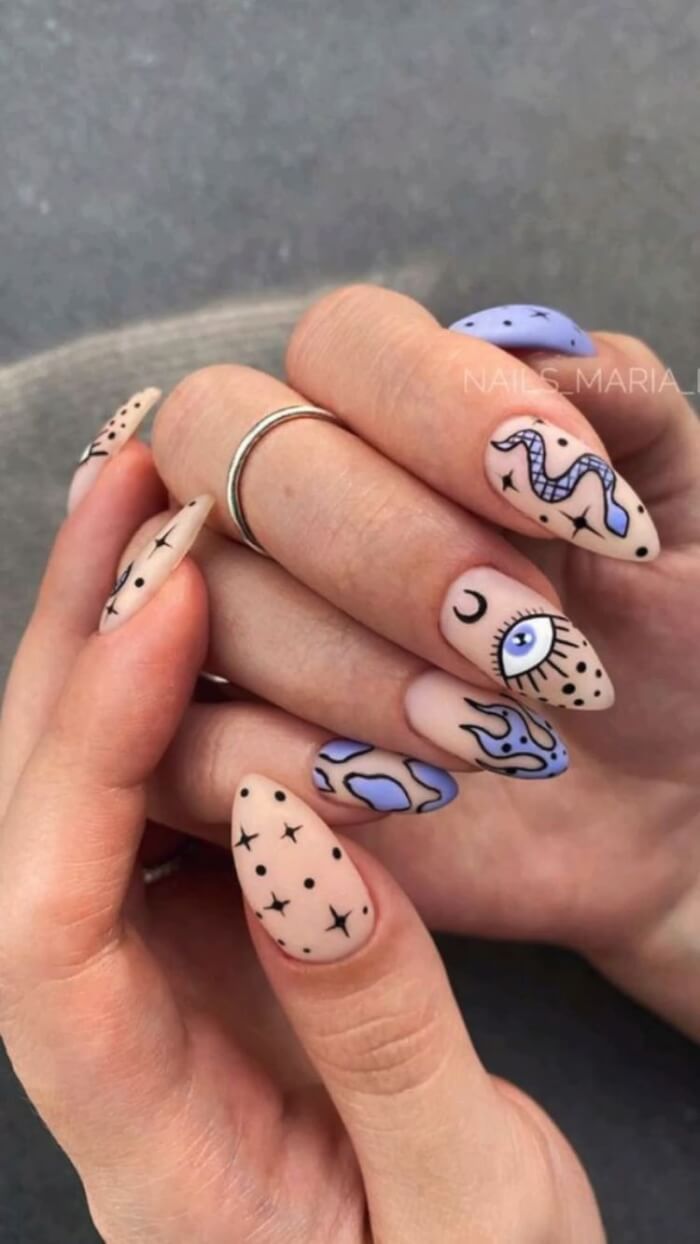
Although you can wear it as jewelry, evil-eye nails are considerably more entertaining. There is no better opportunity to give your nails a seasonal change than embracing fresh Turkish eye manicure designs and vibrant hues.
Everyone from celebrity manicurist Miss Pop to DJ and entrepreneur Hannah Bronfman has been spotted sporting an evil-eye manicure. While it may look a little daunting to execute at home, don’t be scared.
Using nail-art pens and a basic dotting tool, you can recreate evil-eye nail art at home with ease. You can add your own touch with different designs and colors.
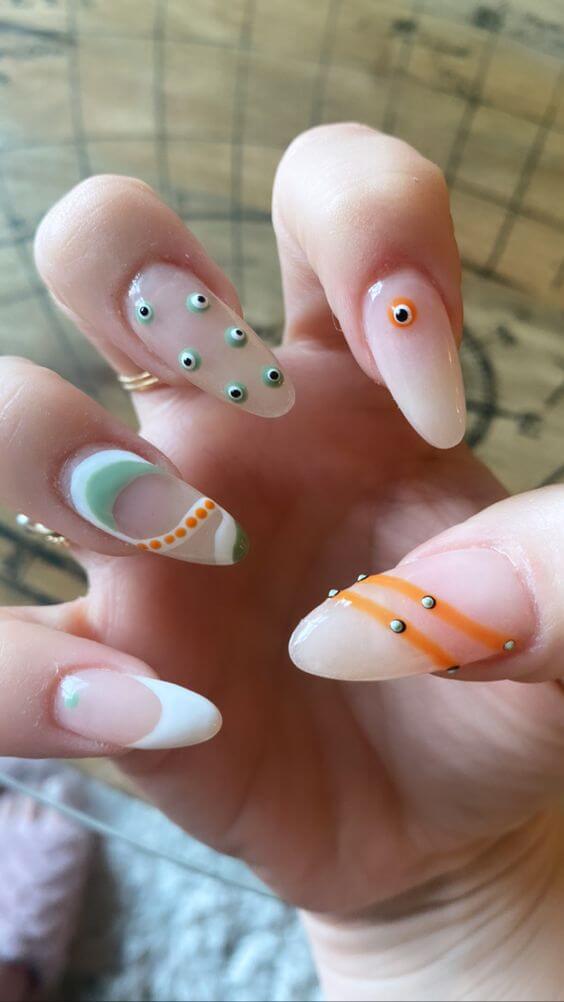 Source: unknown
The Turkish Evil Eye’s History
The Nazar Boncuk charm, often recognized by its deep blue color and concentric circles resembling an eye, is one of the most iconic symbols in Turkish culture.
It was created as a protective amulet designed to ward off the evil eye, a belief that jealousy or negative energy directed toward someone could bring them harm or misfortune.
Unlike charms that are meant to bring luck or wealth, the Nazar Boncuk’s primary purpose is protection and safety. It shields the wearer or the space it inhabits from bad intentions and unseen dangers.
 Source: unknown
 Source: unknown
 Source: unknown
 Source: unknown
Over time, this amulet became deeply woven into daily life. Turkish families often hang the Nazar Boncuk near the entrance of their homes to keep bad spirits from crossing the threshold.
It’s also common to see the charm in cars, workplaces, and even stitched into clothing.
Parents frequently place small versions of the charm on their children’s clothing or cribs to safeguard them, while pet owners may clip them onto collars for the same reason.
 Source: unknown
 Source: unknown
 Source: unknown
 Source: unknown
While rooted in Turkish culture, the charm has spread widely across the Mediterranean, the Middle East, and beyond. Today, it’s just as likely to be worn as a fashion accessory as it is to be used in traditional spiritual practice.
Its vibrant blue color makes it both striking and symbolic, allowing people to carry with them a piece of cultural heritage while also adding a unique touch to their personal style.
 Source: unknown
 Source: unknown
 Source: unknown
The Nazar Boncuk is more than just a pretty trinket; it’s a symbol of protection, resilience, and cultural identity.
Whether you hang it on your wall, wear it as jewelry, or give it as a gift, it serves as a reminder that sometimes, staying safe is just as important as seeking good fortune.
 Source: unknown
 Source: unknown
 Source: unknown
 Source: unknown
What Materials Were Used, And Why Was The Color Blue?
Although its name already implies protection, the evil eye amulet is a carefully crafted piece of symbolism. Traditionally made from hand-blown blue glass, this talisman is created in a single oven using a limited yet meaningful palette of colors.
Blue, white, yellow, and black dominate the design, each shade contributing to the amulet’s deeper meaning.
 Source: unknown
 Source: unknown
 Source: unknown
At its core, the amulet is composed of two shades of blue: light blue and dark blue.
The outer blue background represents calmness, truth, and good karma, while the inner black circle serves as the “watchful protector,” always alert against negative energy.
Between the two, artisans often add a yellow or light blue circle to symbolize honesty and clarity.
 Source: unknown
 Source: unknown
 Source: unknown
Blue is a spiritual anchor. Across cultures, blue has long been associated with the sky and the divine.
Looking at the sky has always brought comfort, so it’s no surprise that light blue became linked with serenity and relief from anxiety.
The darker blue tones, meanwhile, symbolize depth, protection, and wisdom, reinforcing the amulet’s role as a safeguard against envy and ill will.
 Source: unknown
 Source: unknown
 Source: unknown
In ancient symbolism, blue was also tied to God and higher powers, reinforcing the belief that the Nazar Boncuk was not only a cultural charm but also a spiritual shield.
This connection to the divine gave people reassurance that by wearing or displaying the amulet, they were aligning themselves with honesty, purity, and divine protection.
 Source: unknown
 Source: unknown
 Source: unknown
 Source: unknown
 Source: unknown