
Today, let’s spend some time learning about Ms. Whang-od Oggay, the oldest and the only “mambabatok” tattoo artist left in the Philippines.
Mrs. Whang-od is well-known both nationally and internationally. Every year, to acquire a tattoo from this legend, thousands of tourists travel to the mountain village of Buscalan, located in the north of Manila and tucked away amongst forests and rice terraces.
One of these people commented that the tattoo by Miss Od is particularly different from modern tattoos; it looks like artwork done in ancient times.
In the past, no one in the Philippines had given any attention to traditional tattooing. However, Ms. Whang-od continues to strive for the preservation of these precious values.
Luckily, she has succeeded after appearing in a 2009 documentary series by Lars Krutak, an American anthropologist. She quickly became famous and was visited by travelers from all over the world.
 Source: Unknown
Now, more people are aware of the tattooing tradition, which makes Mrs. Whang-od feel incredibly relieved. She does not need to worry about maintaining culture anymore. This heritage will continuously be preserved and developed by the young generations and the Kalinga’s authority.
#1 Mrs. Whang-Od
 Source: The Independent
The vibrant cultural history embodied in the “batok” tattooing method faces a unique and significant hurdle in its preservation, particularly for renowned practitioners like Ms. Whang-od. The core obstacle lies in the sacred and exclusive nature of its transmission: this particular tattooing method can only be disseminated through bloodlines.
This strict lineage requirement was a deliberate choice by the ancients. They meticulously designed this system to protect these “mambabatok” tattoos, ensuring they wouldn’t become “polluted.”
This meant safeguarding the authenticity, spiritual significance, and cultural integrity of the art from external influences or commercial exploitation.
#2 Mrs. Whang-od
 Source: Unknown
Despite being childless, the legendary Kalinga mambabatok, Ms. Whang-Od, has ensured the continuation of her sacred art by diligently teaching the custom of batok (neck tattooing) to her grandchildren.
She shared with reporters a poignant truth: all her friends who bore similar tattoos have passed on, a testament to the fleeting nature of life and the art’s deep historical roots.
However, Ms. Whang-Od remains undaunted by the thought of the custom disappearing. Her confidence stems from the vital work she’s undertaking: she is actively nurturing and training the next generation of tattoo artists within her bloodline.
Through this dedicated mentorship, she’s ensuring that the ancient art of batok, with all its cultural significance and intricate beauty, will continue to thrive for generations to come. Her legacy isn’t just in the tattoos she creates, but in the living tradition she meticulously passes down.
#3 Her daily image
 Source: Unknown
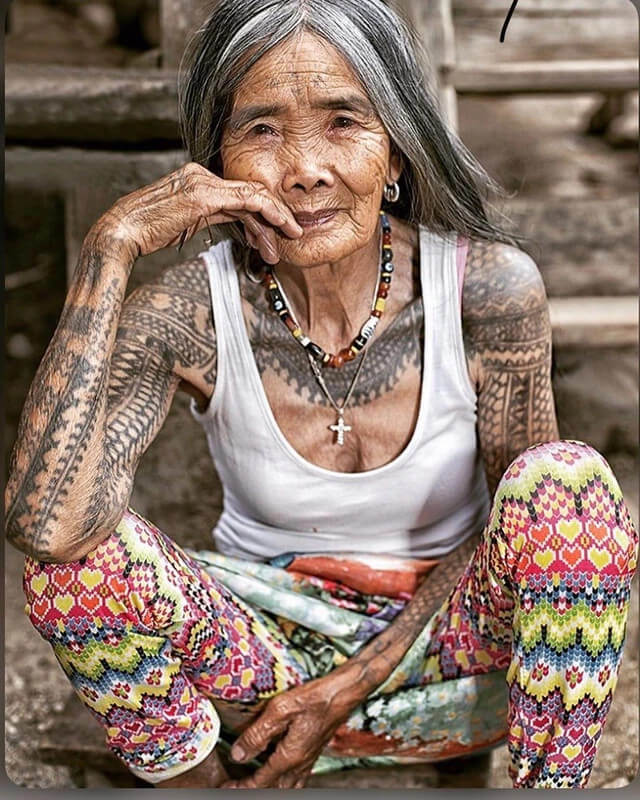
Mrs. Whang-od is among the few who still have traditional tattoos and know how to make them. Every day, she wakes up at 5:30 a.m. and begins her day by getting the tattooing tools ready.
This 105-year-old lady is “actively” living her life with more enthusiasm than ever, aiming to finish 14 tattoos each day.
#4
 Source: The New York Times
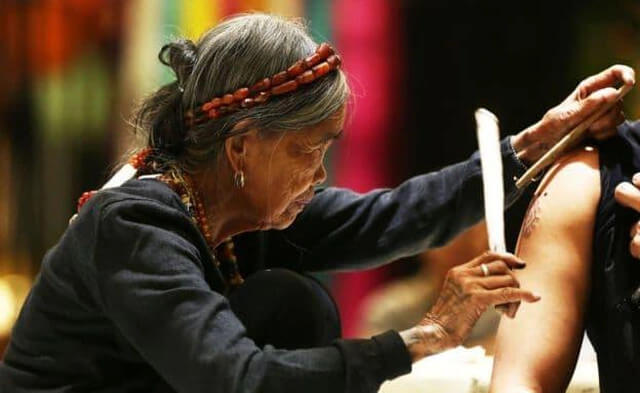
Imagine sitting patiently, enveloped by the cool, misty air of Buscalan, as the legendary Ms. Whang-Od meticulously works her magic. For a tourist, receiving a tattoo from this iconic Kalinga mambabatok is a profound journey into living history.
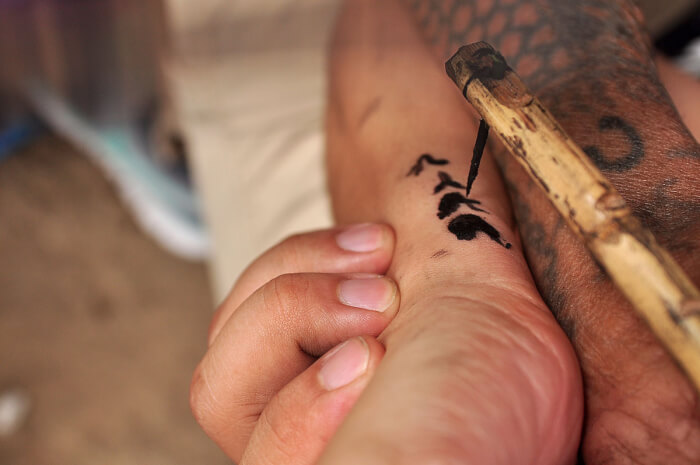
The rhythmic tap-tap-tap of the calamansi thorn, guided by Whang-Od’s experienced hand, echoes centuries of tradition. Each precise strike imprints a connection to a cultural legacy that Ms. Whang-Od, now in her late 90s, has tirelessly worked to preserve.
#5 Mrs. Whang-od
 Source: Unknown
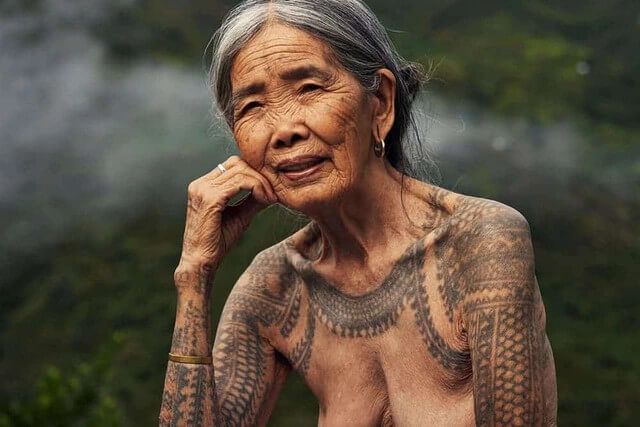
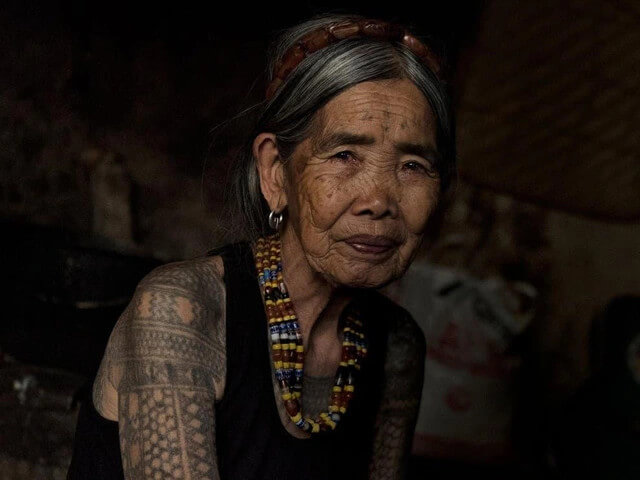
Though time has left its mark, making her body weak and bent, Ms. Whang-Od remains an incredibly admirable fighter. Her skin tells a profound story, a living canvas adorned with a collection of powerful tattoos.
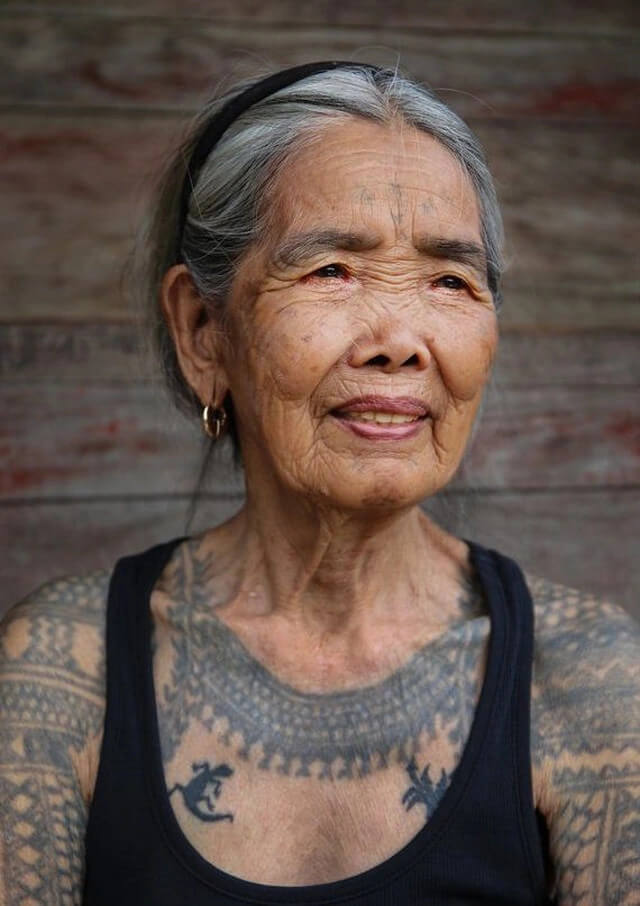
Even on her face, the signs of a long life are interwoven with her art. Tiny, delicate tattoos merge seamlessly with the wrinkles etched on her jaw and forehead, creating an intimate portrait of a woman whose wisdom and resilience are literally etched onto her skin.
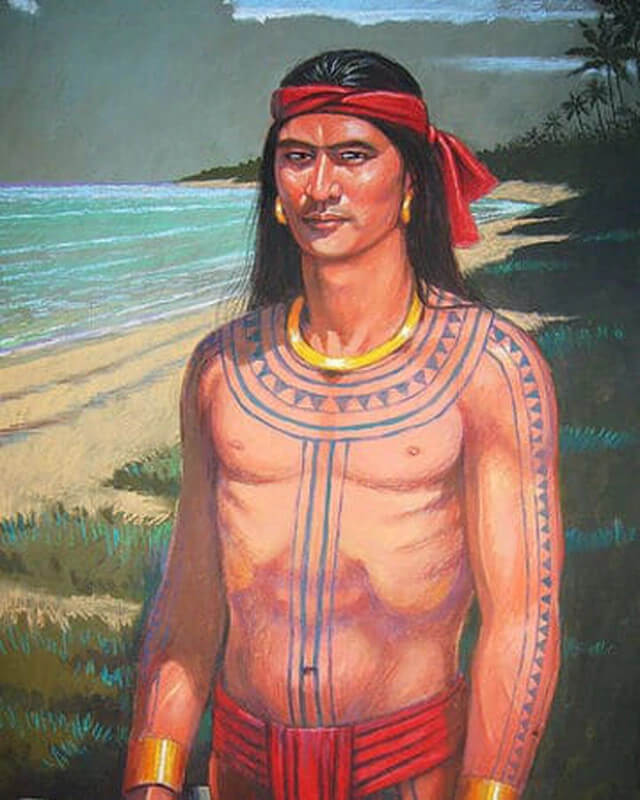
#6 An Example Of A Men’s Tattoo From The Past
 Source: Unknown
According to Ms. Whang-od, the history of the tattooing tradition in the Philippines is truly meaningful in terms of social and cultural values.
One century ago, Kalinga women used tattoos to decorate themselves, and each unique type of tattoo represented a different rank among them. Meanwhile, Kalinga men only got tattoos after celebrating victory in a range of festivals, such as headhunting ceremonies.
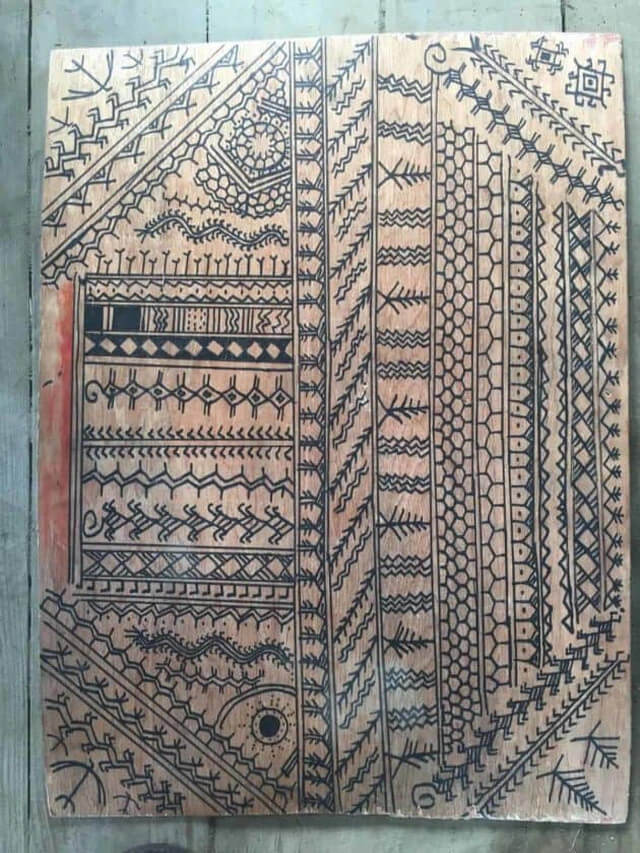
#7 One Of The Earliest Tattoo Designs From Kalinga Village
 Source: Lars Krutak
Ms. Whang-Od stands not just as the last true mambabatok of her generation, but as a vibrant testament to the enduring power of cultural heritage. Her weathered hands, etched with the very symbols she meticulously applies, continue to tap out stories on new skin.
As visitors trek to Buscalan, they seek a connection to a living legend, a tangible link to a past fiercely protected and lovingly passed down. Thanks to her unwavering dedication, the rhythmic tap of the thorn, the sacred ink, and the spirit of Kalinga will echo through generations to come.