
Indoor plants that you can propagate from leaves are a smart way to expand your collection without spending extra money. With this method, you only need a single healthy leaf to start an entirely new plant.
It’s a simple and rewarding process that works faster than growing from seeds and requires minimal equipment.
Leaf propagation also gives you full control since you already know the variety you are growing. With a little patience, you’ll soon see roots and fresh shoots forming from your cuttings.
Here are 12 indoor plants you can successfully propagate from leaves and enjoy multiplying around your home.
#1 Jade Plant
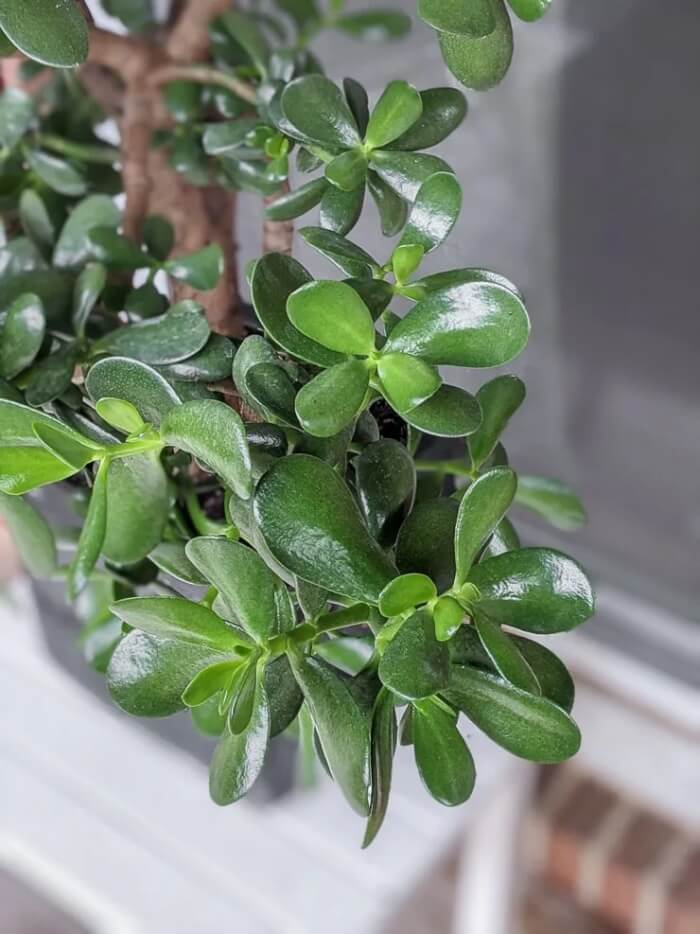
Jade Plant is one of the easiest succulents to multiply from a single leaf. Take a healthy leaf, let it dry for a few days until a callus forms, and then set it into damp soil. This step prevents rot and encourages strong root growth.
Place the container in bright, indirect sunlight and avoid overwatering. Within a few weeks, small roots and shoots will emerge. Over time, you’ll have a sturdy little succulent ready for its own pot.
#2 Echeveria
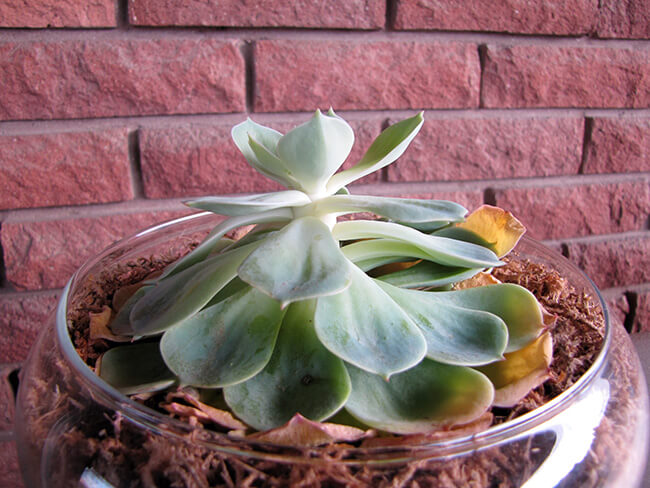
Echeveria is famous for leaf propagation, making it perfect for beginners. Simply twist a plump leaf from the base of the rosette and let it dry on a tray for a couple of days. Once the end has healed, lay it on top of a pot filled with a cactus mix.
Water lightly to keep the soil barely moist. Tiny roots and new rosettes will appear near the cut edge. Transplant them once they are strong enough to handle on their own.
#3 Hoya kerrii
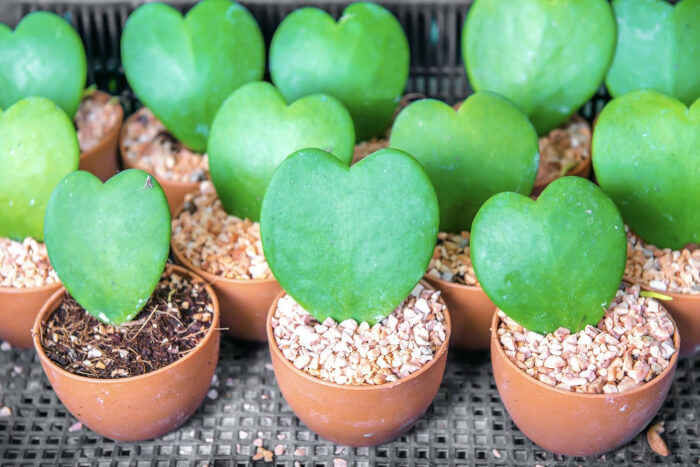
Hoya Kerrii, also known as the sweetheart plant, can be propagated with single leaves. Select a healthy leaf with a bit of stem attached, and let the end dry for 2 to 3 days.
Insert the base vertically into well-draining soil mixed with pebbles for airflow. Keep the pot in a warm spot with indirect light.
Roots usually develop in a few weeks if the soil stays slightly moist. This slow grower eventually forms new vines if you’re patient.
#4 ZZ Plant

The ZZ Plant grows new roots from individual leaves, though it takes some time. Cut a few mature leaves along with part of their petiole and place them in a seed tray filled with potting mix. Bury only the bottom part of each leaf so it doesn’t rot.
Keep the soil barely damp and set the tray in low to medium light. Roots and rhizomes may take months to form, but once they do, they’ll develop into strong plants. ZZ propagation rewards patience with lush greenery.
#5 Christmas Cactus
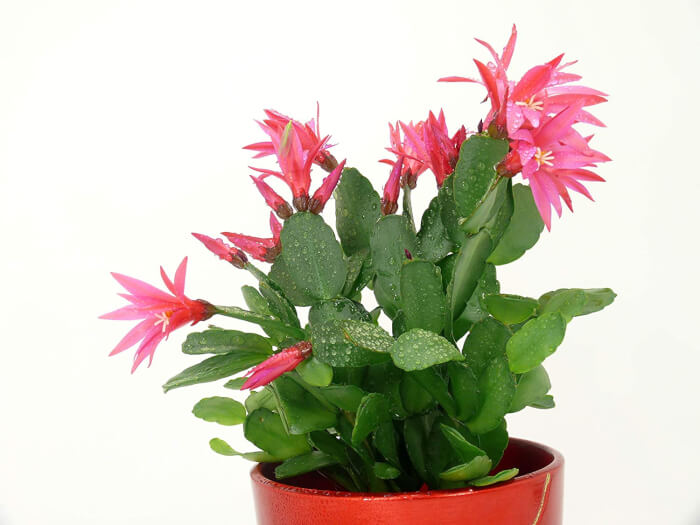
Once the Christmas Cactus has finished flowering, you can propagate it by leaf segment cuttings. You also grow this plant from seeds carried in the red fruits in the fall season.
Take cut sections of the leaf with 3-5 segments, and let them sit in a cool, dry place to form calluses.
Fill a container with potting soil. Push each cutting into the soil about an inch deep, then cover it with a plastic bag. After 2-3 weeks, the new roots will appear.
#6 Kalanchoe
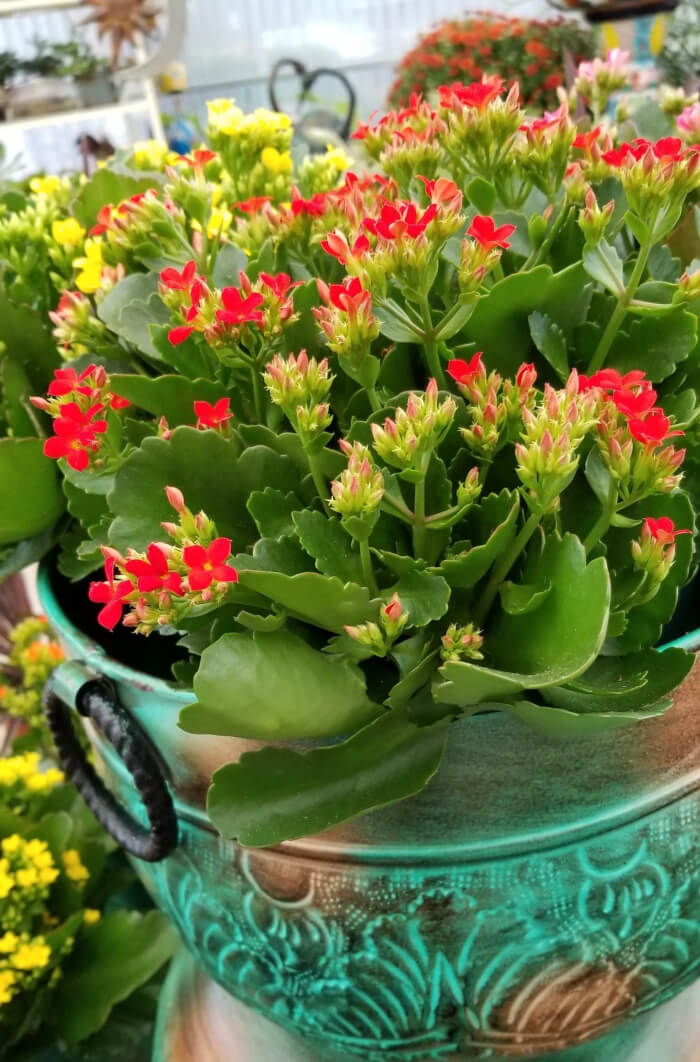
For Kalanchoe leaf propagation, firstly cut healthy leaves, then lay them on a piece of newspaper in a dry place. Wait 2-3 days for the ends of the callus to form.
Fill a container with a damp succulent mix, and place the callused piece of the stem into the soil mix.
Set the container in a warm spot with direct sunlight, and mist regularly. After a few weeks, they will form young roots and can be moved into their own pots.
#7 Bryophyllum pinnatum
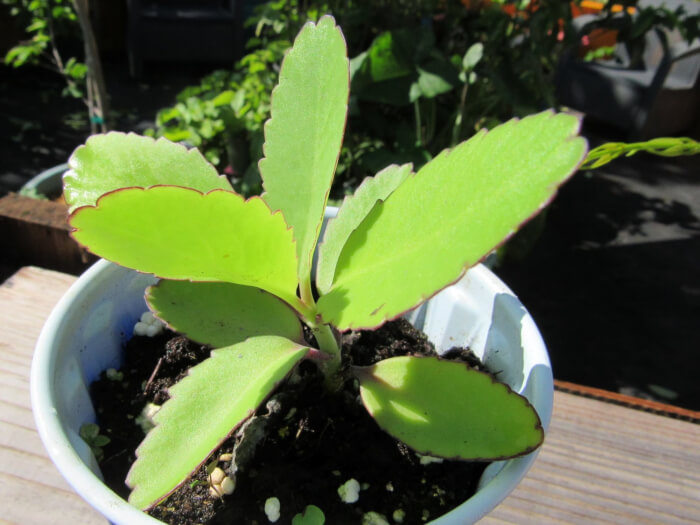
Burro’s Tail is a trailing succulent that’s easy to propagate. Gently pluck a few leaves and place them on top of a pot filled with a cactus soil mix. Keep the pot in a warm, bright spot away from harsh sunlight.
Mist lightly when the soil is dry to encourage rooting. New shoots will appear at the base of the fallen leaves after a couple of weeks. Once they grow half an inch long, move them into individual pots.
#8 Snake Plant
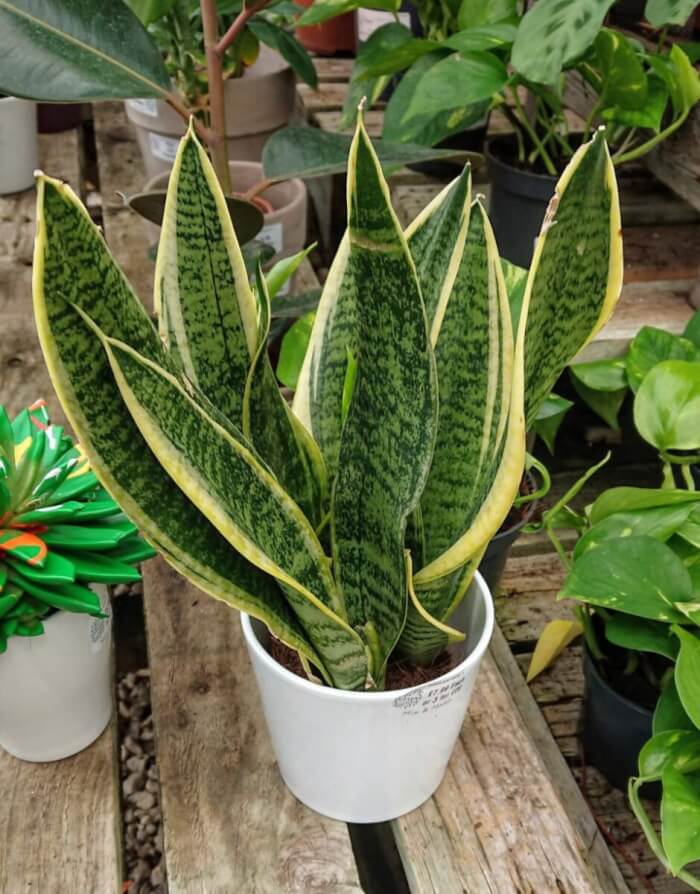
To expand your collection, start by cutting off one of the leaves at the base of a healthy plant. Then, you cut the long leaf into sections around 4 inches long, and mark the bottom of each piece with a marker to ensure you plant them root side down.
Place the cuttings in a potting mix or use toothpicks to suspend the sections in a glass of filtered water. Within a few weeks, the new root will develop and be ready to transplant into the soil to grow.
#9 Aloe
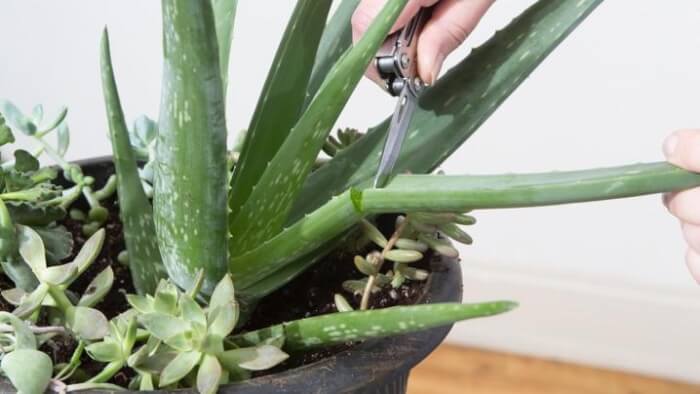
To propagate Aloe leaves successfully, you are sure that the leaves are juicy and need to be dried out for about 4 weeks or longer.
Because they will rot away and not produce any roots when you attempt to plant and grow roots. Using a sharp, clean knife at an angle, cut a leaf at least 4 inches long.
Before planting in potting mix, leave the cuttings to callus over the cut to a third of the length of the leaf. Place the pot in a warm sunny spot and give moderate water; the plant should root in a few weeks.
#10 Chinese Money Plant
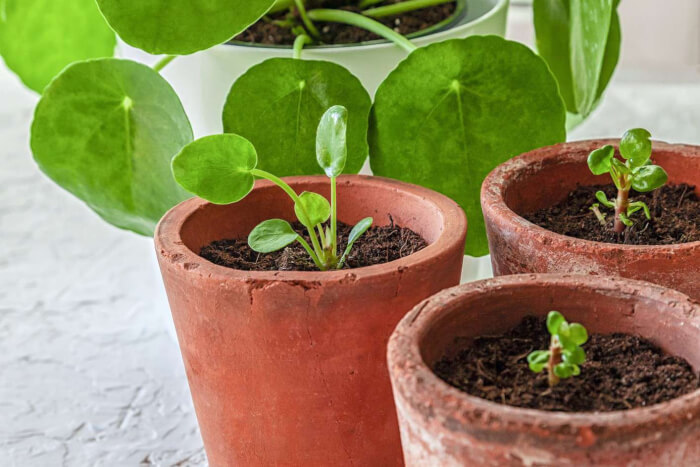
Chinese Money Plants can be propagated from offshoots that grow from the roots or from leaves. Take a cutting carefully and follow the leaf down to the trunk.
Take a small slice of the trunk, not too much, and root it in water. Set the base of the stalk in the water (not the leaf).
Change the water at least once a week and place the pot in bright indirect sunlight. Within 1- 2 months, new plantlets will form at the base of the stalk, and then can be planted in a pot of their own.
#11 Burro’s Tail
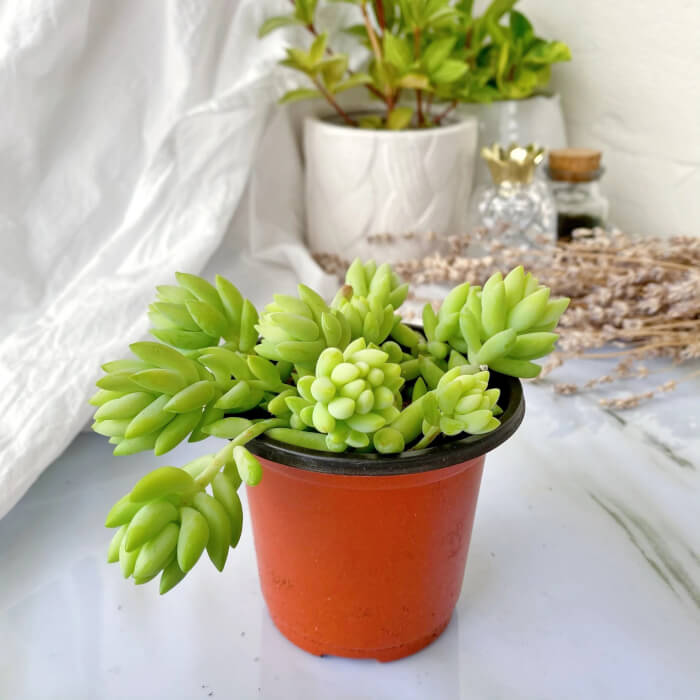
Burro’s Tail is a trailing succulent that’s easy to propagate. Gently pluck a few leaves and place them on top of a pot filled with a cactus soil mix. Keep the pot in a warm, bright spot away from harsh sunlight.
Mist lightly when the soil is dry to encourage rooting. New shoots will appear at the base of the fallen leaves after a couple of weeks. Once they grow half an inch long, move them into individual pots.
#12 Begonia

Begonias are excellent candidates for leaf propagation. Take a mature leaf with prominent veins and cut it into small sections. Lay the pieces flat on a moist propagation mix with the vein side down.
Pin them gently to the soil using bent paper clips to maintain contact. Keep the container warm and mist lightly to prevent drying. New plantlets will sprout along the cut veins, eventually growing into full plants.