
A rotating compost sifter is a clever way to turn scrap wood, wire mesh, and an old bicycle wheel into a useful garden tool. It helps separate fine compost or soil from twigs, stones, and unfinished organic matter without needing to shake a flat screen by hand.
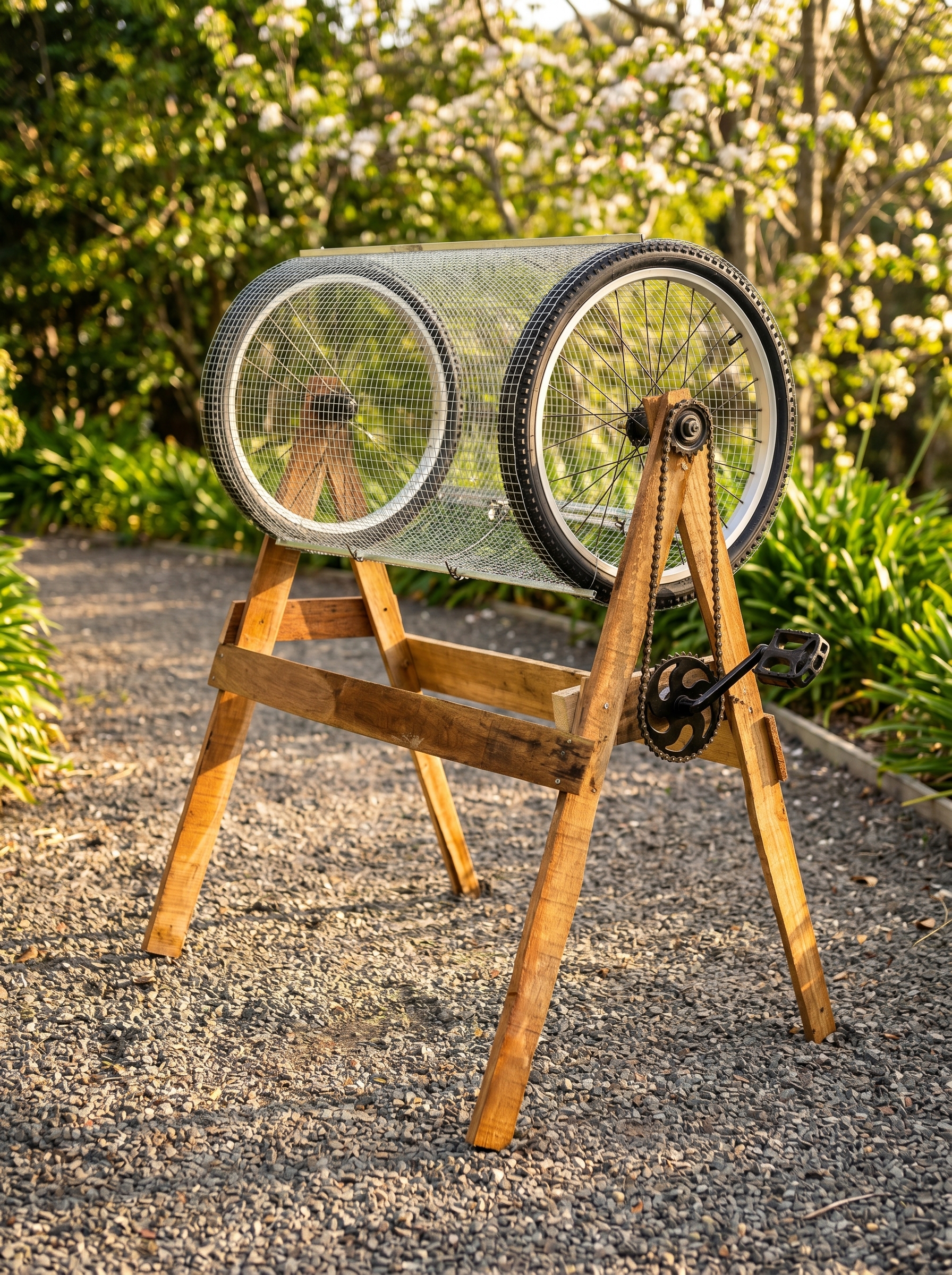
Materials Needed
- 1 old bicycle wheel with tire removed or kept as a rim edge
- 1 bicycle crank arm and pedal
- 1 bicycle sprocket or hub assembly
- Galvanized hardware cloth or wire mesh, about 1/2 inch openings
- Scrap lumber for the A-frame stand
- 2 long wooden boards for side supports
- 4 angled wooden legs
- 2 cross braces
- Wood screws
- Washers and bolts
- Zip ties, metal wire, or hose clamps
- Hinges or metal brackets
- Staple gun and heavy-duty staples
- Wire cutters
- Drill
- Saw
- Measuring tape
- Work gloves
Step-by-Step Guide
Step 1: Build the Wooden A-Frame Stand
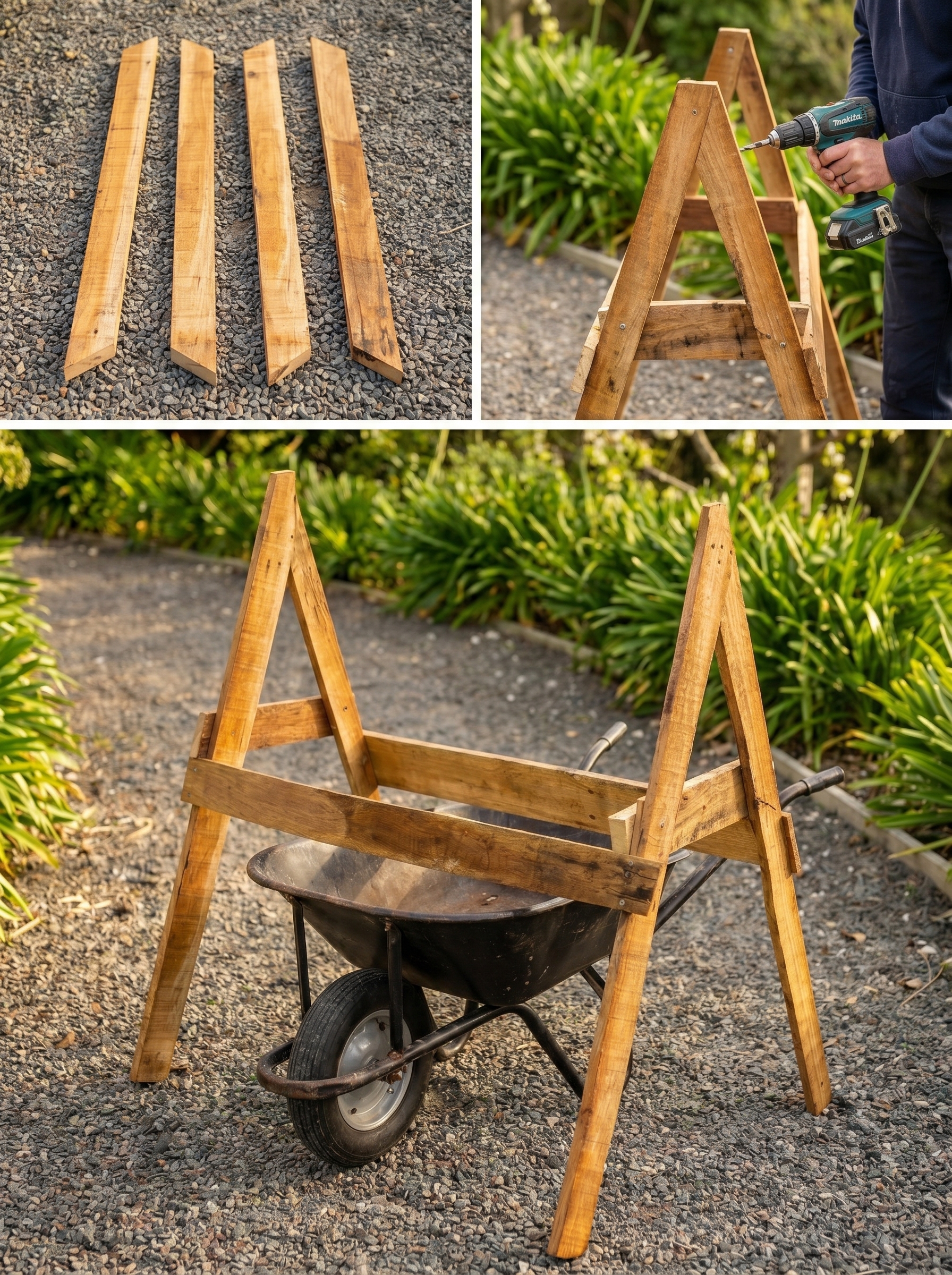
Cut four wooden legs to the same length, then angle them slightly outward so the frame stays steady while the drum turns. Attach two legs on each side to create an A-frame shape. Use screws and cross braces to make the structure firm. The stand should be wide enough to hold the mesh drum and tall enough for a wheelbarrow or tub underneath.
Step 2: Add Side Support Boards
Attach one long board along each side of the frame. These boards will support the rotating drum and help keep everything aligned. Make sure both side boards sit at the same height. A slight downward angle can help compost move through the cylinder while turning, but keep it gentle so the material does not slide out too fast.
Step 3: Shape the Wire Mesh Cylinder
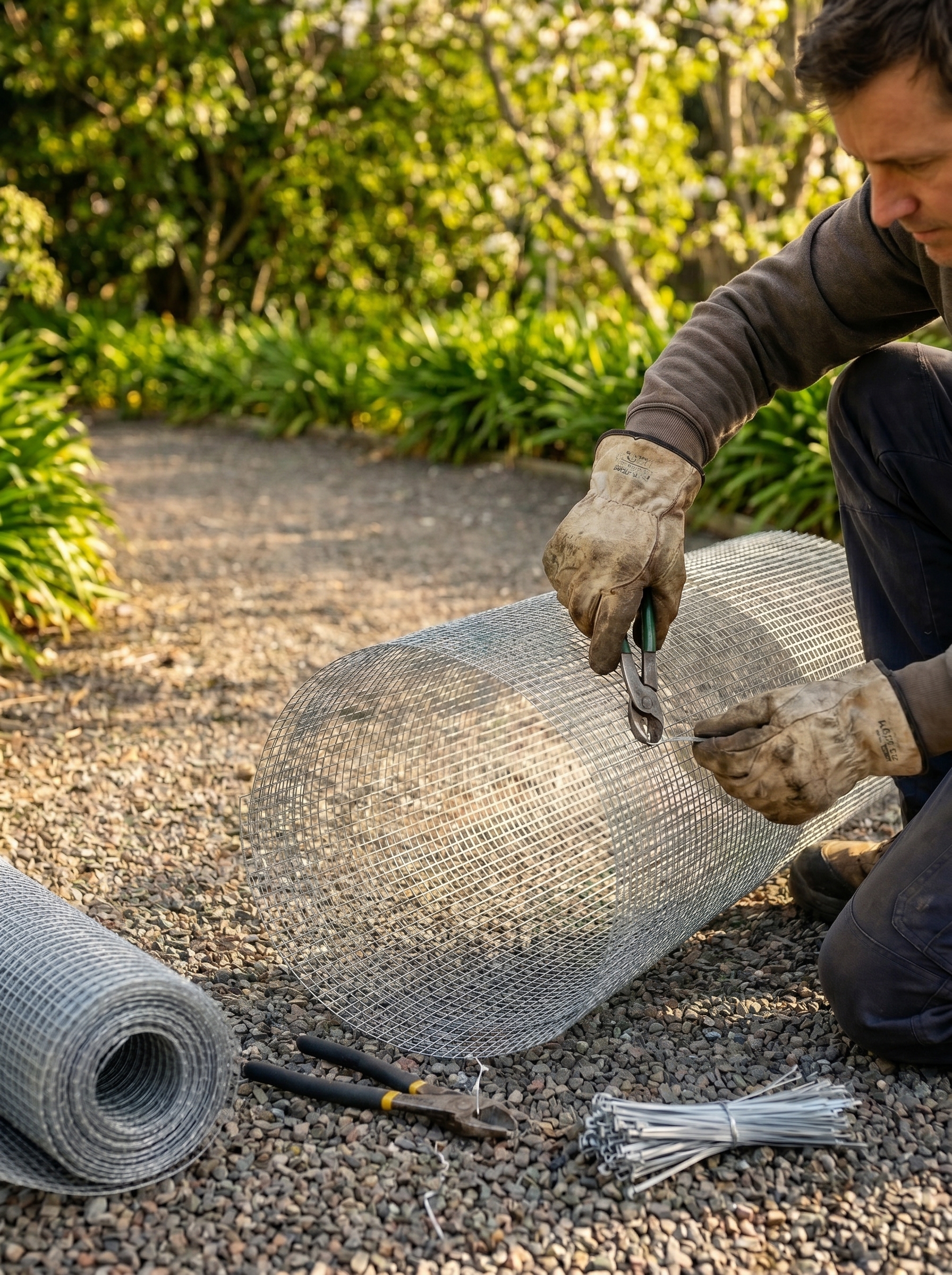
Roll the galvanized hardware cloth into a large cylinder. The diameter should roughly match the bicycle wheel so the wheel can sit neatly on one end. Overlap the mesh edges by a few inches, then secure the seam with wire, zip ties, or small metal clamps. Wear gloves because cut wire edges can be sharp.
Step 4: Attach the Bicycle Wheel to One End
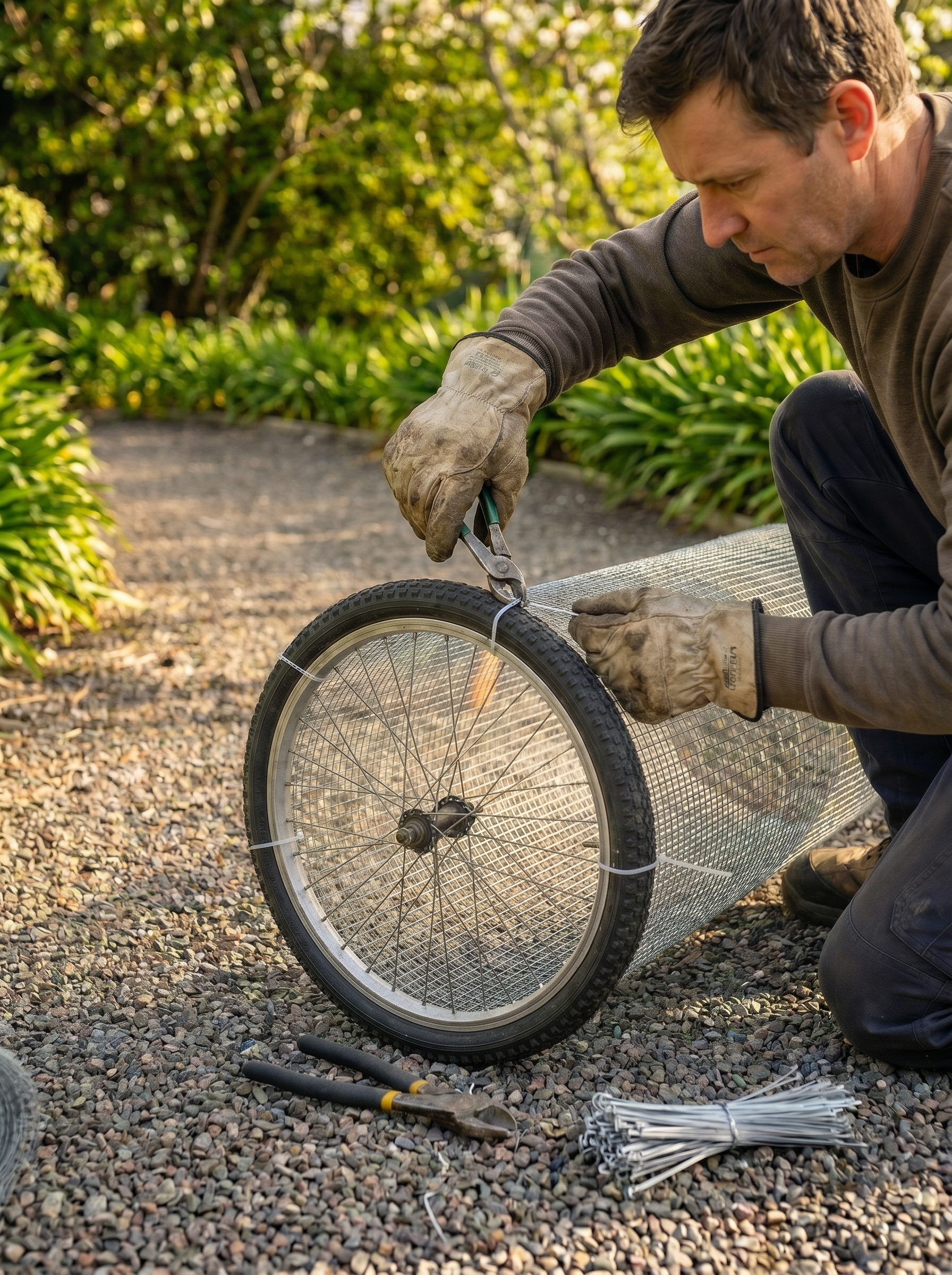
Place the bicycle wheel against one open end of the mesh cylinder. Secure the mesh to the rim using metal wire, zip ties, or hose clamps spaced evenly around the circle. The wheel gives the drum strength and creates a smooth turning point. Check that the wheel is centered, because an uneven drum will wobble when rotated.
Step 5: Reinforce the Other End of the Drum
For the opposite end, bend the mesh edge inward slightly or add a circular wooden or metal ring for extra support. This end can stay open so you can load compost into the drum. Make sure the opening is large enough for a shovel, but strong enough to hold its shape during use.
Step 6: Install the Wheel Hub and Crank
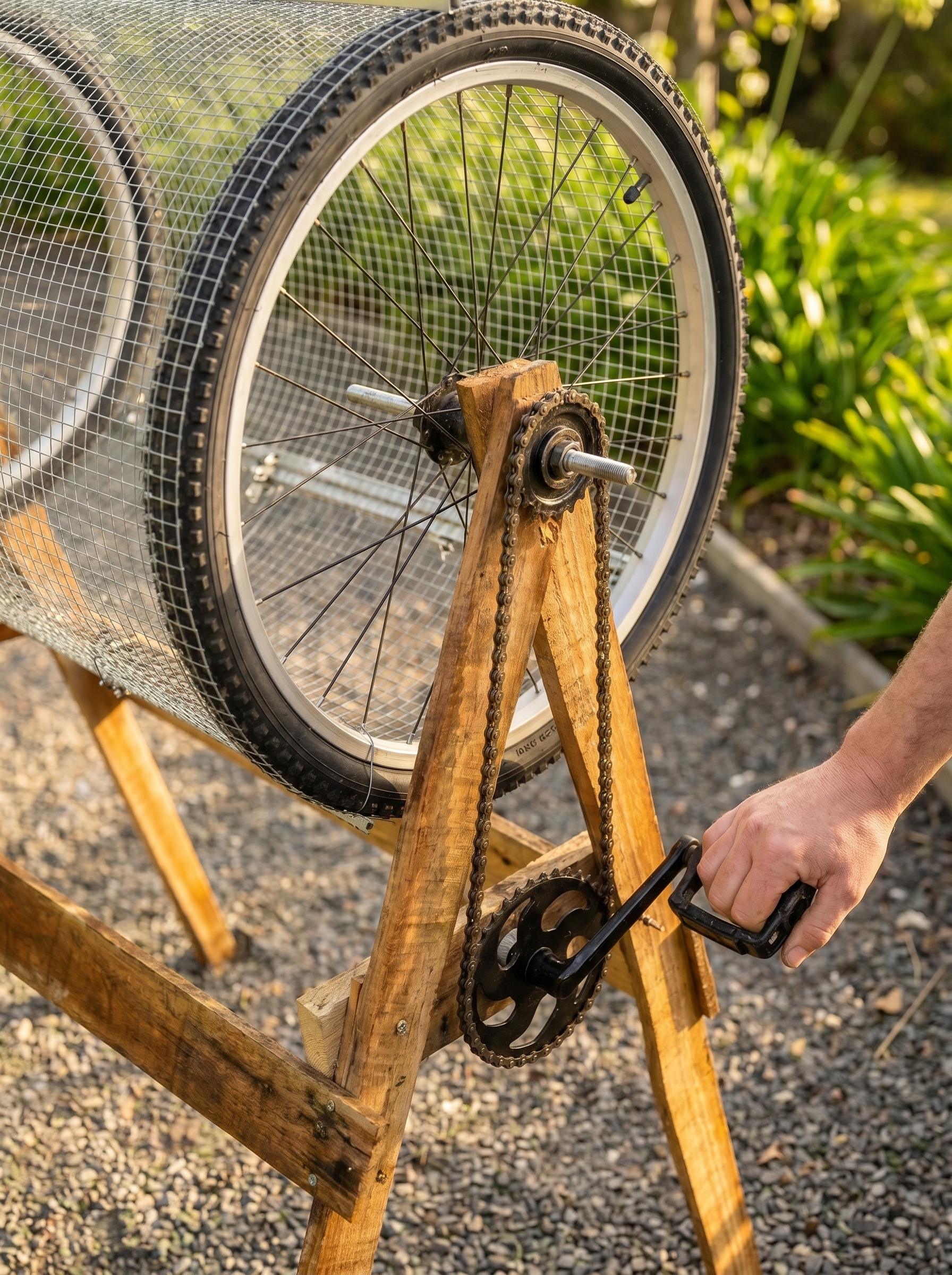
Mount the wheel hub through the wooden frame so the wheel can spin freely. Attach the sprocket, crank arm, and pedal to the outside of the frame. The pedal will act as a hand crank. Test the movement before tightening everything completely. The drum should rotate smoothly without scraping the wood.
Step 7: Secure the Drum on the Stand
Set the mesh cylinder onto the frame and connect it firmly to the wheel end. Add small wooden blocks, brackets, or guide pieces along the frame to keep the drum from shifting sideways. Do not press them too tightly against the mesh. A small gap helps the cylinder turn without friction.
Step 8: Add Lower Bracing for Stability
Install one or two wooden cross braces between the legs. This keeps the sifter from rocking while you crank it. A wider base is better, especially if you plan to sift heavy compost. You can also add rubber feet or small wooden pads under the legs for grip.
Step 9: Smooth Sharp Edges
Trim any sharp wire ends with wire cutters. Bend loose mesh points inward and cover rough spots with tape, rubber edging, or folded wire. This small step makes the sifter safer to use and helps prevent gloves or sleeves from catching.
Step 10: Test the Compost Sifter
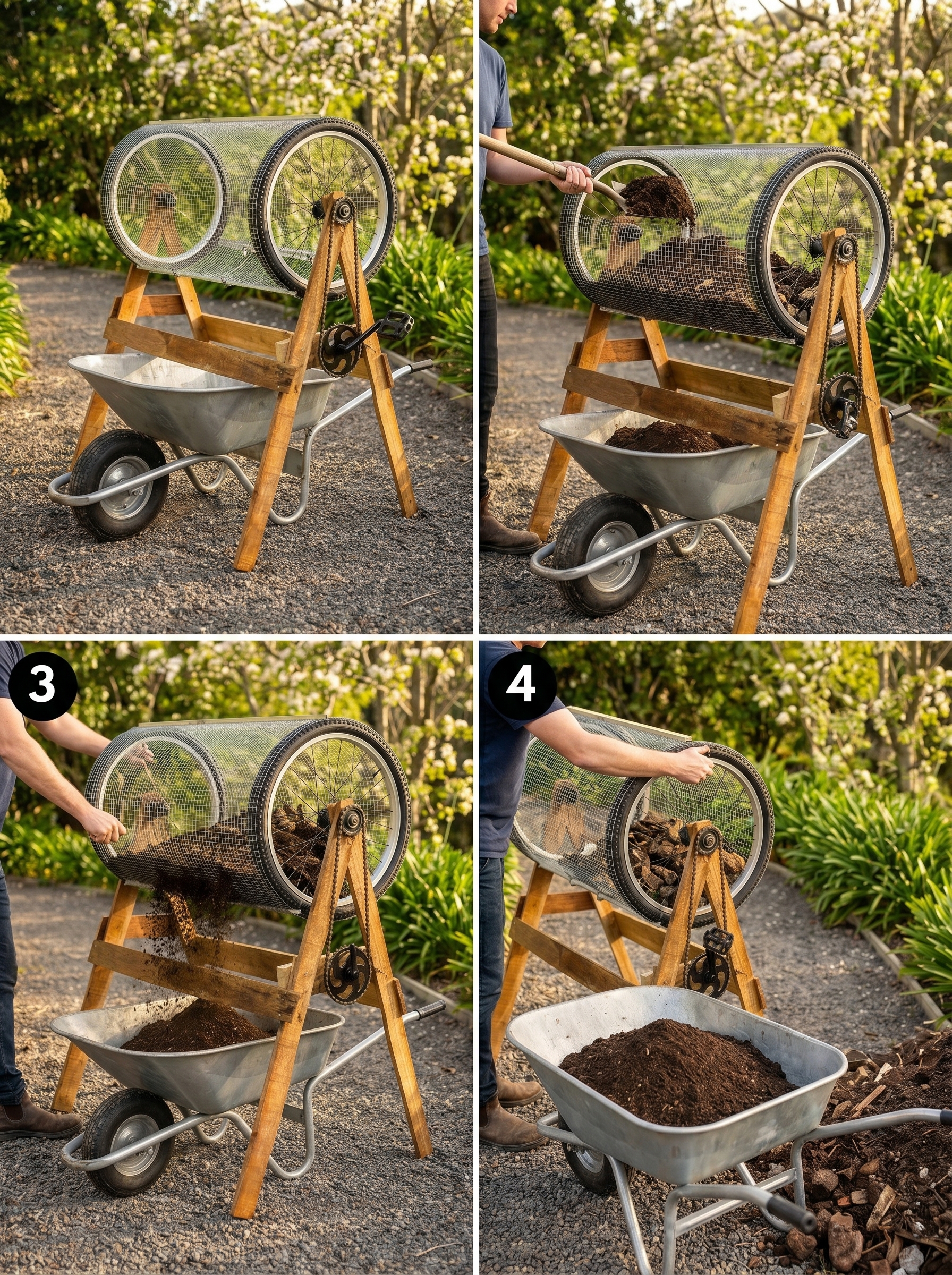
Place a wheelbarrow, tarp, or large bin under the mesh drum. Add a few shovels of compost into the open end. Turn the pedal slowly by hand. Fine compost should fall through the mesh, while larger pieces remain inside the cylinder. Empty the leftover chunks back into your compost pile to break down further.
Step 11: Make Final Adjustments
If the drum shakes too much, check whether the wheel is centered. If compost spills out too fast, raise the front end slightly. If the mesh bends under weight, add another support ring around the cylinder. Small adjustments make the tool easier and more satisfying to use.
Helpful Tip
Use galvanized mesh instead of thin chicken wire if possible. Compost can be heavy, and stronger mesh will last longer outdoors. Store the sifter under cover when not in use so the wood and metal parts stay in better condition.